
Uyuni
Perched at 3,700 meters across the windswept Altiplano of southwestern Bolivia, Uyuni feels like a stark frontier settlement anchored against an immense sky. Walking its wide, grid-patterned streets, travelers encounter low brick buildings, swirling dust kicked up by mountain winds, and an unhurried desert stillness that contrasts sharply with the vast, blinding salt plains just beyond the perimeter. Founded in 1890 by President Aniceto Arce as a strategic railway junction connecting Bolivia to Pacific ports, the town preserves its industrial past through distinct landmarks. Just south of town lies the Train Cemetery, where dozens of British-built steam locomotives from the late nineteenth century sit abandoned and oxidized along open rails. In the town center, Avenida Ferroviaria leads past the historic 1930 clock tower, while the adjacent railway station still services cargo lines. A short drive away, the hamlet of Colchani demonstrates living trade heritage, where local families shovel, bake, and package artisanal cooking salt. Daily life centers around the bustling Mercado Central, where vendors serve steaming bowls of sopa de maní and plates of tender charque to ward off the high-altitude chill. In February, the town transforms with brass bands and energetic dancing for carnival, featuring the traditional ch'alla ritual of pouring alcohol to thank Pachamama. Between May and October, travelers find crisp, dry skies, though night temperatures drop well below freezing. The flat town is easily navigated on foot, though reliable four-wheel-drive vehicles with experienced drivers are necessary for excursions into the surrounding desert.
Read more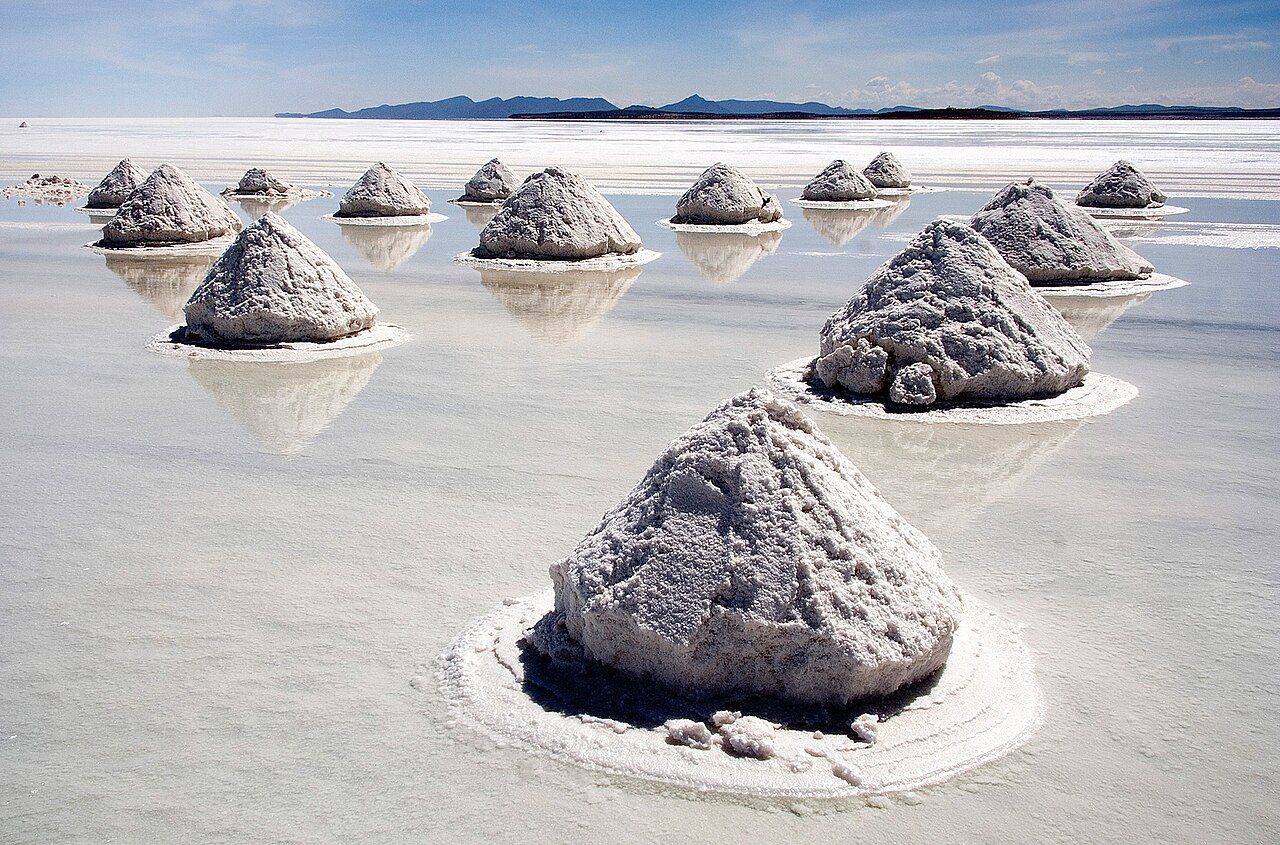
What to see in Uyuni

Photo credits (2)
- Luca Galuzzi ( Lucag ), edit by Trialsanderrors, CC BY-SA 2.5, via Wikimedia Commons
- Diego Delso, CC BY-SA 4.0, via Wikimedia Commons