Signagi
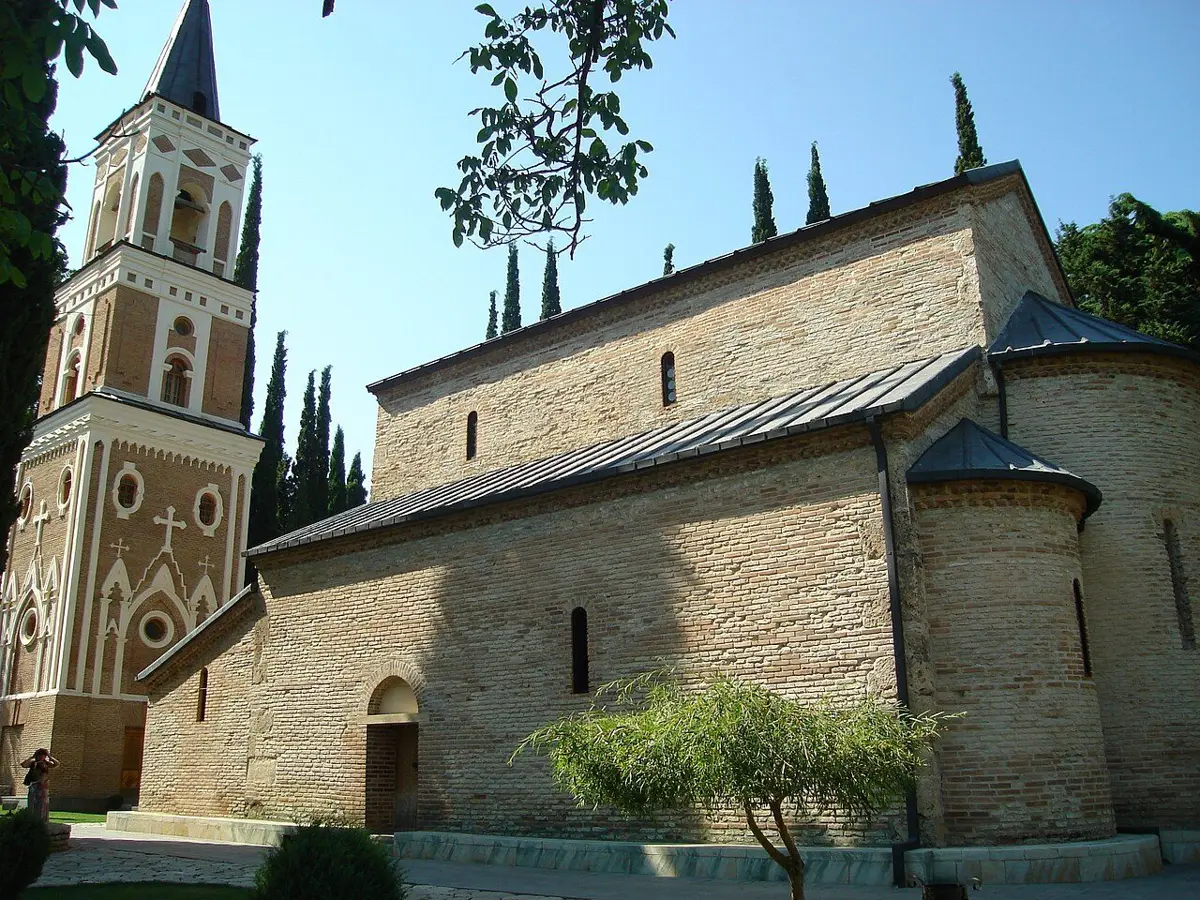
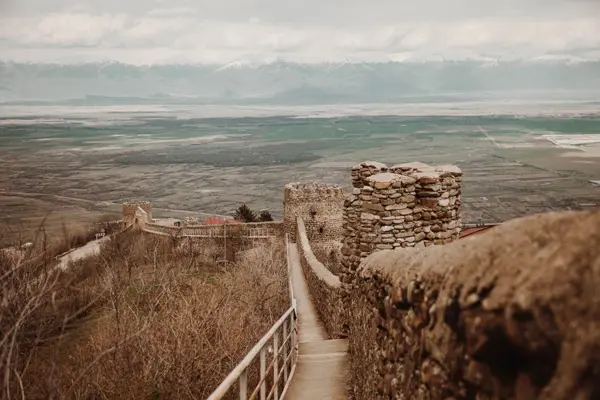
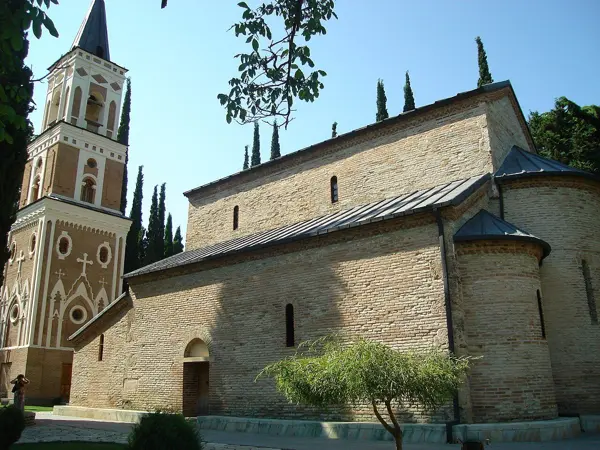
Perched along the eastern ridges of the Gombori Range in Kakheti, Signagi looks directly across the flat Alazani Valley toward the Greater Caucasus wall. Moving through its steep, looping lanes feels unhurried; footsteps echo on rough river-stone cobblestones, and carved pastel wooden balconies overhang red-tiled roofs that gather the low morning fog drifting up from the lowlands. King Erekle II fortified the settlement in 1762 as a defensive refuge, encircling it with four kilometers of stone ramparts and twenty-three watchtowers, several of which visitors can still climb to trace the valley floor. Two kilometers south, Bodbe Monastery holds the fourth-century tomb of Saint Nino, flanked by steep cypress groves and an active convent. In town, the Signagi Museum preserves a rare permanent collection of canvases by the primitive master Niko Pirosmani, alongside bronze-age artifacts excavated from the surrounding plains. Autumn life centers on Rtveli, the regional grape harvest, when farmsteads fill subterranean clay qvevri vessels with fermenting Saperavi and Rkatsiteli juice. Cellars and open-air taverns serve skewered mtsvadi grilled over dried grapevines alongside strands of freshly dipped walnut churchkhela. The town is compact enough to navigate entirely on foot, though the sharp gradients require sturdy shoes. Early autumn offers the mildest walking weather and the richest sense of local agricultural rhythm before winter sets in.
Read more