
Saranda
Curving around a horseshoe bay in the southern Albanian Riviera, Saranda steps steeply up from the Ionian Sea into dry limestone hills. Across a narrow channel, the northern headlands of Corfu sit low on the horizon. Walking through town means navigating sun-bleached staircases that cut between modern apartment blocks, smelling wild sage carried down from the ridge, and drifting toward the coastal promenade where working fishing skiffs bump against stone piers. Known in antiquity as Onchesmos, the harbor served as an ancient port for the Chaonian tribe of Epirus. In the center of town, preserved mosaic floors mark the remains of a fifth-century synagogue complex that later transformed into an early Christian basilica. Higher on the eastern crest stand the cracked stone vaults of the sixth-century Monastery of the Forty Saints, the Byzantine sanctuary that gave the modern city its name. Watching over the bay from an adjacent ridge, Lëkurësi Castle was built in 1537 by Ottoman Sultan Suleiman the Magnificent to secure the coastline against Venetian raids. Daily life centers on the water, with tavernas serving plates of grilled red mullet and black mussels farmed in nearby Lake Butrint. At dusk, the entire town observes the xhiro, an unhurried evening stroll along the paved waterfront boulevard as the heat breaks. For regional produce, the morning market on Rruga Flamurit fills with local honey, mountain tea, and brined sheep cheese. Travel in May or September to avoid the packed ferries and intense midsummer heat, and use local furgon minibuses rather than rental cars to navigate the narrow coastal routes.
Read more
What to see in Saranda
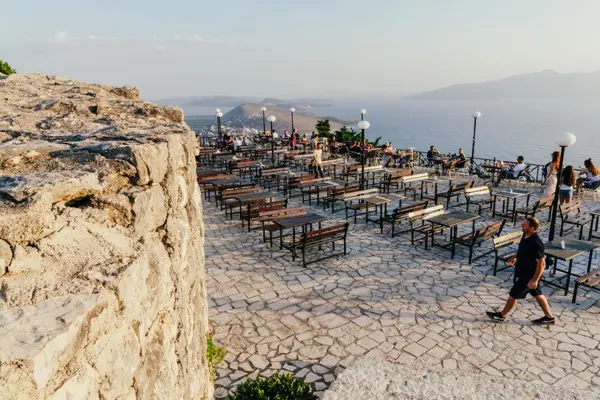
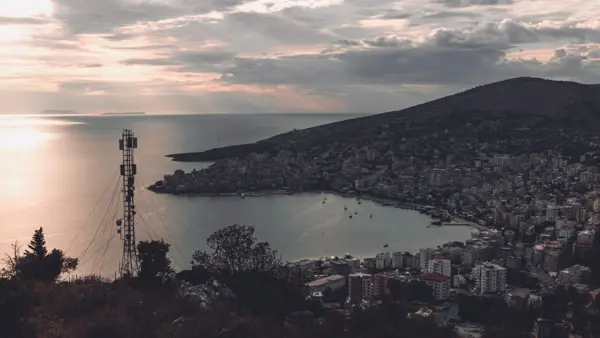
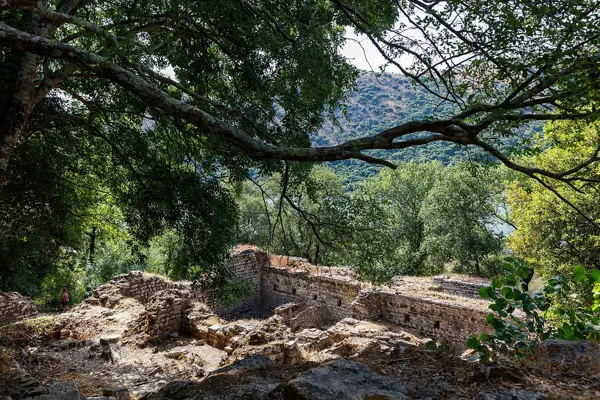
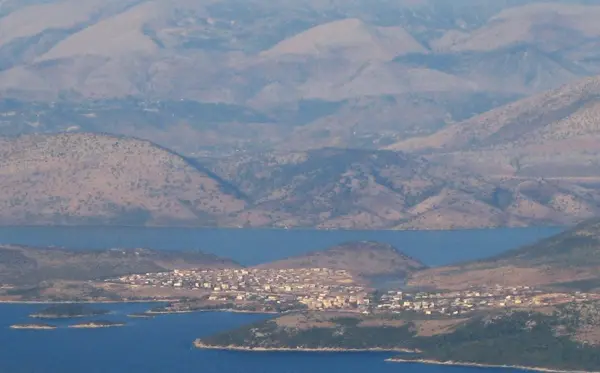
Photo credits (2)
- Marmontel, CC BY 2.0, via Wikimedia Commons
- Unknown author, CC BY-SA 2.5, via Wikimedia Commons