
Butrint
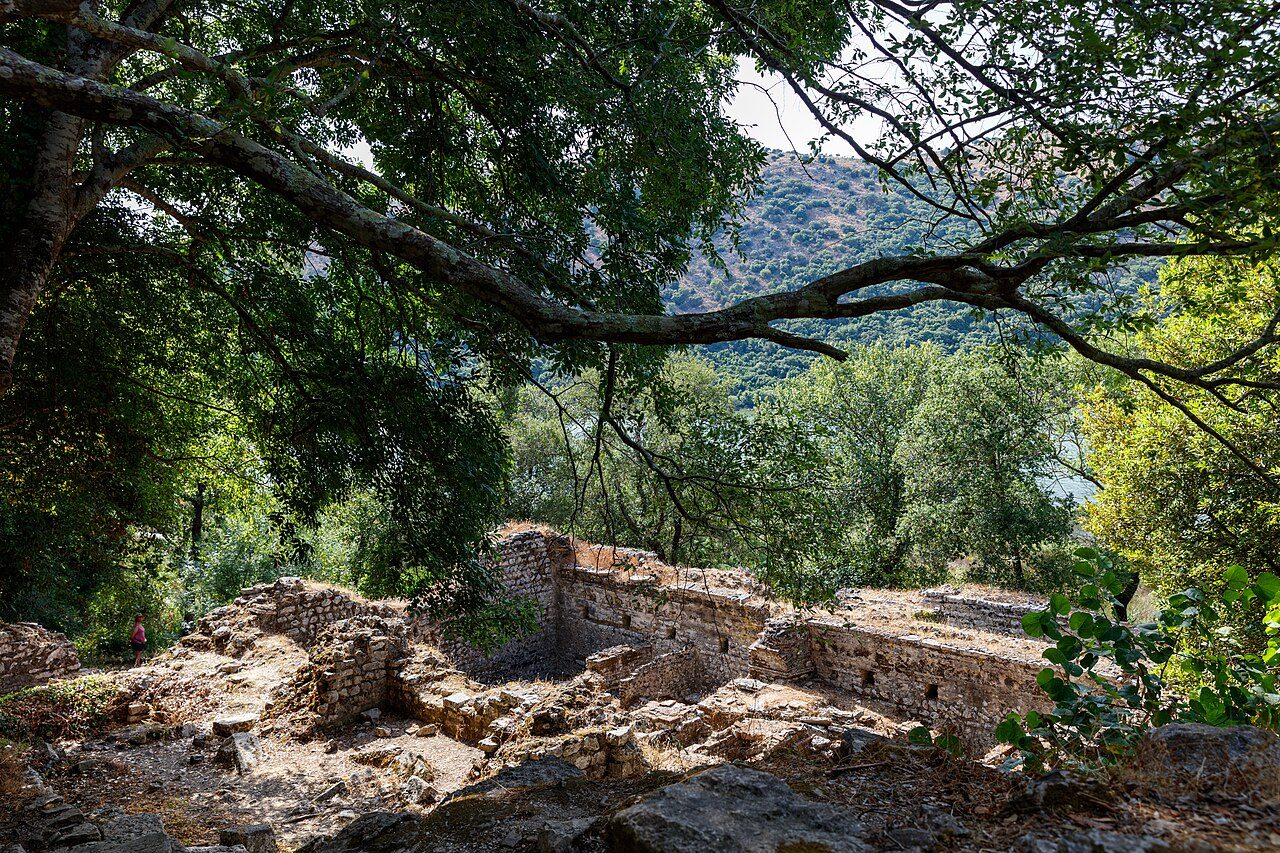
Shrouded within a forested peninsula between the Vivari Channel and Lake Butrint, this ancient port encapsulates nearly three millennia of Mediterranean conquest. Settled by the Epirote Chaonians in the 4th century BC before Julius Caesar designated it a Roman colony in 44 BC, the site later flourished as a Byzantine bishopric and a Venetian outpost. Travelers entering through the laurel-shaded paths first encounter the Hellenistic theater, its stone cavea tiers curving downward toward an orchestra pit often submerged in brackish spring water, where terrapins bask on submerged limestone. Nearby rise the imposing, roofless stone arches of the 6th-century Great Basilica, showcasing the early Christian transformation of pagan civic space. Deeper along the shaded trails lies the 6th-century Baptistery, renowned for its sixteen central columns and an extraordinary, rarely uncovered polychrome mosaic floor decorated with fifty-seven medallions of peacocks, drinking stags, and twisting grapevines. A short climb up the ancient acropolis leads to the restored 16th-century Venetian fortress, now housing statues of Apollo and Roman portrait busts excavated from the surrounding mud. Standing along these fortified ramparts, visitors feel the cool breeze sweeping in from the Ionian Sea, hearing the hum of cicadas and looking down over the tidal lagoons and ancient defensive walls that once guarded the strait of Corfu.
More in Saranda
Photo credits (2)
- Marmontel, CC BY 2.0, via Wikimedia Commons
- Unknown author, CC BY-SA 2.5, via Wikimedia Commons