
Oaxaca
Cradled by the Sierra Madre del Sur in southern Mexico, Oaxaca rests in a high valley five thousand feet above sea level. Walking its central grid reveals a rhythm dictated by sunlight against pale green cantera stone facades and the scent of roasting chilies drifting through open doorways. Shade gathers beneath the laurel trees of the central zócalo, where textile weavers, musicians, and shoe shiners gather from dawn until late into the night. Centuries of Zapotec and Mixtec civilisations anchor the valley, which was formally chartered as a Spanish villa in 1529. The gilded baroque interior of the sixteenth-century Templo de Santo Domingo de Guzmán anchors the northern pedestrian lane. Just uphill, the quiet Barrio de Xochimilco features stone walls along an eighteenth-century aqueduct, while the terraced pyramids of Monte Albán rise five miles to the west, overlooking the valley floor from an artificially flattened mountain summit. Local life moves to the heat of the smoke hall inside Mercado 20 de Noviembre, where thin cuts of tasajo sizzle over charcoal alongside platters of herb-strewn mole negro. In July, communities from across the eight regions arrive to share dances and harvest gifts during the Guelaguetza festival. The center is best explored on foot in the cool early mornings, while shared taxis known as colectivos easily connect travelers to outlying weaving and ceramics villages.
Read more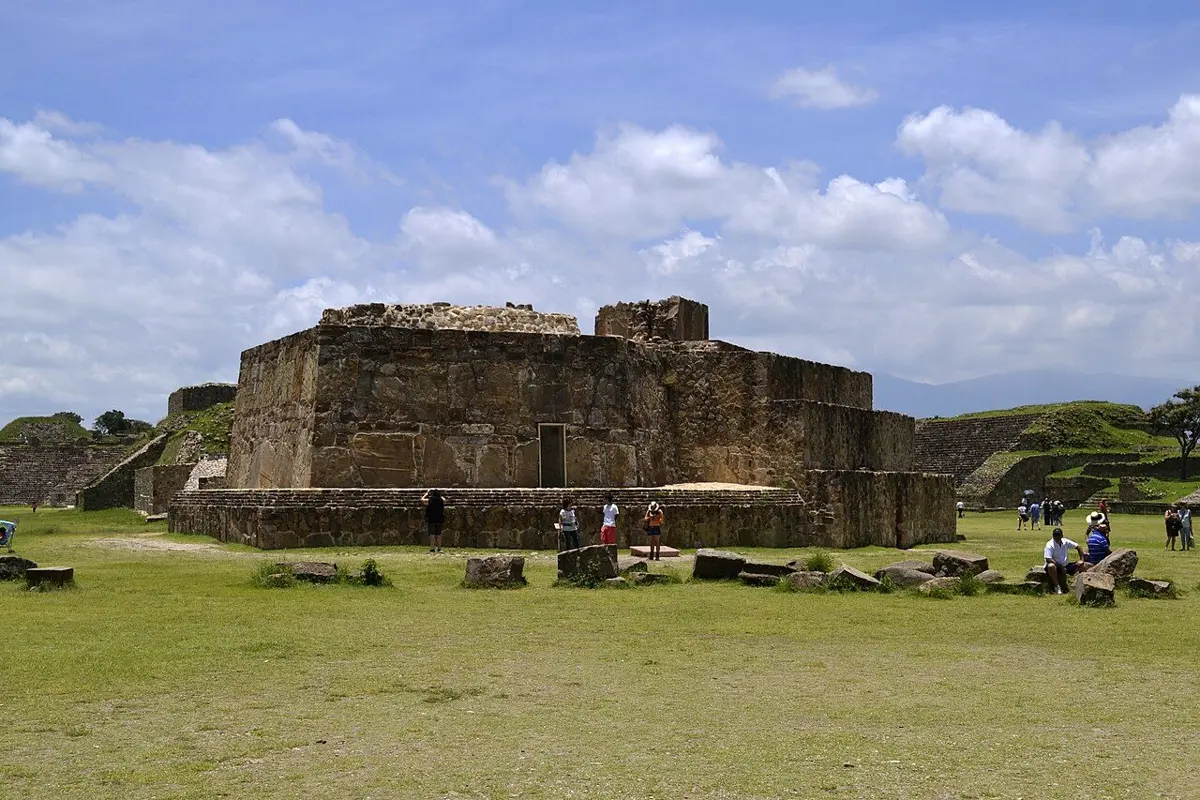
What's on in Oaxaca
Oaxaca's century-old holiday tradition where local artisans display intricate nativity and cultural figures carved entirely from oversized radishes.
Official infoEvents are collected automatically from the web. Dates can change, so please check the official information before you travel.
What to see in Oaxaca
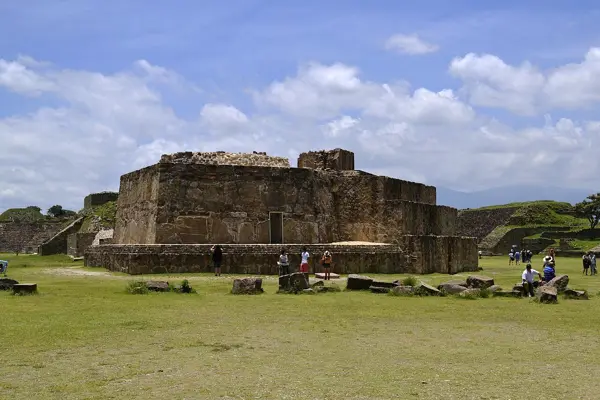
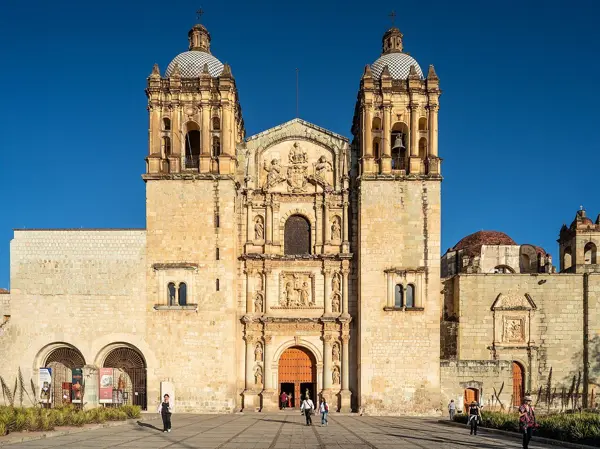
Photo credits (3)
- ENDS2306, CC BY-SA 3.0, via Wikimedia Commons
- Adrián Cerón, CC BY-SA 3.0, via Wikimedia Commons
- nan palmero, CC BY 2.0, via Wikimedia Commons