
Monte Alban
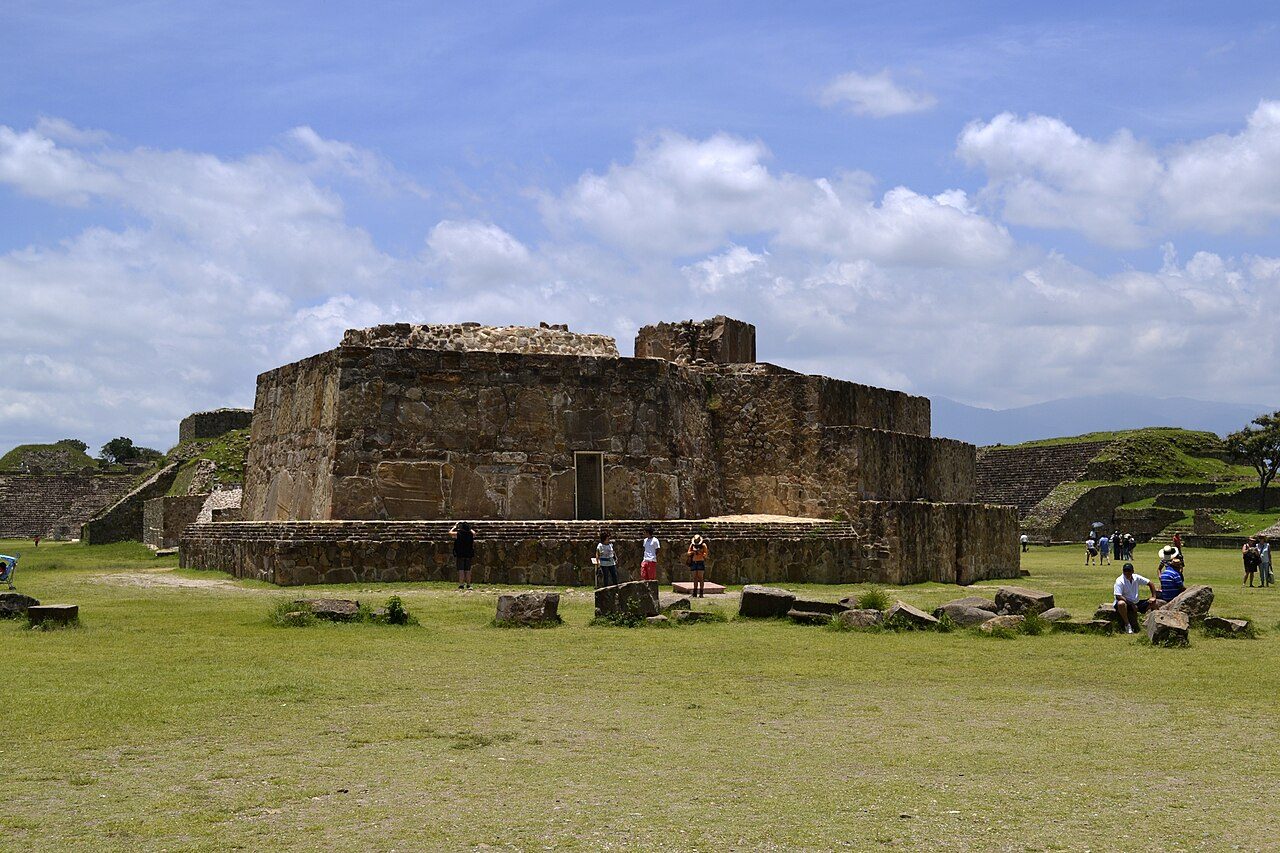
High above the confluence of the Oaxaca Valley’s three arms, the Zapotec civilization leveled an entire mountain ridge around 500 BCE to construct their sacred capital. Spanning the vast, terraced expanse of the Gran Plaza, Monte Albán stands as an early masterpiece of pre-Columbian urban planning, framed by truncated pyramids, sunken patios, and an I-shaped ball court. Most enigmatic is the pentagonal Building J, an anomalous arrowhead-shaped structure piercing the site's otherwise rigid orthogonal grid, angled specifically by ancient astronomers to track the transit of the star Capella across the Mesoamerican sky. Standing atop the towering South Platform, visitors absorb a staggering 360-degree panorama framed by the Sierra Madre, greeted by thin, dry air and persistent highland winds that have swept these stone plazas for millennia. At the plaza's western edge, the Gallery of the Danzantes demands close inspection: dozens of low-relief stone orthostats reveal contorted, grimacing human figures etched into gray stone—captives and slain rival leaders rendered with detailed anatomical motifs and early Zapotec glyphs. Wandering between these sun-bleached limestone facades, down into elite residential compounds and past subterranean burial chambers, travelers encounter a palpable monument to imperial theater and celestial alignment.
More in Oaxaca
Photo credits (3)
- ENDS2306, CC BY-SA 3.0, via Wikimedia Commons
- Adrián Cerón, CC BY-SA 3.0, via Wikimedia Commons
- nan palmero, CC BY 2.0, via Wikimedia Commons