
Jerash
Cradled in the fertile, pine-clad hills of northern Jordan, Jerash unfolds along the valley of Wadi Jerash. Walking its ancient paving stones feels like stepping into a preserved Roman provincial world, where wind whistles through standing Corinthian capitals and deep chariot ruts mark the limestone. Prospering as a prominent member of the Decapolis trade confederation, the city of Gerasa reached its architectural peak in the second century. Emperor Hadrian spent the winter here in 129 AD, leaving behind the massive, triple-bayed Arch of Hadrian at the southern approach. Past the gate, the unusual asymmetry of the Oval Plaza opens into the straight spine of the Cardo Maximus, while the nearby South Theater retains acoustics clear enough to carry a spoken whisper across thousands of stone seats. Across the stream bed, the modern town bustles around its produce markets, known throughout Jordan for cured green olives, fragrant cold-pressed oil, and communal platters of lamb mansaf. Each July, the ruins awaken during the Jerash Festival of Culture and Arts, filling the ancient spaces with traditional folk dance, poetry, and classical Arab music. The ideal time to explore is spring, from March to May, when red poppies dot the surrounding hills. Arrive on foot at the visitor entrance right at eight in the morning to wander the stone avenues in cool air and solitary light before the tour coaches arrive from Amman.
Read more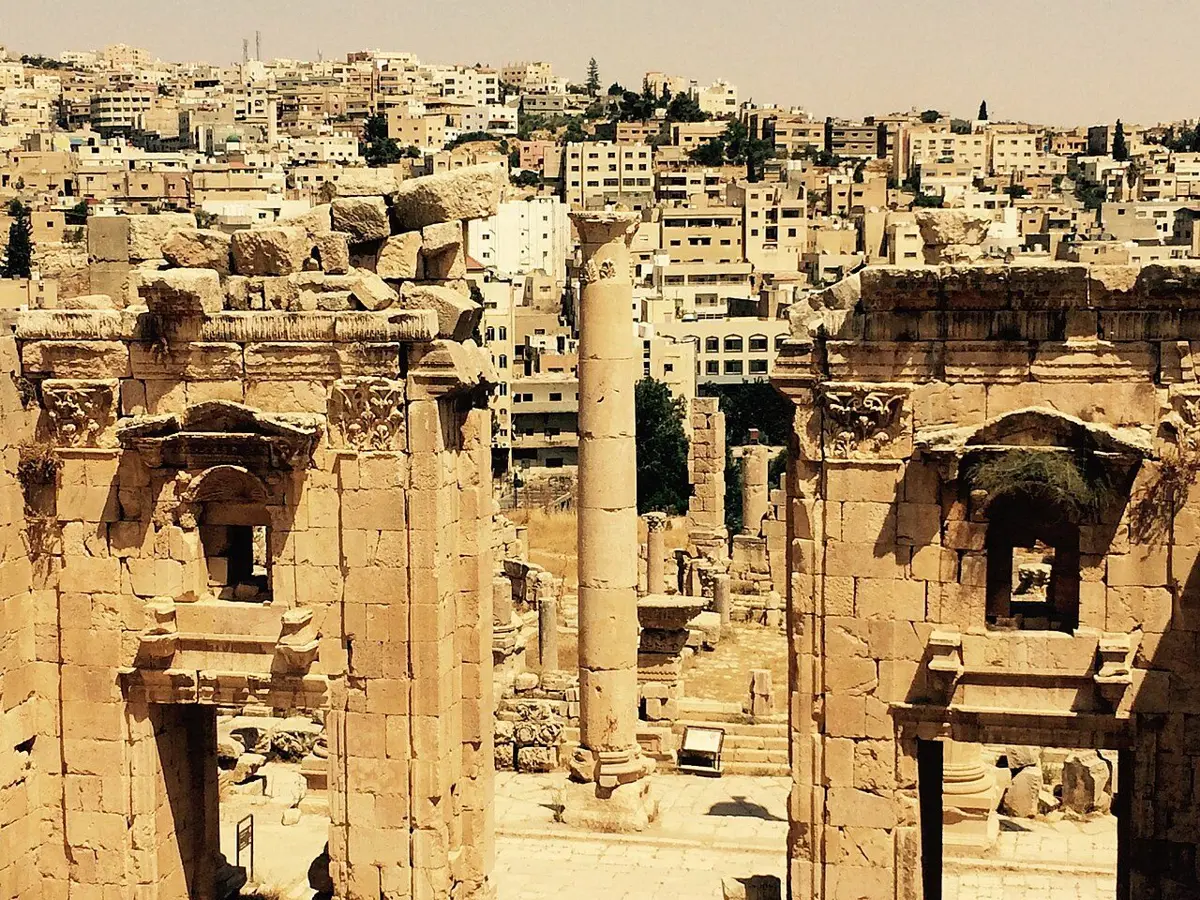
What to see in Jerash
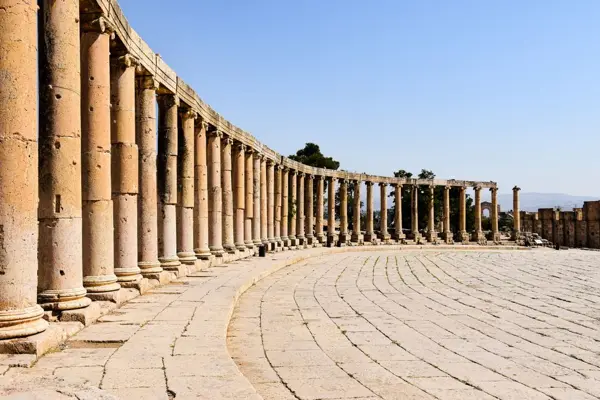
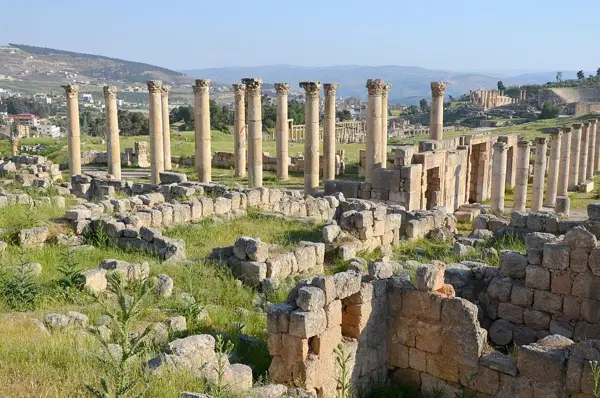
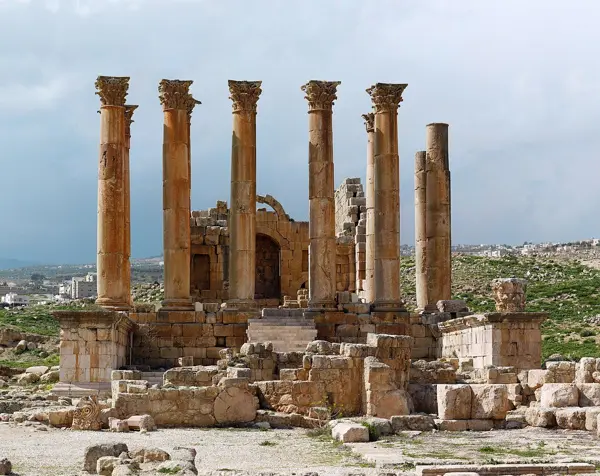
Photo credits (3)
- ZaBanker, CC BY-SA 4.0, via Wikimedia Commons
- Carole Raddato from Frankfurt, Germany, CC BY-SA 2.0, via Wikimedia Commons
- Askii, CC BY 3.0, via Wikimedia Commons