
Belogradchik
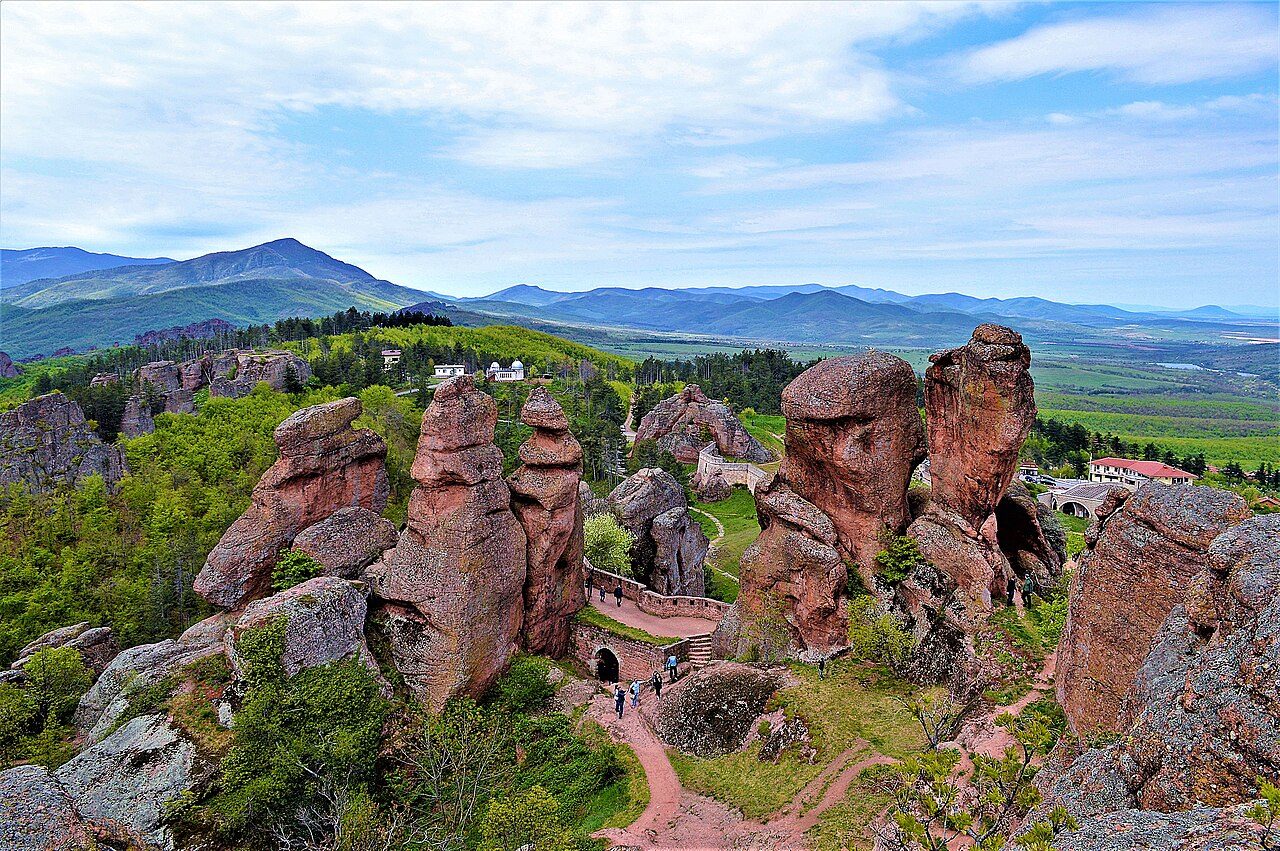
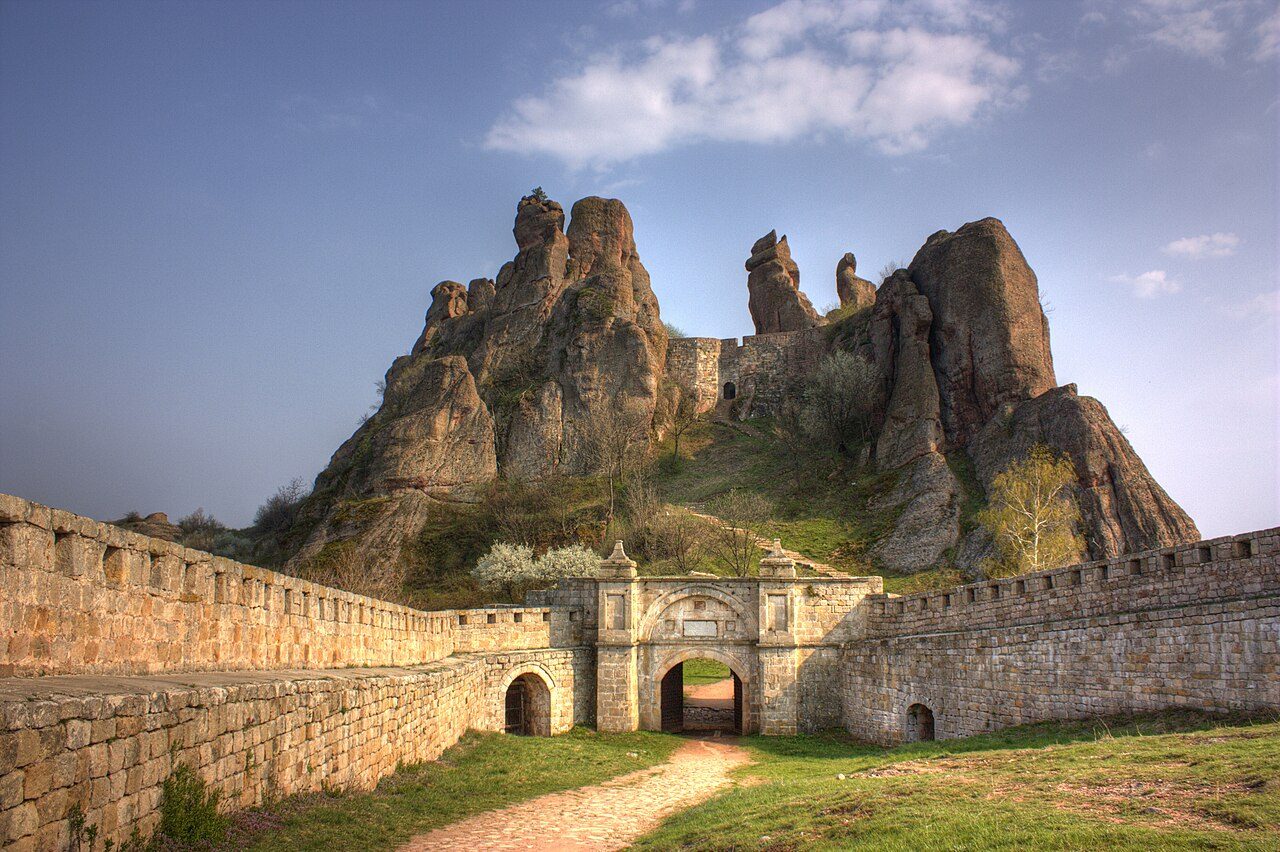
Tucked into the folds of the western Balkan Mountains in northwestern Bulgaria, Belogradchik sits beneath an arresting natural wall of red-hued sandstone pinnacles. Strolling along its quiet, sloping streets feels intimate and unhurried; traditional whitewashed homes with clay-tiled roofs give way to fruit orchards, while colossal, wind-sculpted stone towers continually loom over the rooftops, anchoring the town to the rugged Danubian borderlands. The town grew around the fortress of Kaleto, established by the Romans in the third century to guard trade routes through the mountain passes. Bulgarian Tsar Ivan Stratsimir expanded the stronghold in the fourteenth century, and Ottoman engineers completed its three defensive yards in the 1830s, seamlessly fusing masonry into the surrounding vertical rock spires. Just down the slope, the nineteenth-century Panov House displays local National Revival architecture, while twenty kilometers north, Magura Cave preserves prehistoric bat-guano paintings alongside massive subterranean galleries. Daily life revolves around the region's distinct Torlak heritage, best experienced in taverns serving belomuzh, a warm skillet dish of melted fresh sheep or cow cheese mixed with flour, paired with local red wine from Dimyat and Gamza grapes. Each summer, the Opera of the Peaks festival stages classical productions directly against the natural stone amphitheaters. The town itself is easily navigated on foot, though climbing the ramparts of Kaleto is best done in the early morning or late afternoon during May or October, when cooler weather prevails and low sunlight deepens the crimson mineral tones of the stone.
Read more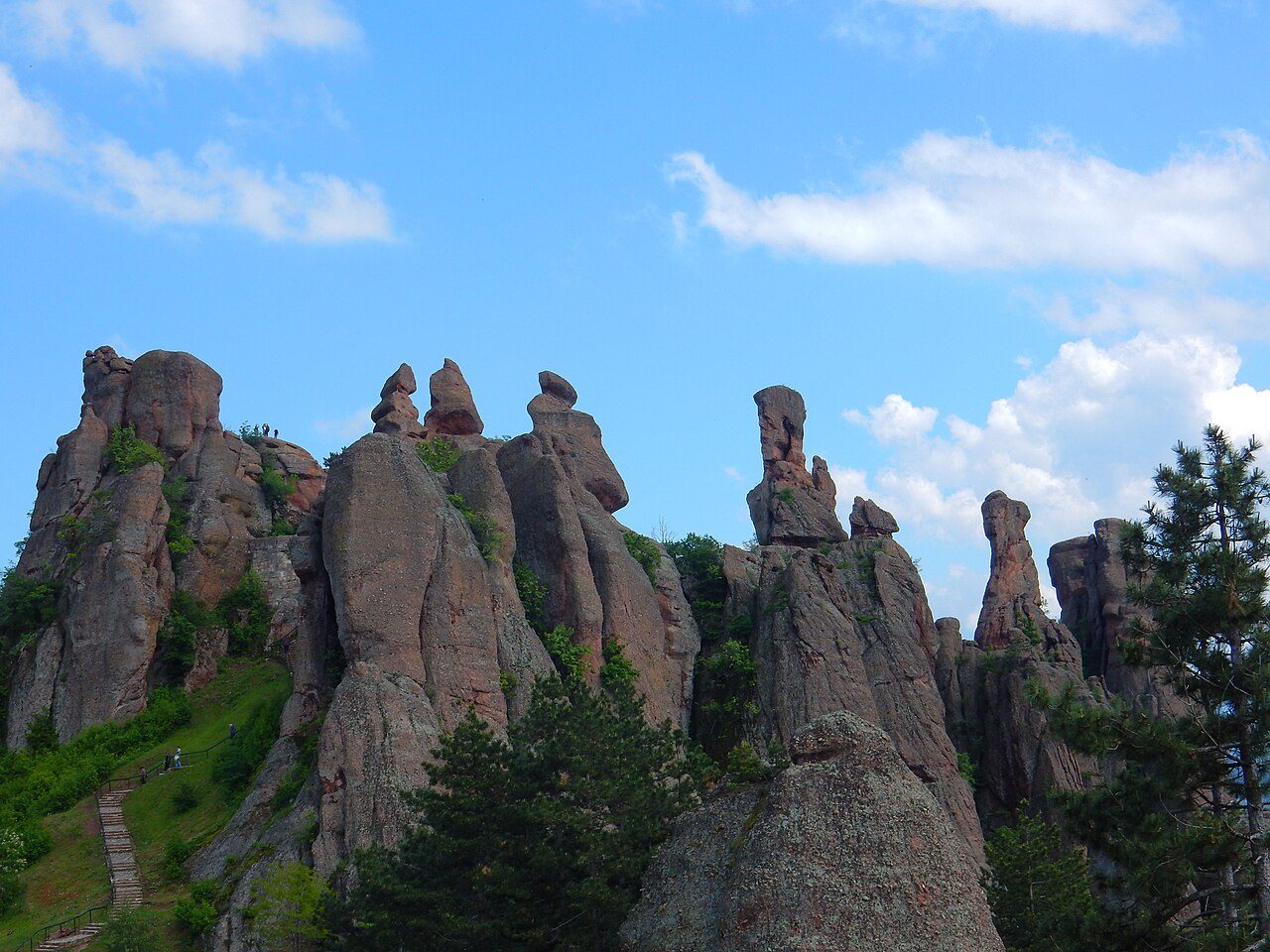
What to see in Belogradchik
Guides & drivers nearby

Photo credits (3)
- Laborec, CC BY-SA 4.0, via Wikimedia Commons
- Fonvan, CC BY-SA 4.0, via Wikimedia Commons
- Klearchos Kapoutsis, CC BY 2.0, via Wikimedia Commons