
Arequipa
Framed by the Chili River valley and flanked by the volcanic peaks of Misti, Chachani, and Pichu Pichu, Arequipa sits at an altitude of 2,325 meters in southern Peru. Walking its streets feels luminous and crisp. The historic core glows pale white under an intense high-altitude sun, built from sillar, a volcanic ignimbrite that keeps shaded courtyards cool and absorbs the shocks of frequent regional tremors. Founded in 1540 by Spanish lieutenant Garcí Manuel de Carbajal, the city carries a fierce civic pride shaped by resilient reconstruction after repeated earthquakes. Its architectural anchor is the Monasterio de Santa Catalina, an expansive sixteenth-century convent citadel painted in cobalt blue and terracotta. Across the arcaded Plaza de Armas stands the twin-towered Basilica Cathedral, while a short walk across the river leads to the Yanahuara quarter, famous for its carved sillar arches framing views of Misti. Local life centers around afternoon picanterías, traditional dining halls where patrons gather for rocoto relleno, crayfish stews, and glasses of fermented corn chicha de jora. Nearby, Mercado San Camilo fills a historic iron hall with pyramids of Andean potatoes, fresh herbs, and tropical fruits. Every August, the city erupts in celebratory parades and traditional rural bull matches for its founding anniversary. Plan your visit during the dry winter from May to October, and explore the compact colonial center entirely on foot during the morning hours.
Read more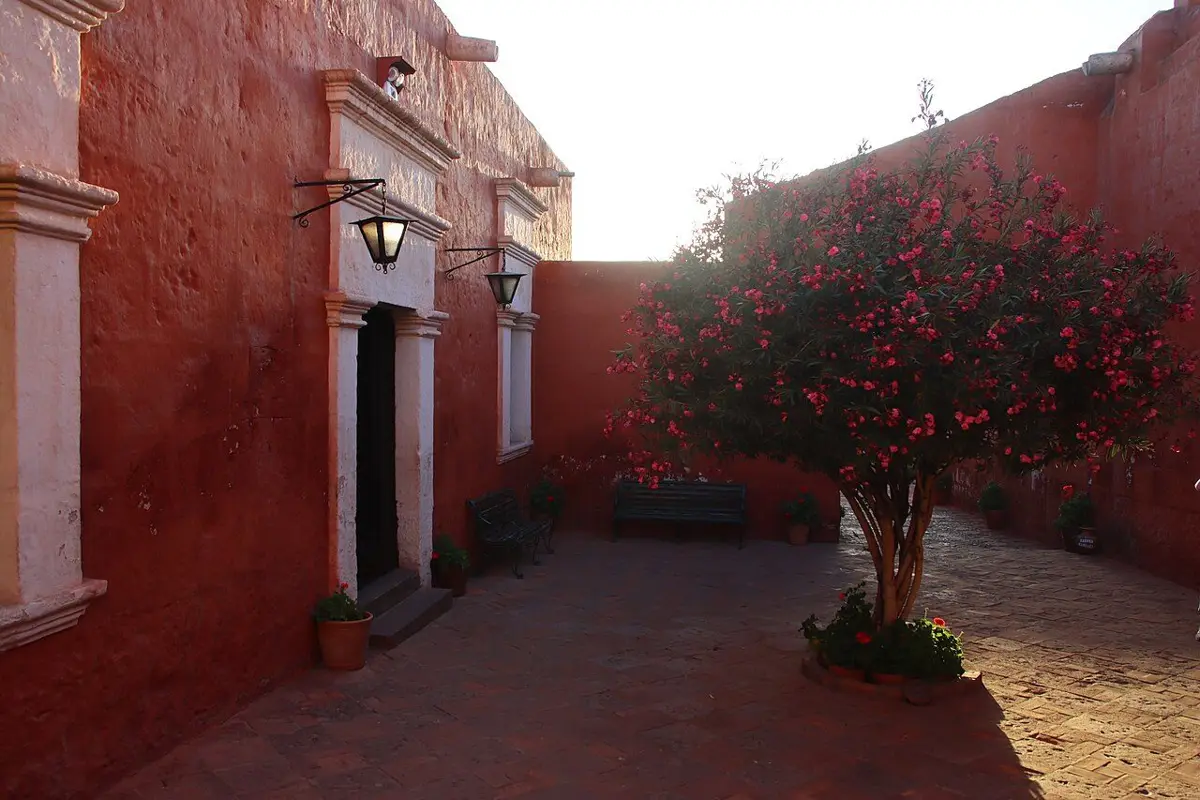
What's on in Arequipa
Champion folk dancers present a showcase of traditional Peruvian dance styles at Arequipa's historic Teatro Municipal.
Official infoEvents are collected automatically from the web. Dates can change, so please check the official information before you travel.
What to see in Arequipa
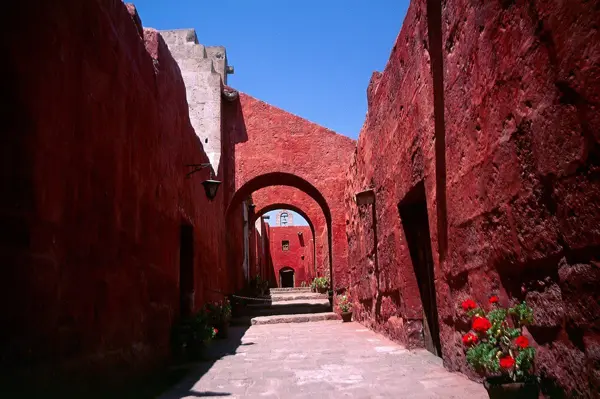
Photo credits (2)
- Draceane, CC BY-SA 4.0, via Wikimedia Commons
- Unknown author, CC BY-SA 2.5 es, via Wikimedia Commons