
Santa Catalina Monastery
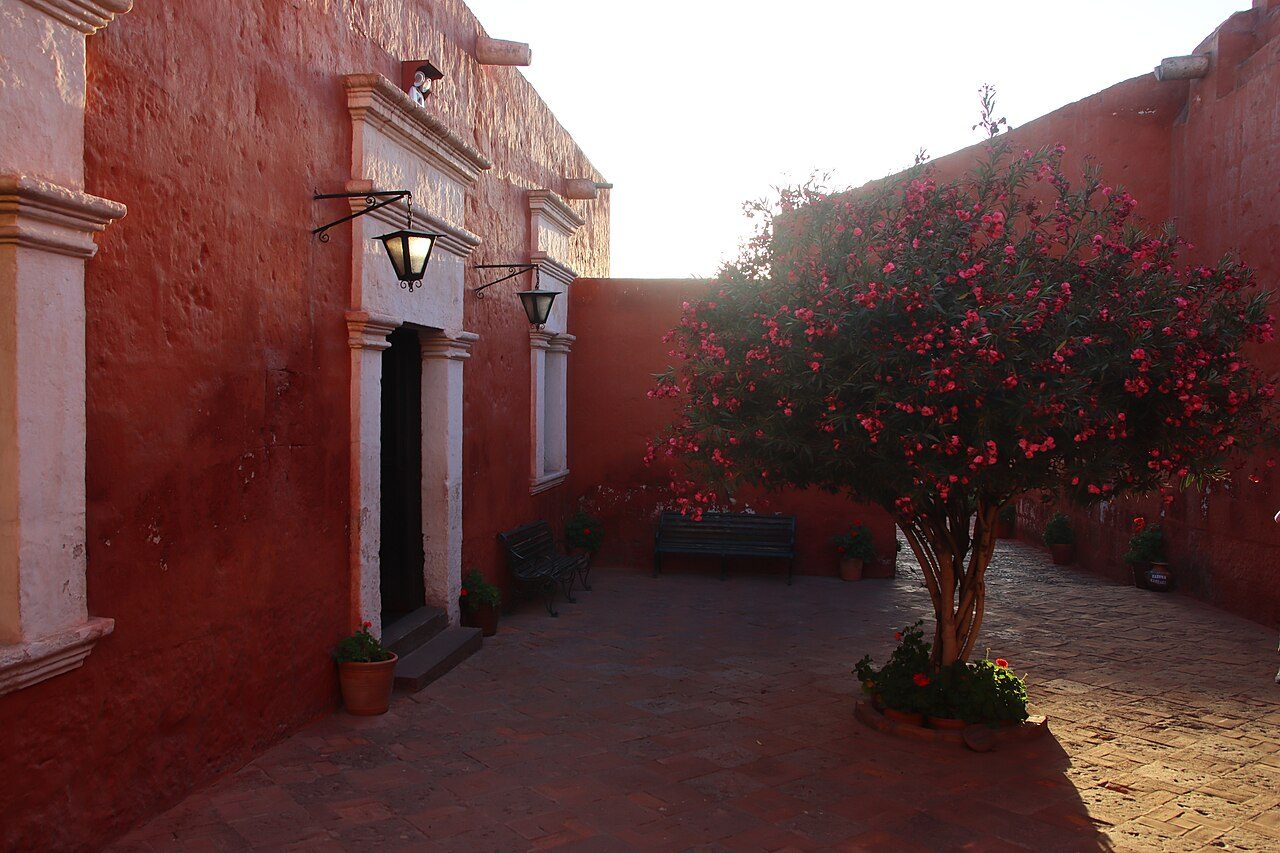
Founded in 1579 by the wealthy widow Doña María de Guzmán, the Santa Catalina Monastery sprawls as a fortified citadel carved from white volcanic *sillar* stone in the shadow of Mount Misti. Enclosed behind six-meter-high barrier walls, this 20,000-square-meter sanctuary operated for centuries as an exclusive, self-governed enclave for the second daughters of Arequipa’s wealthiest Spanish families. The complex mirrors an authentic Andalusian town, featuring private residential apartments, vaulted arcades, and cobblestone passageways christened with names like Calle Sevilla and Calle Granada. Visually, the citadel abandons monastic austerity for striking chromatic drama: luminous cobalt blue dominates the Patio del Silencio, while deep, sun-baked terracotta washes over the Cloister of San Lázaro, offset by potted geraniums and fragrant bitter orange trees. Wandering these quiet alleys, visitors step into a sequestered colonial past where whispers echo off curved sillar vaults and gilded Cusqueña school oil paintings. One discovers how the nuns lived in cloistered luxury—complete with private kitchens and domestic servants—until 1871, when the Dominican reformist Sister Josefa Cadena dissolved personal privileges in favor of strict communal vows. In the open-air communal laundry (*Lavandería*), cool water trickles down a stone canal into rows of bisected earthenware jars (*tinajas*), evoking the daily rhythms of the past. As shadows lengthen across the flagstones, the scent of cedar and aged lime hangs in the cool mountain air, leading the eye upward to the white bell tower framed against the Andean sky.
More in Arequipa
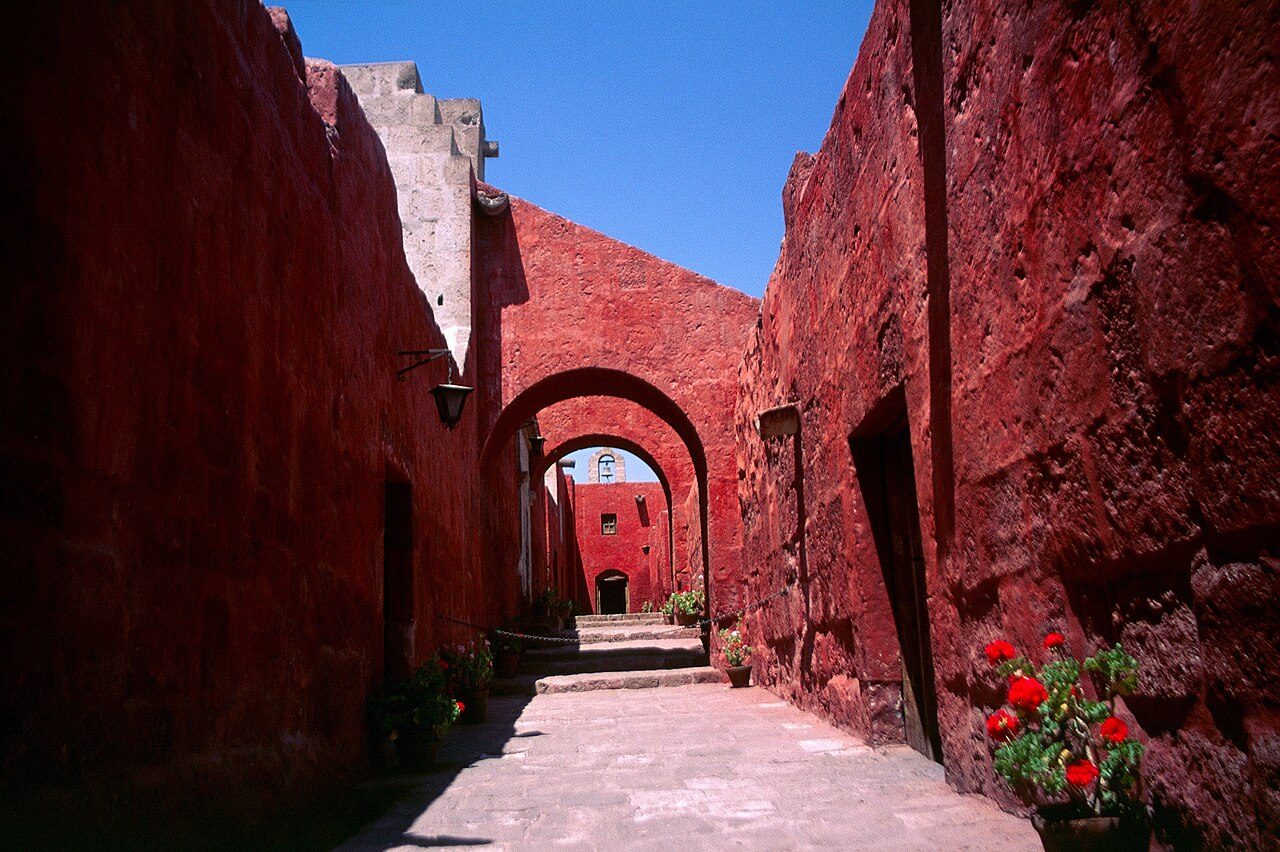
Photo credits (2)
- Draceane, CC BY-SA 4.0, via Wikimedia Commons
- Unknown author, CC BY-SA 2.5 es, via Wikimedia Commons