 New added
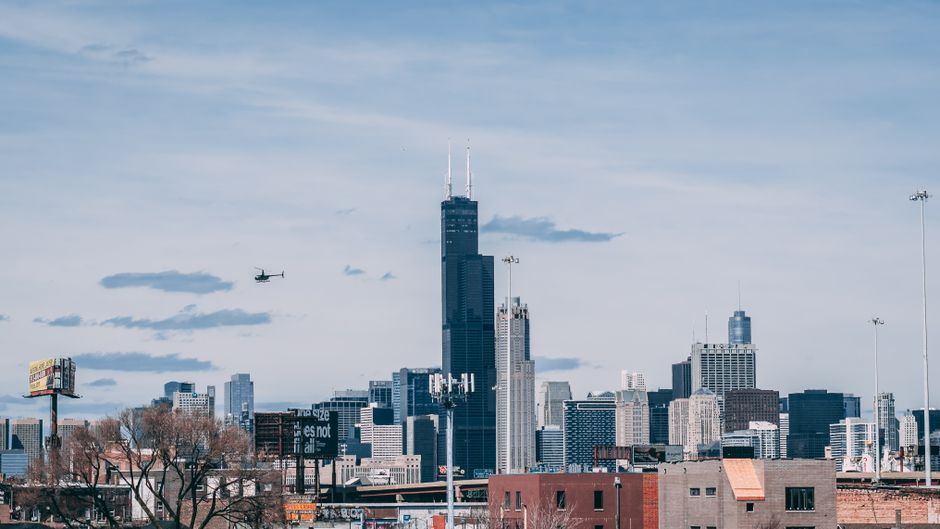
Willis Tower
Rising 1,450 feet above the Chicago street grid, this 110-story monolith redefined skyscraper engineering upon its completion in 1973. Commissioned by retail giant Sears, Roebuck & Co., architect Bruce Graham and visionary structural engineer Fazlur Rahman Khan of Skidmore, Owings & Merrill pioneered the revolutionary "bundled-tube" system to counteract brutal prairie gales. Nine interconnected steel tubes ascend together before stepping back at various intervals, culminating in a distinctive, asymmetrical silhouette. Clad in matte-black anodized aluminum and deep bronze-tinted glass, the tower held the title of the world’s tallest building for a quarter-century, standing as the definitive monument of Late Modernist structural expressionism. Inside, high-speed elevators vault passengers to the 103rd-floor Skydeck in sixty seconds flat. The defining encounter here is The Ledge: four retractable glass boxes cantilevered 4.3 feet outside the building’s western facade. Stepping onto these transparent, multi-layered panes produces an unmistakable jolt of vertigo, suspending travelers 1,353 feet in midair with nothing beneath their boots but a sheer drop to Wacker Drive’s ant-sized yellow cabs. On clear afternoons, the sweeping view stretches over fifty miles across the navy-blue expanse of Lake Michigan, capturing the distinct coastlines of Illinois, Indiana, Wisconsin, and Michigan in a single panoramic sweep.