 New added
Statue of Liberty
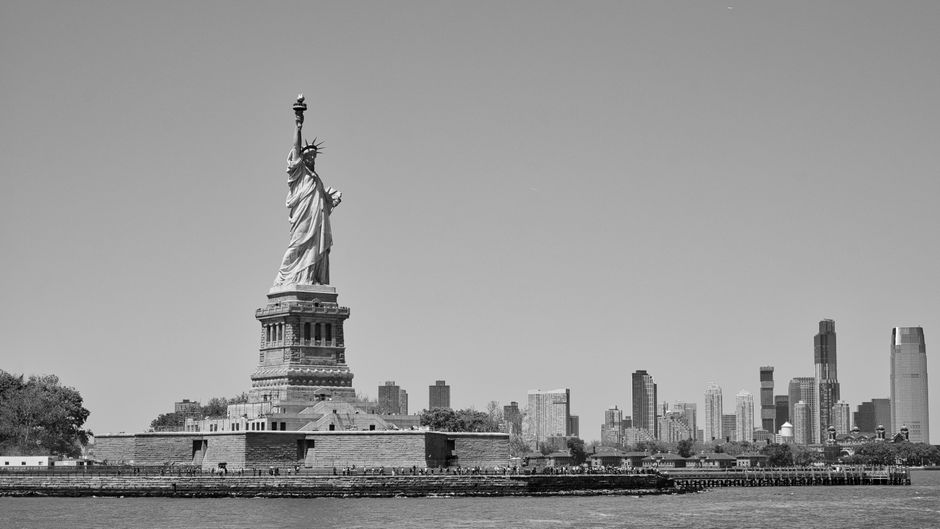
Conceived in 1865 by French jurist Édouard René de Laboulaye and sculpted by Frédéric-Auguste Bartholdi, *Liberty Enlightening the World* was officially dedicated in New York Harbor on October 28, 1886. Beneath the neoclassical monument’s sea-green verdigris exterior lies pioneering nineteenth-century engineering: Alexandre-Gustave Eiffel’s flexible wrought-iron skeletal framework, which allows the hand-hammered copper skin—measuring barely two pennies thick—to shift naturally with Atlantic gales. Rising 305 feet above the water atop the eleven-pointed granite ramparts of Fort Wood, the colossus holds a tablet inscribed with July 4, 1776, while a severed chain and shackle lie deliberately trampled beneath her robes, symbolizing the end of American slavery. Stepping off the ferry onto Liberty Island, visitors encounter a perspective that distant shoreline vistas cannot capture. Looking up from the base of Richard Morris Hunt’s stone pedestal, the monument’s monumental drapery looms overhead, revealing the individual rivets joining hundreds of repoussé plates. The brisk salt air of the harbor whips past as travelers climb the interior double-helix staircase, ascending through Eiffel’s exposed industrial ribbing into the intimate, copper-scented space of the seven-spiked crown. From its twenty-five small observation windows, you look out over the churning waters of the Upper Bay and the Manhattan skyline, viewing the historic gateway where millions of arrivals caught their first glimpse of the shore.