
 New added
Constitution Hill
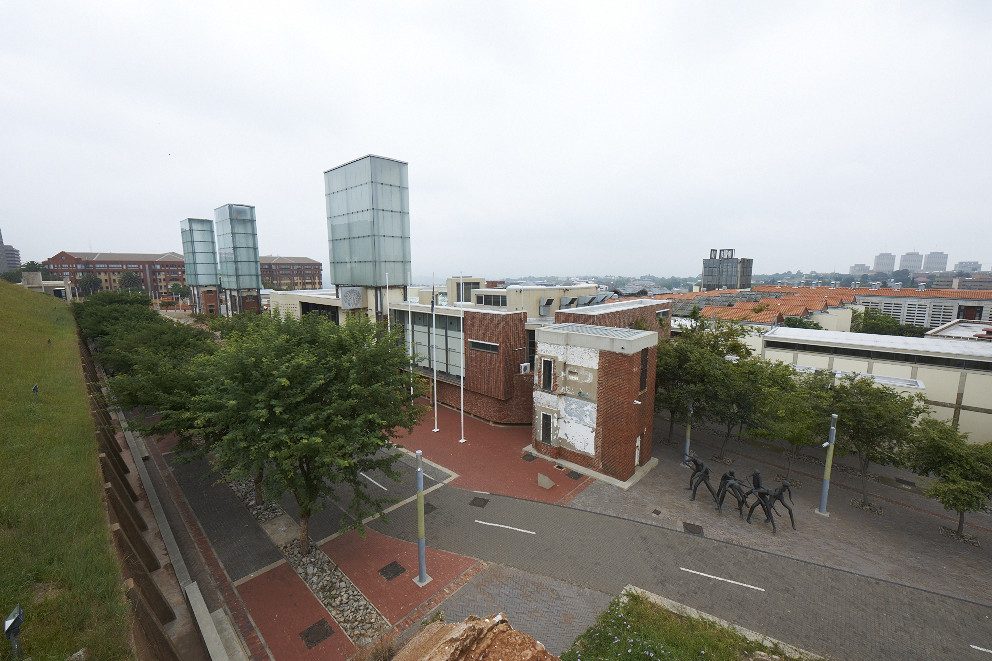
Perched above the urban expanse of Braamfontein, the scarred ramparts of the Old Fort—erected in the 1890s under Boer President Paul Kruger—anchor a complex that long served as the punitive epicenter of apartheid Johannesburg. Stepping into the damp, echo-laden corridors of the Number Four prison block, you confront the chilling reality of carceral segregation: suffocating solitary cells where both Mahatma Gandhi (1908) and Nelson Mandela (1962) were imprisoned. Nearby, the red-brick arches of the Victorian-style Women’s Jail preserve the harrowing legacy of anti-apartheid activists like Winnie Madikizela-Mandela and Albertina Sisulu, framed by austere courtyards and barbed-wire enclosures. This carceral history resolves in a striking architectural metamorphosis at South Africa’s Constitutional Court, inaugurated on human rights grounds in 2004. Salvaged red bricks from the demolished Awaiting Trial Block form the interior walls, deliberately repurposing the fabric of oppression to sustain justice. Visitors pass through colossal timber doors hand-carved with the Bill of Rights in the country’s eleven official languages to enter a luminous chamber. Slit windows set at floor level allow judges and travelers to see the feet of everyday pedestrians outside, while tree-like concrete columns and vibrant beaded chandeliers evoke an open-air gathering place. Standing here, the shift from institutionalized brutality to hard-won constitutional democracy feels viscerally immediate.
More in Johannesburg

Photo credits (4)
- ConstHill, CC BY-SA 3.0, via Wikimedia Commons
- Nolween, CC BY-SA 3.0, via Wikimedia Commons
- Diego Delso, CC BY-SA 4.0, via Wikimedia Commons
- User:Katangais, CC BY-SA 3.0, via Wikimedia Commons