 New added
Myeongdong
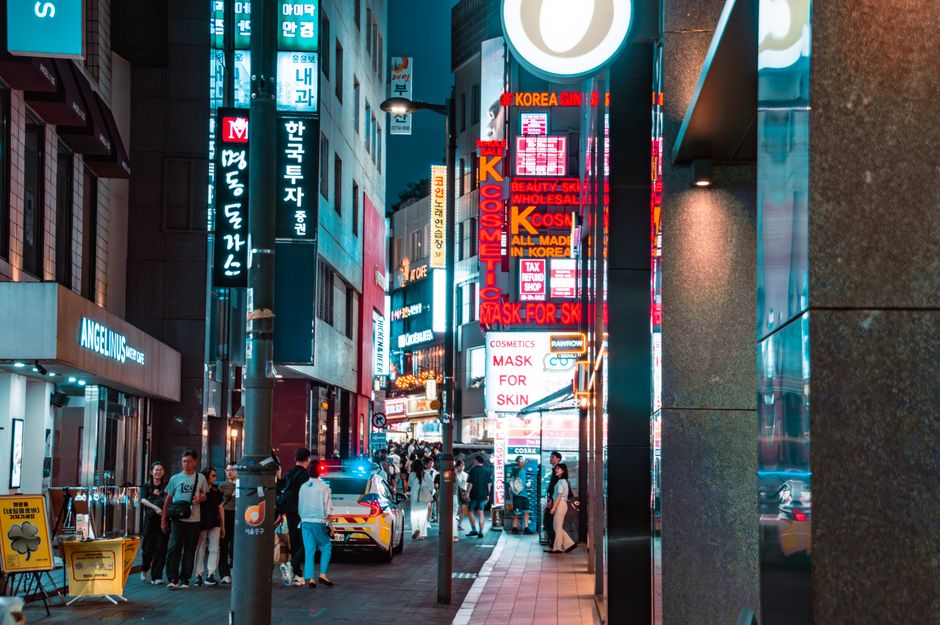
Once designated as the Japanese colonial commercial enclave of Honmachi and earlier home to Joseon-era scholars, Myeongdong balances hyper-capitalism with a poignant legacy of political defiance. Dominating the district’s eastern knoll is Myeongdong Cathedral, consecrated in 1898 under French priest Eugène Coste. A masterpiece of Korean Gothic Revival design, the basilica showcases an unplastered facade constructed from twenty varieties of locally fired red and gray bricks, anchored by a 45-meter bell tower. Beneath its rib-vaulted ceilings, this sanctuary sheltered student dissidents and labor activists during the 1987 June Democracy Movement, forever cementing the neighborhood as the crucible of modern Korean civil liberties. Stepping down from the cathedral’s quiet stone esplanade, visitors plunge into a dense grid of pedestrian corridors illuminated by towering LED facades and mirrored cosmetic flagships. The evening air grows thick with charcoal smoke and sweet butter, carrying the aromas of butane-torched lobster tails, sizzling hotteok, and golden gyeran-bbang baking in cast-iron molds. Polyglot barkers call out above the din, distributing snail-essence face masks beneath blinding pink and chrome neon signs. Between the relentless push of shoppers on polished paving stones and the savory hiss of street-cart griddles, the neighborhood envelops travelers in an electric sensory blitz, shadowed always by the solemn copper spire watching from the ridge above.