
 New added
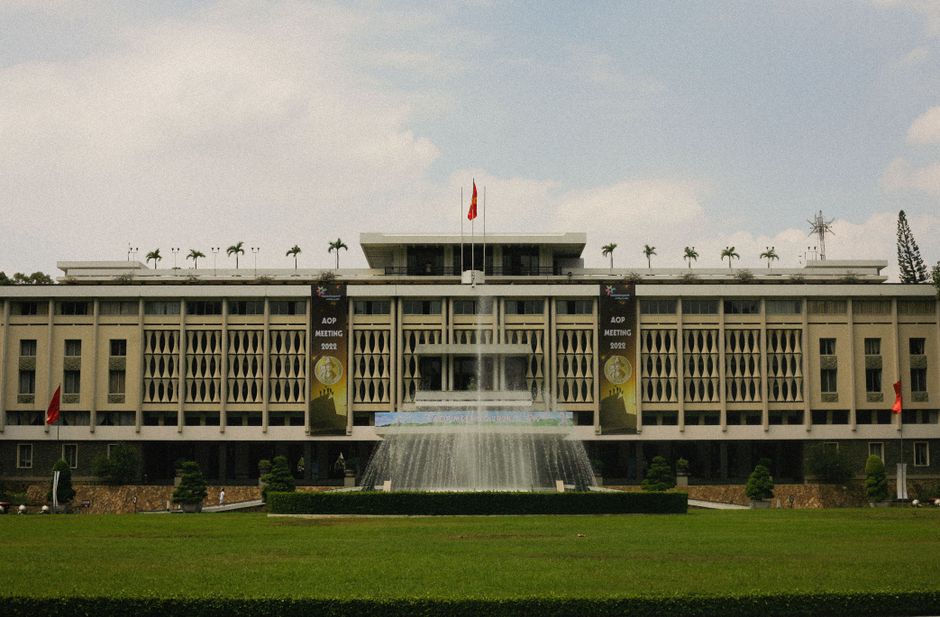
Independence Palace
Framed by manicured lawns where North Vietnamese Tank 390 famously breached the iron gates on April 30, 1975, the Independence Palace stands as a pristine monument to Mid-Century Modernism infused with traditional geomancy. Designed by Rome Prize-winning architect Ngô Viết Thụ and completed in 1966, the facade mirrors the Chinese character *Cát* (good fortune), shielded by precast concrete louvers sculpted to resemble slender bamboo joints. Inside, over one hundred staterooms unfold in a showcase of 1960s political grandeur, boasting crimson-carpeted banquet halls, monumental lacquer artworks, and diplomatic reception suites illuminated by geometric crystal chandeliers. Ascending to the breezy rooftop helipad, visitors spot red target circles marking the exact bomb impact sites from an April 1975 mutiny against President Nguyễn Văn Thiệu. The sensory transition is startling when descending from these sunlit verandas down into the blast-proof subterranean bunker. Deep within this reinforced labyrinth, the oppressive stillness is broken only by the hum of vintage air systems. Travelers walk past heavy steel blast doors into claustrophobic combat command centers, where yellowing troop-movement maps remain pinned to the walls alongside green rotary telephones and American-made telecommunications gear frozen in the final hours of the Vietnam War.
More in Ho Chi Minh City
Photo credits (1)
- Steffen Schmitz ( more photos ), CC BY-SA 4.0, via Wikimedia Commons