 New added
Fort Aguada
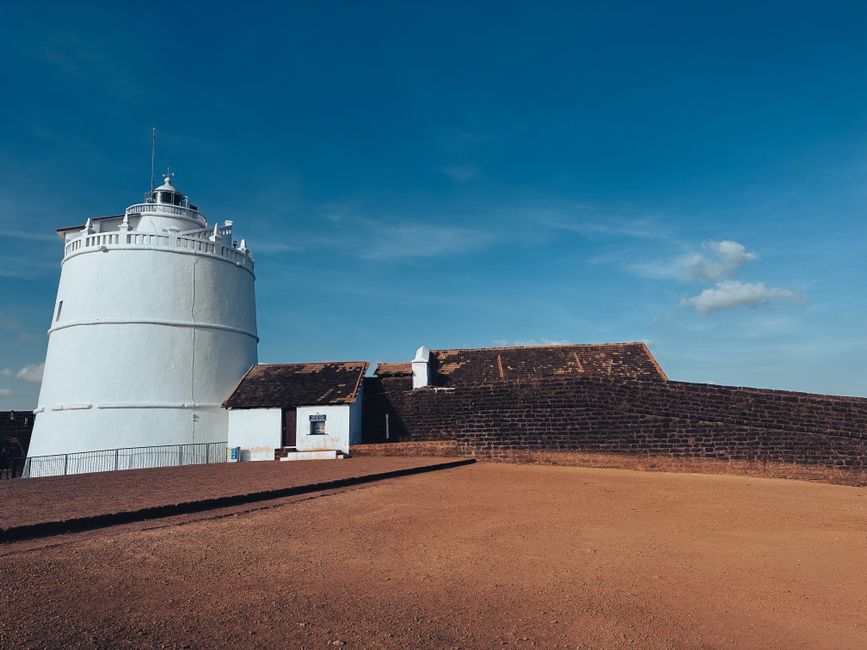
Erected in 1612 under the directive of Portuguese Viceroy Rui Lourenço de Távora, Fort Aguada crowns the rocky headland where the Mandovi River collides with the Arabian Sea. Constructed to thwart naval incursions by the Dutch fleet and Maratha forces, this formidable stronghold was engineered entirely from deep-crimson laterite stone. Its name—derived from *água*, the Portuguese word for water—harks back to the fortress's central marvel: a massive, barrel-vaulted subterranean cistern holding over two million gallons of fresh spring water, strategically designed to replenish passing transoceanic galleons. Climbing through the citadel today, visitors step onto sweeping, sun-scorched ramparts pierced by embrasures that once seated 79 heavy artillery cannons. Dominating the upper courtyard stands a cylindrical, four-tiered lighthouse built in 1864, one of the earliest navigation beacons of its kind in Asia. The sensory experience is dominated by the relentless ocean wind and the textured grip of weathered stone underfoot. From the high gun platforms, travelers look down at waves thrashing against the rocky bluffs below, taking in panoramic vistas that stretch from the golden sands of Sinquerim Beach all the way to the distant headlands of the Mormugao peninsula.