 New added
Mount Qingcheng
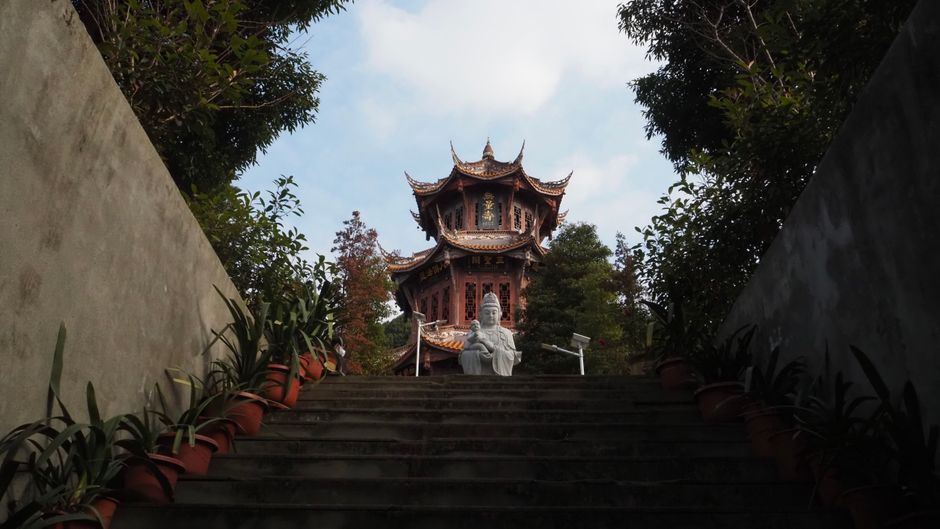
In 142 CE, hermit philosopher Zhang Daoling retreated into these secluded, mist-shrouded slopes to establish the Way of the Celestial Masters, permanently sanctifying Mount Qingcheng as the cradle of religious Daoism. Guided by the principle of non-action and harmony with nature, the mountain’s sacred architecture deliberately dissolves into the landscape rather than conquering it. Complexes like Tianshi Cave and Jianfu Palace eschew imperial ostentation for rustic craftsmanship, showcasing pavilions framed in twisted, unpeeled timber, raw cedar bark eaves, and muted moss-green glazed tiles. Within these secluded courtyards, ancient stone steles bearing calligraphic inscriptions stand in the shadow of a legendary 1,800-year-old ginkgo tree said to have been planted by Zhang himself. Ascending the slick, fern-bordered flagstone steps of the Front Mountain, travelers plunge into an atmosphere perpetually damp with mountain drizzle and cool fog. The air smells intensely of damp earth, wild laurel, and smoldering sandalwood incense drifting from open-air shrines. Thick groves of weeping bamboo and ancient nanmu trees muffle the world, broken only by the trickle of hidden mountain springs and the periodic, resonant chime of bronze temple bells. Reaching the multi-tiered Laojun Pavilion near the summit, hikers step out from the dense forest to witness the sea of clouds parting over thirty-six emerald peaks, experiencing the profound, meditative stillness that has drawn hermits and scholars here for nearly two millennia.