 New added
Great Wall
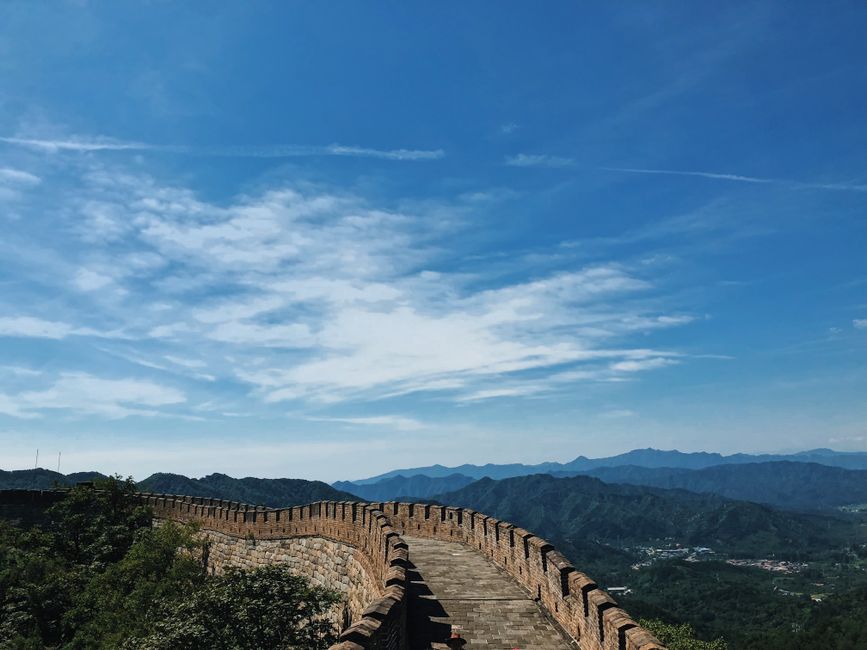
Snaking across the jagged ridgelines of the Yan Mountains north of Beijing, the Great Wall reached its architectural zenith during the Ming dynasty under the direction of 16th-century commanders like General Qi Jiguang. Rather than a singular rampart, the fortifications around Beijing—exemplified by the restored parapets of Mutianyu and the rugged masonry of Simatai—feature defensive systems built from quarried granite slabs and kiln-fired gray bricks bound with sticky-rice mortar. Every few hundred paces, multi-tiered watchtowers puncture the skyline, engineered with vaulted stone ceilings, narrow arrow slits, and elevated embrasures. Beacon terraces crown the highest promontories, where garrisons once ignited dried wolf dung to send smoke signals racing across imperial frontiers at the first sign of northern cavalry. Ascending these battlements, travelers confront the punishing verticality of the terrain, where uneven stone steps tilt at dizzying forty-five-degree angles along sheer cliff edges. The tactile bite of cold mountain wind cuts across the ramparts, carrying the scent of wild pine and dry scrub from the valleys far below. Standing in the shadow of a stone watchtower, visitors trace the endless, sinuous ribbon of gray stone undulating over razor-thin crests until it dissolves into the distant haze, offering an intimate, visceral encounter with the colossal scale of Ming military engineering.