 New added
Dotonbori
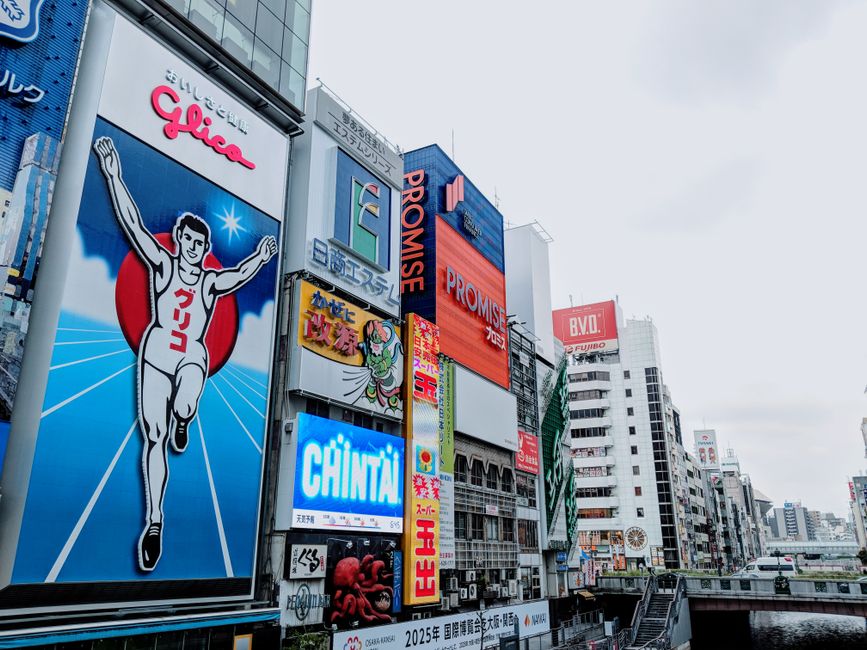
Carved through the heart of Minami in 1612 by merchant Yasui Dōton, who poured his personal fortune into linking the Umezu and Kizugawa rivers, this historic canal was completed in 1615 following the devastation of the Siege of Osaka. By 1626, the Tokugawa shogunate transformed its southern bank into the empire's premier theatrical precinct, anchoring five major bunraku puppet stages and six kabuki playhouses. Today, that Edo-period theatricality survives in towering, kinetic commercial installations lining the water. Anchoring the skyline above Ebisu Bridge is the Glico Running Man—first erected in 1935—flanked by the mechanical, six-meter-wide red fiberglass crustacean of Kani Doraku and the canary-yellow, oval-tracked Ferris wheel bolted to the facade of Don Quijote. Standing on the wooden boards of the Tombori River Walk at dusk, visitors are plunged into a sensory tempest fueled by Osaka’s ethos of *kuidaore* ("eat until you drop"). The dark canal water churns with vivid reflections of cobalt, crimson, and amber neon as open-top tour barges slice through the glare. Dense plumes of savory steam carry the sharp aromas of bubbling dashi, crispy takoyaki batter crisped on dimpled iron griddles, and skewers of golden kushikatsu plunging into vats of tare. Between the metallic clatter of spatulas and the relentless murmur of surging crowds, the district pulses with unyielding, electric vitality.