 New added
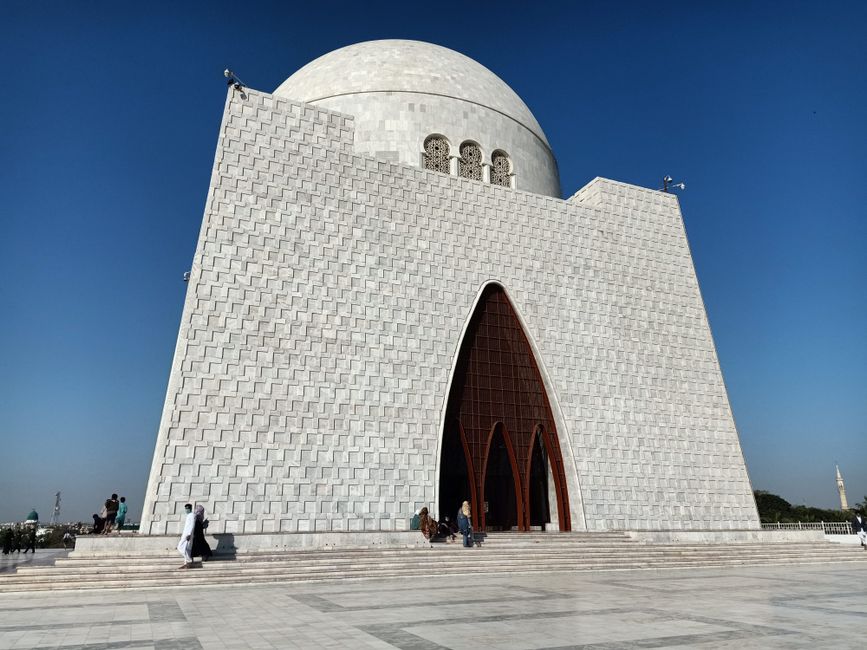
Quaid-e-Azam Mausoleum
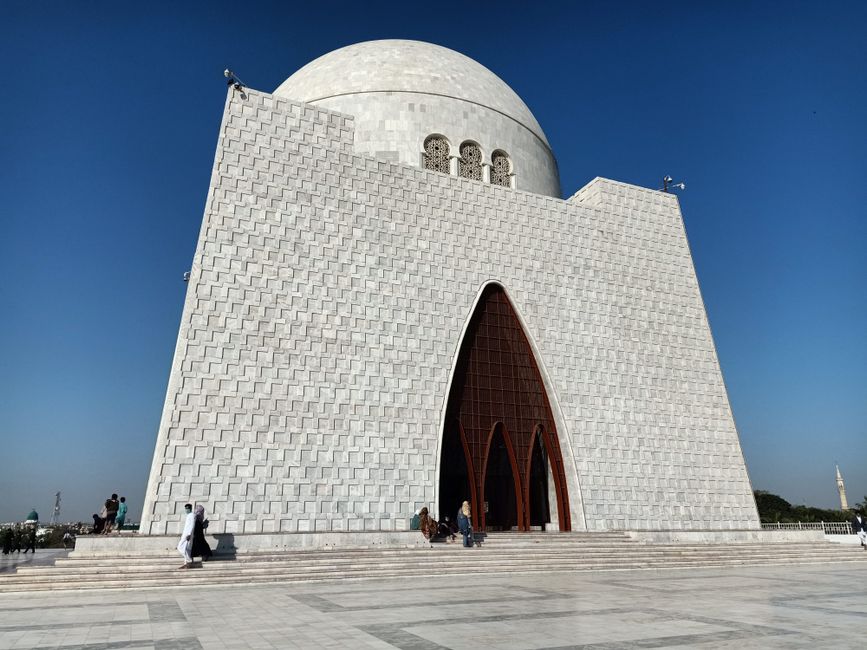
Dominating the Karachi skyline from an elevated plateau, the tomb of Pakistan's founding father, Muhammad Ali Jinnah, stands as a triumph of modernist Islamic architecture and austere restraint. Designed by architect Yahya Merchant and completed in 1970, the monumental structure—known as Mazar-e-Quaid—rises as a tapered cube of pure white Makrana marble crowned by a massive, 26-meter-high semicircular dome. Merchant drew philosophical inspiration from the 10th-century Samanid Mausoleum in Bukhara, deliberate in eschewing traditional ornate surface motifs in favor of clean geometric lines, imposing pointed-arch portals, and monolithic white stone that catches the intense coastal glare. Ascending the terraced granite plinth, visitors shed their shoes to step from Karachi’s bustling urban heat into the sanctuary's vast, cool silence. Inside the octagonal chamber, acoustic whispers drift beneath a magnificent four-tiered, 23-meter chandelier crafted with emerald-tinted crystal pendants—a historic diplomatic gift from the People's Republic of China. Beneath its soft luminescence sits Jinnah’s polished sarcophagus, enclosed within an intricate silver-plated filigree screen. Outside, fifteen cascading fountains bisect lush, 53-hectare formal gardens, where spectators gather to witness the sharp, rhythmic footfalls of the ceremonial changing of the guard, performed with drill-precision by immaculate cadets beneath the fluttering national standard.