 New added
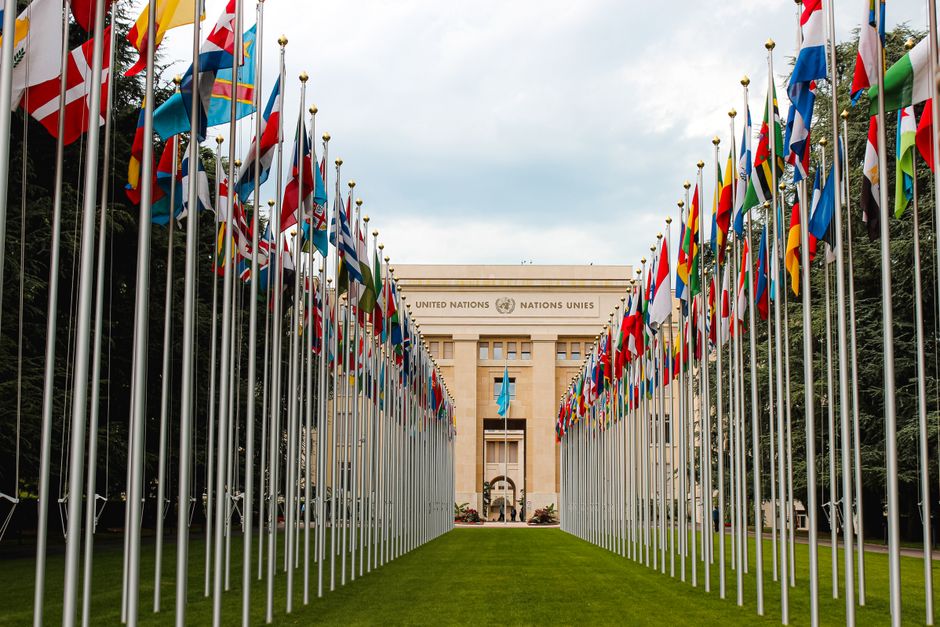
United Nations HQ
Commissioned between 1929 and 1938 to house the ill-fated League of Nations, Geneva’s Palais des Nations stands as a monumental exercise in stripped-down Neoclassicism and interwar Art Deco. Before entering, visitors cross the sunlit expanse of Place des Nations, confronting Swiss artist Daniel Berset’s towering *Broken Chair* sculpture—a poignant memorial against landmines—before gazing down the iconic Allée des Nations, where 193 sovereign flags ripple in strict alphabetical unison. The vast limestone complex commands the 46-hectare Ariana Park, an idyllic sloping estate bequeathed by collector Gustave Revilliod with the stipulation that resident peacocks always roam its lawns and views across Lake Geneva toward the distant snowcapped Alps remain forever unobstructed. Beyond the secure perimeter, the hushed, marble-clad corridors transport travelers directly into the operational heart of global diplomacy. In the grand Assembly Hall, rows of polished desks and simultaneous translation booths conjure the high-stakes negotiations of the mid-twentieth century, but the visual climax awaits in the Human Rights and Alliance of Civilizations Room (Room XX). Here, visitors inevitably crane their necks beneath Spanish artist Miquel Barceló’s spectacular ceiling: an undulating, 1,500-square-meter cavern of 35 tons of paint forming thousands of multi-hued stalactites that seem ready to drop into the chamber below. It is a rare environment where high geopolitical gravity meets audacious contemporary art, leaving an enduring impression of humanity's fragile, collective ambition.