 New added
Grossmünster
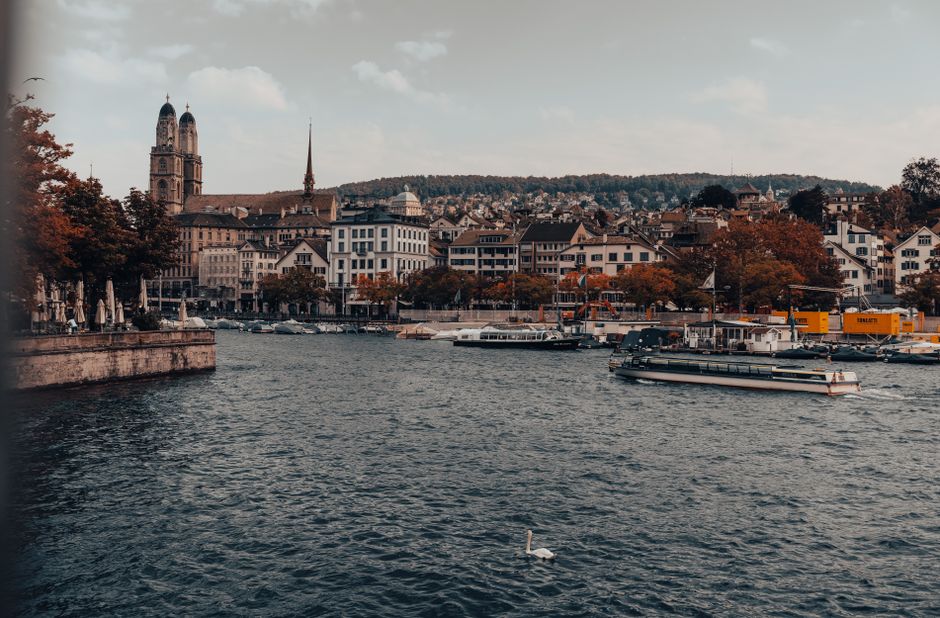
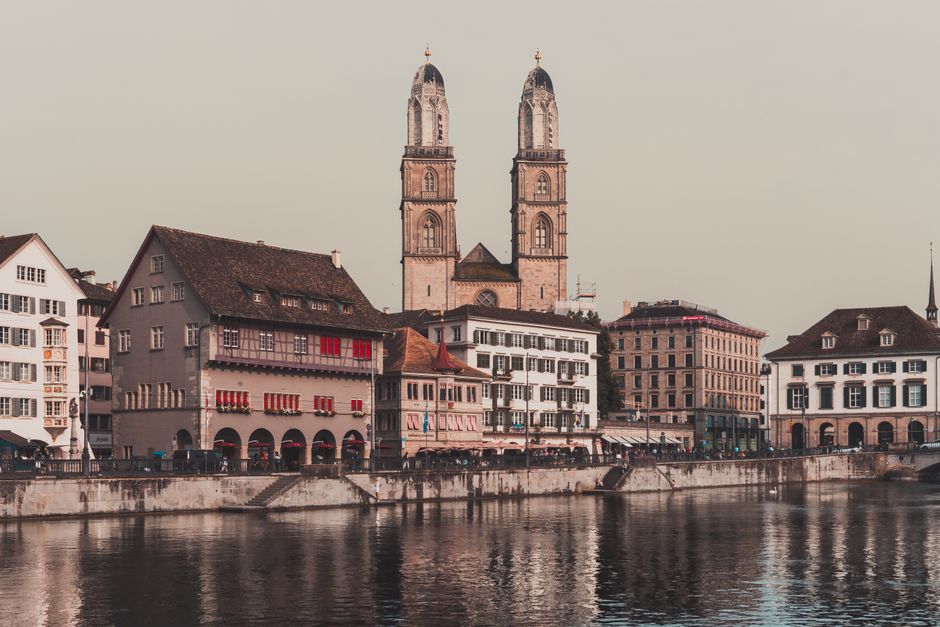
Crowning an ancient terrace above the Limmat River, the Grossmünster’s twin sandstone towers anchor Zurich with severe, Romanesque authority. Legend attributes its construction—commenced around 1100—to Charlemagne, who supposedly stumbled upon the burial site of the city’s patron saints, Felix and Regula. In the 1520s, the cathedral transformed into the crucible of the Swiss Reformation under Huldrych Zwingli, whose iconoclastic fury stripped the basilica of its Catholic ornamentation. Down in the dim, barrel-vaulted crypt, Zurich’s oldest preserved interior, travelers encounter a massive 15th-century stone sculpture of Charlemagne himself, resting stoically with a golden crown and an unsheathed sword laid across his lap. Crossing the threshold into the nave reveals an austere hall whose soaring arches celebrate Protestant restraint, yet modern artistic masterstrokes prevent it from feeling barren. Sunlight filters through Sigmar Polke’s luminous stained-glass windows—crafted from paper-thin cross-sections of natural agate—casting kaleidoscopic ribbons of amber, emerald, and violet onto the pale stonework. The defining moment of any visit lies up the 187 spiral steps of the southern Karlsturm tower. Emerging onto the breezy, stone-arched observation platform, visitors look down upon the glittering Limmat, the mirrored spire of Fraumünster across the water, and the distant, jagged peaks of the snow-crested Glarus Alps framing the horizon.