 New added
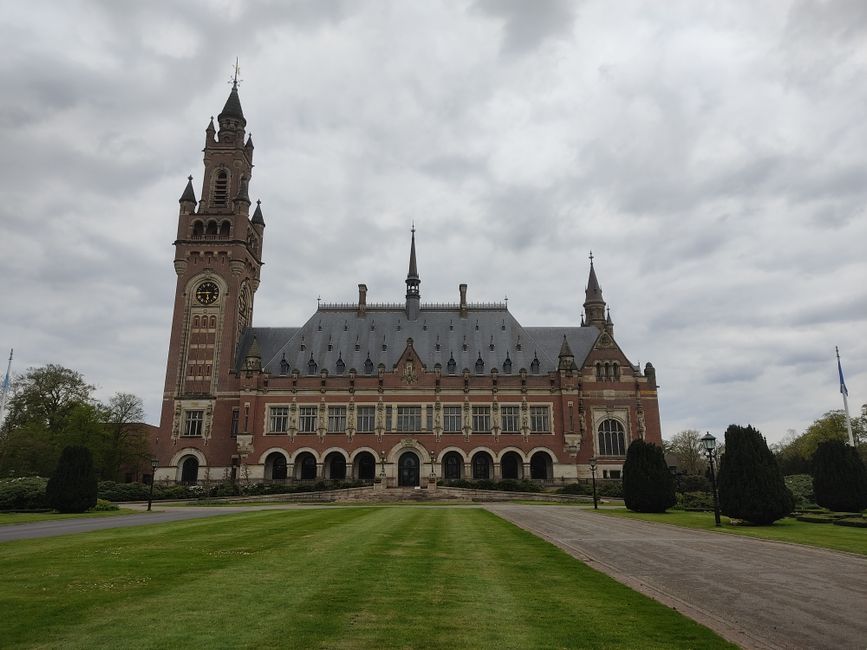
Peace Palace
Born from the idealistic fervor of the 1899 First Hague Peace Conference and realized through a 1.5-million-dollar gift from industrialist Andrew Carnegie, the Peace Palace opened its doors in 1913 as humanity’s preeminent temple to global dispute resolution. French architect Louis Cordonnier rendered the complex in magnificent Neo-Renaissance style, balancing stern Northern European brickwork and granite detailing with an imposing 80-meter clock tower topped by a steeply pitched slate roof. Designed as a physical embodiment of international cooperation, sovereign nations contributed lavish finishing materials: Imperial Russia provided a monumental green jasper urn, Japan dispatched hand-woven silk tapestries depicting mythological peacocks for the Council Chamber, and Germany forged the ornate wrought-iron gates that guard the forecourt. Approaching from Carnegieplein, visitors encounter the flickering World Peace Flame, surrounded by a border of stones harvested from 197 nations, before taking in the palace’s sweeping frontage framed by Thomas Mawson’s classical English-style gardens. The crisp air often carries the resonant melody of the 47-bell carillon echoing across manicured rose beds and quiet reflecting pools, momentarily breaking the hushed solemnity that envelops the working seat of the International Court of Justice. Gazing up at the Great Hall of Justice’s arched stained-glass windows, travelers feel the arresting weight of history—a tangible, architectural reminder of early twentieth-century aspirations to banish war through law.