 New added
Monserrate Palace
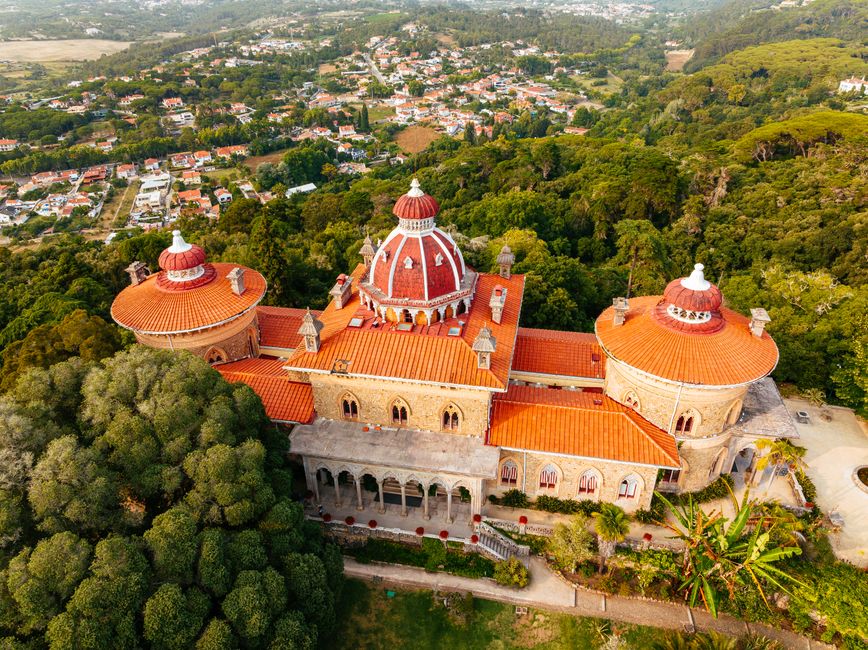
Tucked within the mist-draped folds of the Sintra hills, Monserrate Palace stands as nineteenth-century Romantic eclecticism at its most decadent. Initially immortalized by Lord Byron in his 1812 poem *Childe Harold’s Pilgrimage*, the estate reached its architectural zenith in 1858 when English textile magnate Sir Francis Cook commissioned architect James Knowles Jr. to erect a summer retreat. Knowles engineered an Orientalist dreamscape, crowning the sand-hued villa with circular terracotta domes inspired by Florence’s Duomo and Mughal tombs. Slender columns, Gothic trefoils, and intricate neo-Moorish arabesques wrap the exterior, creating an Andalusian pavilion transplanted into the Atlantic mountains. Stepping inside, travelers are drawn down a luminous central gallery where pierced plaster filigree filters the afternoon sun into shifting, lace-like patterns across pale marble floors. The air remains cool and still, scented with the cedar and damp earth drifting from the surrounding 33-hectare botanical park. Outside the music room—famed for its near-flawless acoustics—sweeping stone arches frame vistas of giant Mexican agaves, Himalayan rhododendrons, and ancient Australian tree ferns. Far removed from Sintra’s more crowded royal residences, standing on Monserrate’s lawn offers an intimate, tranquil encounter with a Victorian collector’s sun-dappled fantasy.