 New added
Jerónimos Monastery
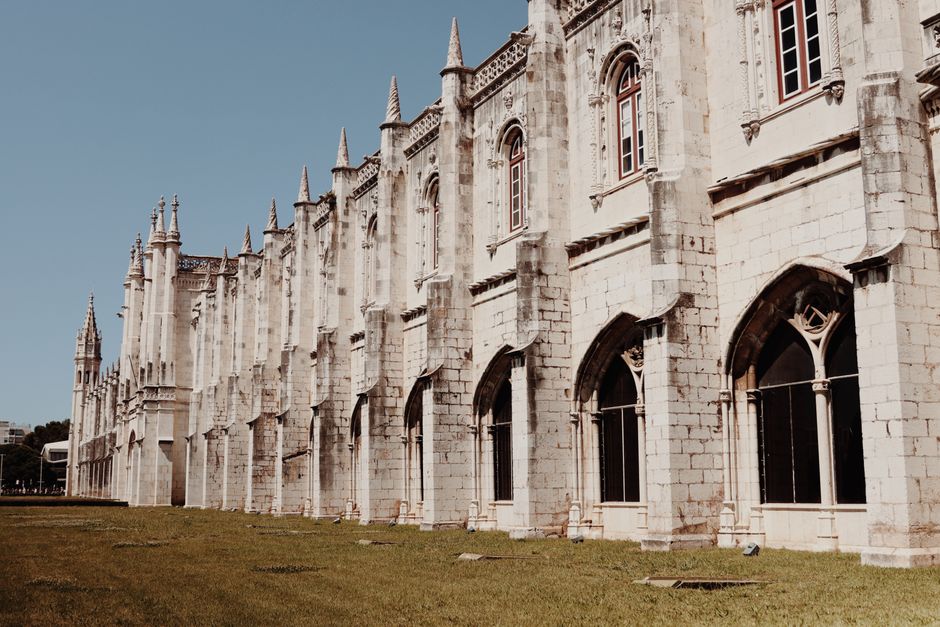
Rising in gleaming honey-hued *lioz* limestone along Lisbon's Belém waterfront, the Mosteiro dos Jerónimos stands as the supreme monument to Portugal’s Age of Discovery. Commissioned by King Manuel I in 1501 and financed by the lucrative "pepper tax" on maritime spice routes, this masterpiece of Manueline architecture fuses flamboyant Late Gothic drama with oceanic symbolism. Stepping through the towering South Portal—flanked by intricate stone statues of Henry the Navigator and the Apostles—visitors enter the cool, cavernous interior of the Church of Santa Maria de Belém. Here, slender octagonal pillars branch outward like petrified palm trees to support an audacious rib-vaulted ceiling. In the quiet nave, travelers encounter the carved stone catafalques of explorer Vasco da Gama and epic poet Luís de Camões, resting beneath canopies of meticulously chiseled lace. The emotional heart of the monastery awaits in its celebrated two-tiered cloister, completed by master mason João de Castilho. Sunlight pours through scalloped double-arches, casting geometric shadows across creamy pavement and illuminating walls carved with maritime fantasies: coiled nautical cables, armillary spheres, sea monsters, and exotic flora brought back from the Indian Ocean. Walking the silent stone galleries, visitors feel the immense ambition of a seafaring empire frozen in rock, where the boundary between religious devotion and global exploration permanently dissolves.