 New added
John Rylands Library
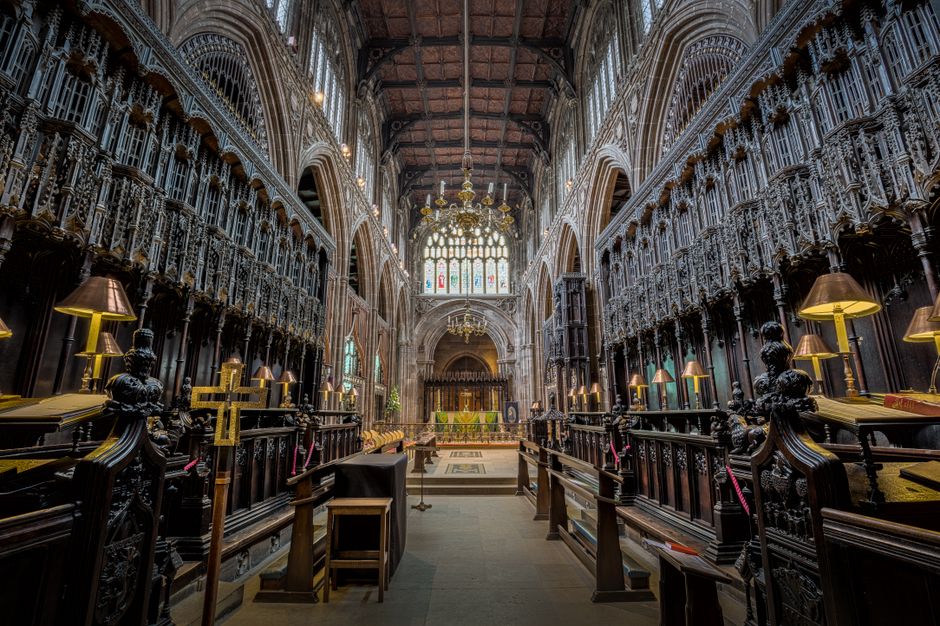
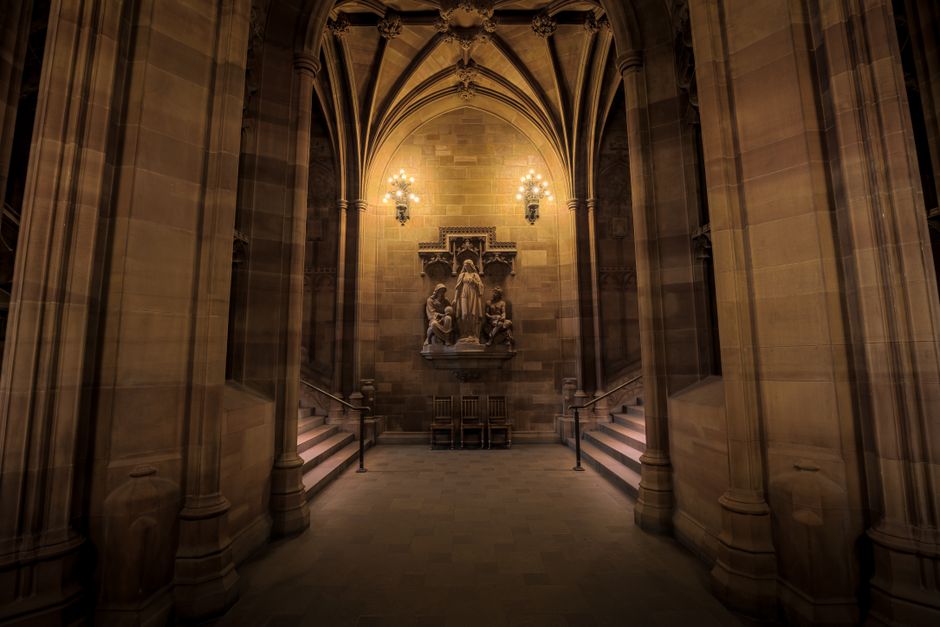
Commissioned in 1890 by philanthropist Enriqueta Rylands in memory of her late industrialist husband, this secular cathedral took a decade of painstaking craftsmanship to complete before opening on New Year's Day 1900. Architect Basil Champneys championed a lavish late Victorian Neo-Gothic style, cladding the exterior in dusky rose Cumbrian sandstone specifically chosen to endure the sulfurous soot of industrial Manchester. Stepping through the heavy entrance off bustling Deansgate, travelers trade the roar of the modern city for an ecclesiastical hush, moving through low-lit, groin-vaulted stone corridors accented by art-nouveau brass fittings, pointed archways, and delicate hand-chiseled flora. The journey culminates inside the Historic Reading Room, a breathtaking space structured like the nave of a Gothic church. Sunlight filters through dramatic stained-glass lancets, illuminating two tiers of gallery alcoves paneled in rich Polish oak, while stone tierceron vaults soar thirty feet overhead. The air carries the distinct scent of beeswax and centuries-old binding. Travelers standing between the marble statues of Enriqueta and John Rylands experience an intimate reverence, peering into climate-controlled vitrines that showcase world-defining relics, including a 1455 Gutenberg Bible and the St John Fragment (Papyrus P52)—the earliest known surviving text of the canonical New Testament.