
 New added
Madain Saleh
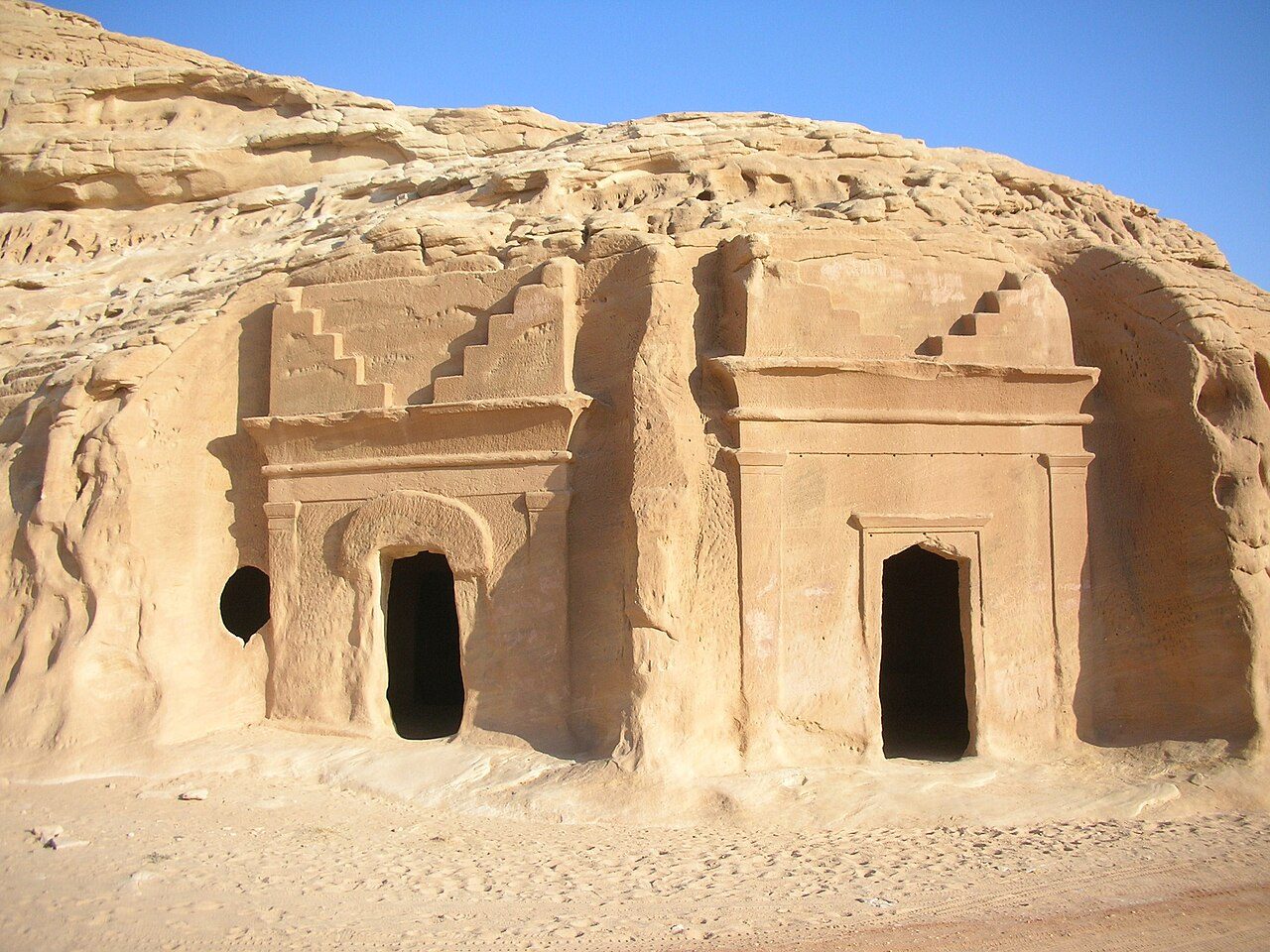
Rising from the wind-scoured plains of AlUla, Hegra—historically known as Madain Saleh—flourished in the 1st century CE as the lucrative southern capital of the Nabataean Kingdom. Across this arid basin, ancient stonemasons chiseled 111 monumental tomb facades directly into freestanding golden-sandstone massifs under the reign of monarchs like King Aretas IV. The architecture reveals an extraordinary crossroads of antiquity, fusing Greco-Roman triangular pediments and Corinthian-style pilasters with Egyptian winged sun disks and Mesopotamian stepped merlons. The most arresting monument, the four-story-tall Qasr al-Farid ("The Lonely Castle"), stands completely isolated, its unfinished base offering a rare glimpse into the top-down carving techniques employed by artisans two millennia ago. Approaching these monolithic necropolises, travelers are enveloped by a profound desert stillness, punctuated only by the whistle of dry winds sweeping across the canyon floor. Standing before the imposing entryways, visitors can gaze up at weathered bas-reliefs of guardian eagles and coiled serpents, alongside crisply chiseled Nabataean inscriptions that explicitly threaten tomb violators with the wrath of the supreme god Dushara. As the late afternoon sun dips beneath the horizon, the porous sandstone shifts from dusty amber to a deep, incandescent copper, casting dramatic shadows that make the ancient burial chambers appear alive against the sweeping desert sands.
More in AlUla
Photo credits (3)
- Véronique Dauge, CC BY-SA 3.0 igo, via Wikimedia Commons
- Richard Mortel, CC BY 2.0, via Wikimedia Commons
- Richard Mortel, CC BY 2.0, via Wikimedia Commons