
 New added
Osh Bazaar
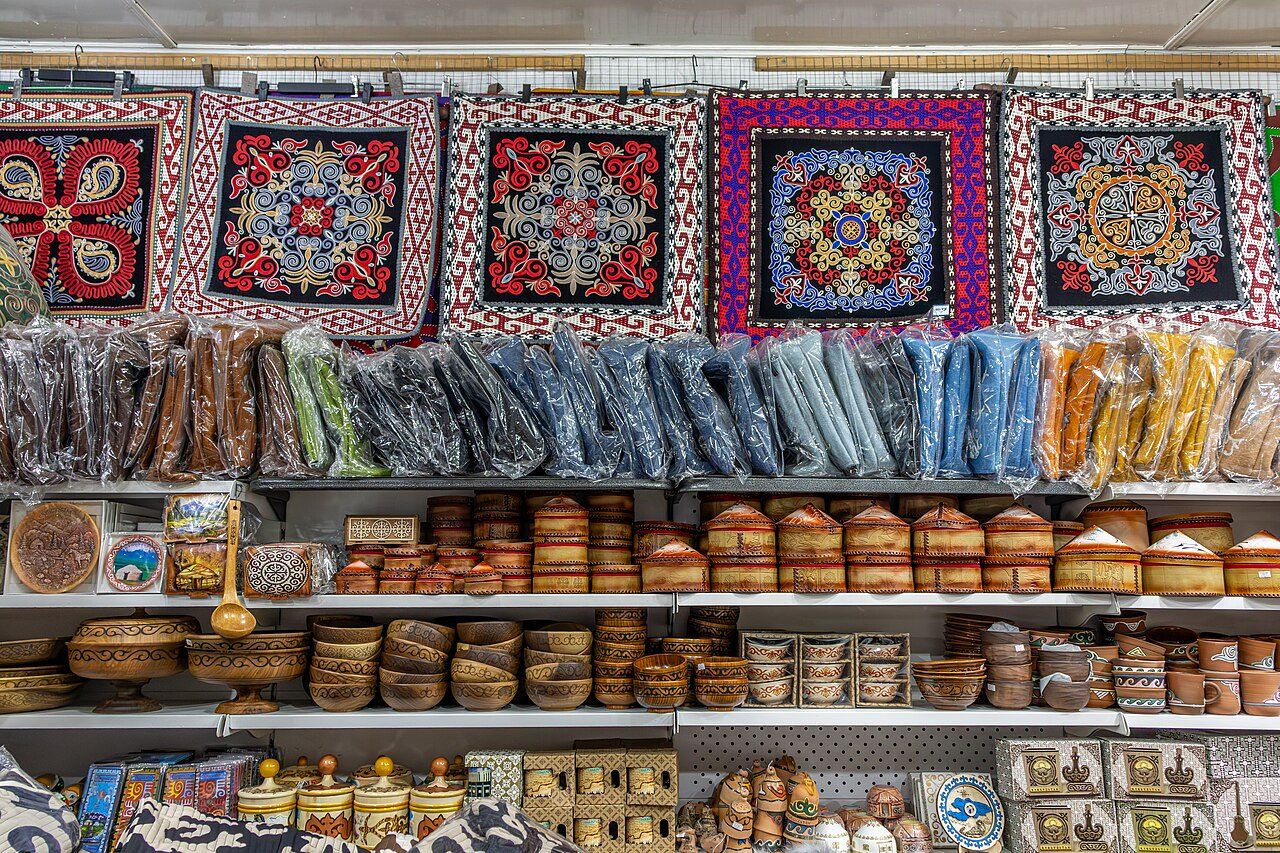
Formed in the early 1980s under late-Soviet urban planning along Bishkek’s western perimeter, Osh Bazaar institutionalized centuries of informal barter between nomadic Kyrgyz pastoralists and settled merchants from the southern Fergana Valley. Beneath utilitarian, barrel-vaulted concrete halls and sprawling canopies of sun-bleached turquoise sheet metal, the complex operates as a dense, grid-defying labyrinth. This rigid Soviet functionalist architecture merely serves as an industrial shell for an older, deeply clan-rooted trade system, where commercial corridors remain strictly segmented by commodity—from raw fleece and hardware to dairy and medicinal herbs. Stepping inside plunges you into a dense fog of pulverized *zira* (wild black cumin), dried coriander, and the sizzling, rich aroma of fat-tailed mutton roasting over open braziers. In the dairy alleys, vendors preside over towering wooden casks of effervescent, smoked mare’s milk (*kymyz*) and chalk-white pyramids of rock-hard *kurut* (salted cheese curd balls). Deeper in the textile quarters, the scent of damp wool takes over; narrow aisles are lined floor-to-ceiling with stiff, white-felt *ak-kalpak* hats and intricately stitched *shyrdak* mosaic rugs patterned with ancient horn motifs. Navigating the damp, bustling flagstones between laden wheelbarrows and the rhythmic thud of butchers' cleavers, you experience a crossroads where Russian and Kyrgyz bartering rings out against the living, unvarnished pulse of Central Asian market trade.
More in Bishkek
Photo credits (4)
- ElenaLitera, CC BY-SA 4.0, via Wikimedia Commons
- Vilya Shoni, CC BY 4.0, via Wikimedia Commons
- Davide Mauro, CC BY-SA 4.0, via Wikimedia Commons
- Artelow, CC0, via Wikimedia Commons