
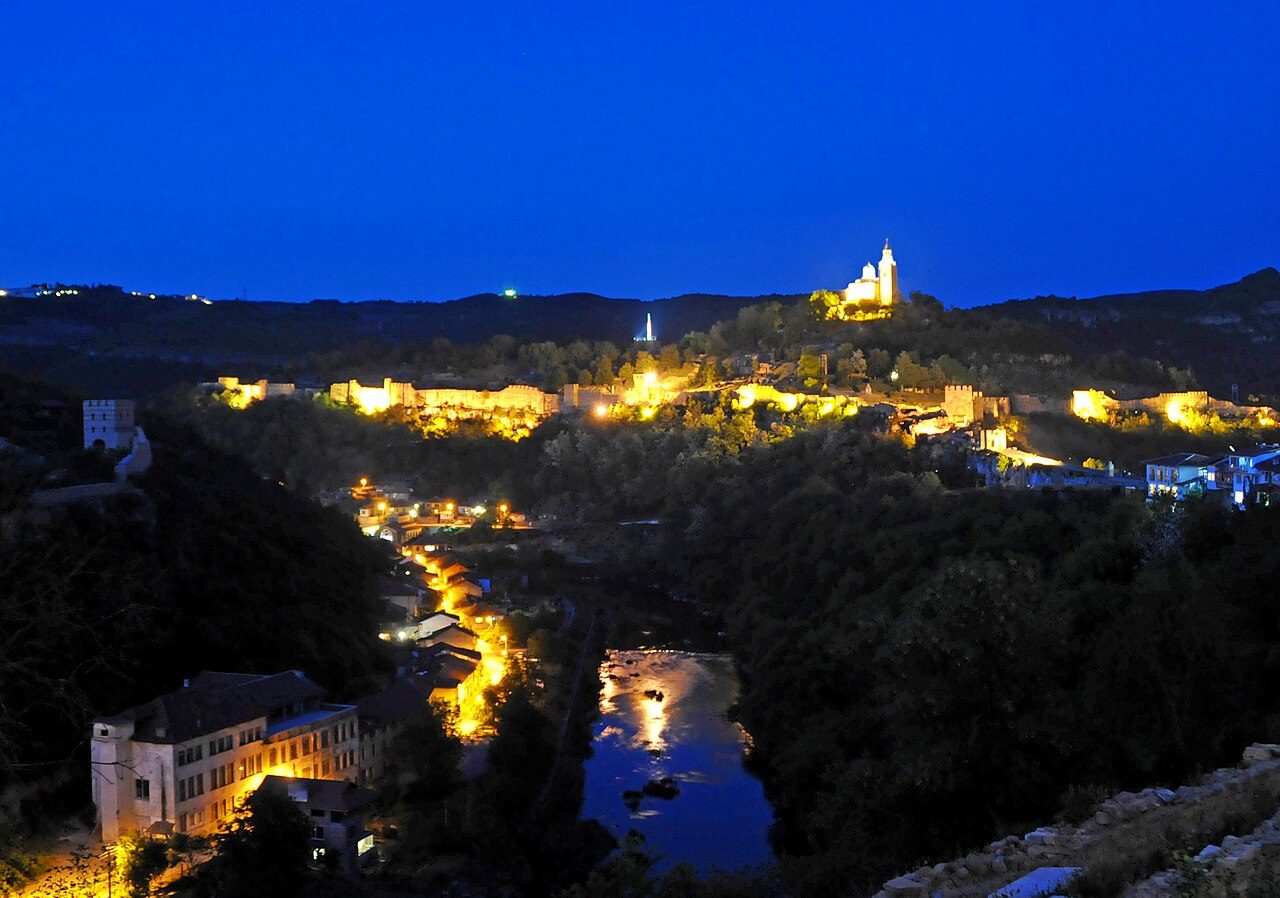
Tsarevets
Rising dramatically above the meandering loop of the Yantra River, the citadel of Tsarevets was the fortified heart of the Second Bulgarian Empire from 1185 until the Ottoman conquest of 1393. Approached via a narrow stone causeway that once featured a wooden drawbridge, the stronghold unfolds behind three successive gate complexes. Thick stone ramparts, stretching over a kilometer and rising up to twelve meters high, enclose the stepped foundations of the royal palace, where Tsar Ivan Asen II governed an empire spanning three seas. Down along the southern perimeter stands Baldwin’s Tower, a stone sentinel reconstructed on the site where Latin Emperor Baldwin I of Flanders was imprisoned following the Battle of Adrianople in 1205. At the hill’s apex sits the Patriarchal Cathedral of the Holy Ascension of God. While its red-brick exterior mirrors 14th-century Byzantine-Bulgarian ecclesiastical design, crossing the threshold reveals an unexpected visual shock: Teofan Sokerov’s monumental 1985 frescoes, which render Bulgarian triumphs and tragedies in brooding, angular, and expressionist strokes rather than traditional gilded iconography. Outside on the northern ridge, travelers encounter the sheer limestone drop of Execution Rock, where medieval traitors were once hurled into the river chasm. Standing on this windswept precipice, visitors look out over the dramatic gorge, absorbing panoramic vistas of Veliko Tarnovo’s tiered, terracotta-roofed houses clinging to the surrounding cliffs.