
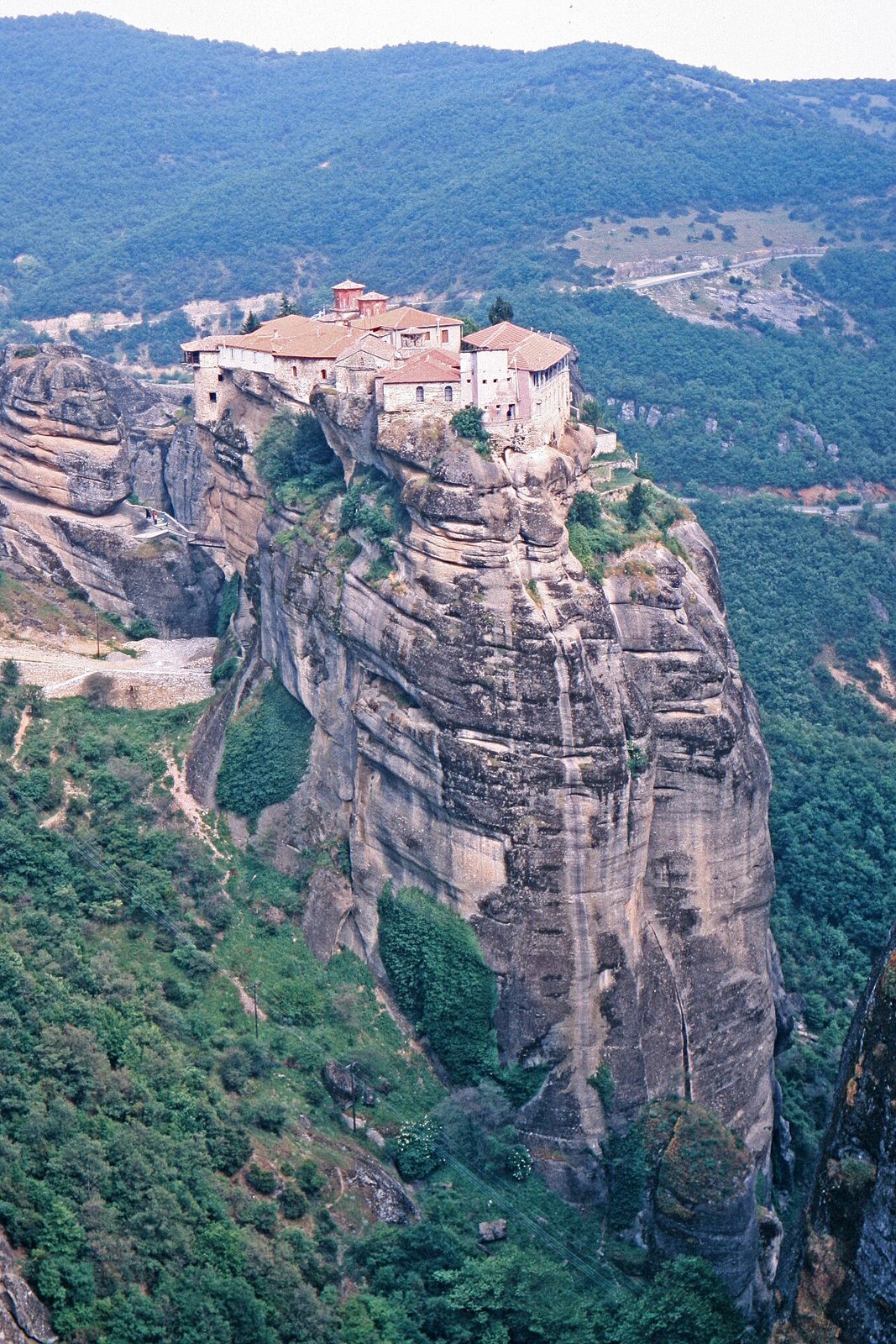
Meteora
Rising over a thousand feet above the Thessalian plain near Kalambaka, Meteora’s colossal sandstone pillars host an extraordinary network of Eastern Orthodox sanctuaries suspended between earth and sky. Founded in the mid-14th century by the monk Saint Athanasios the Meteorite, who established the Monastery of the Transfiguration (Great Meteoron), these aerial refuges provided Byzantine hermits safety from marauding raiders and Ottoman expansion. Of the original twenty-four monasteries, six remain active, showcasing quintessential late-Byzantine religious architecture with multi-domed cross-in-square *katholikons* and timber-cantilevered balconies. Inside Varlaam and the Great Meteoron, 16th-century post-Byzantine frescoes—most notably those painted in 1548 by Frangos Katelanos—depict harrowing martyrdoms in vibrant ochre, cinnabar, and lapis lazuli across rib-vaulted sanctuaries. Reaching these monastic perches requires navigating narrow staircases chiseled directly into the vertical cliff faces, replacing the hair-raising rope ladders and windlass-hauled net baskets historically used by ascetics. At the precipice of Holy Trinity Monastery, visitors encounter a profound sensory contrast: the brisk mountain wind whistling through sheer conglomerate chasms juxtaposed with interior cloisters redolent of frankincense and burning beeswax. From these stone parapets, the vista opens across the serpentine Pineios River and the jagged Pindus mountain range, punctuated only by the resonant strike of a wooden *talanton* calling monks to prayer, immersing you in a world of austere, medieval devotion.