Kalambaka
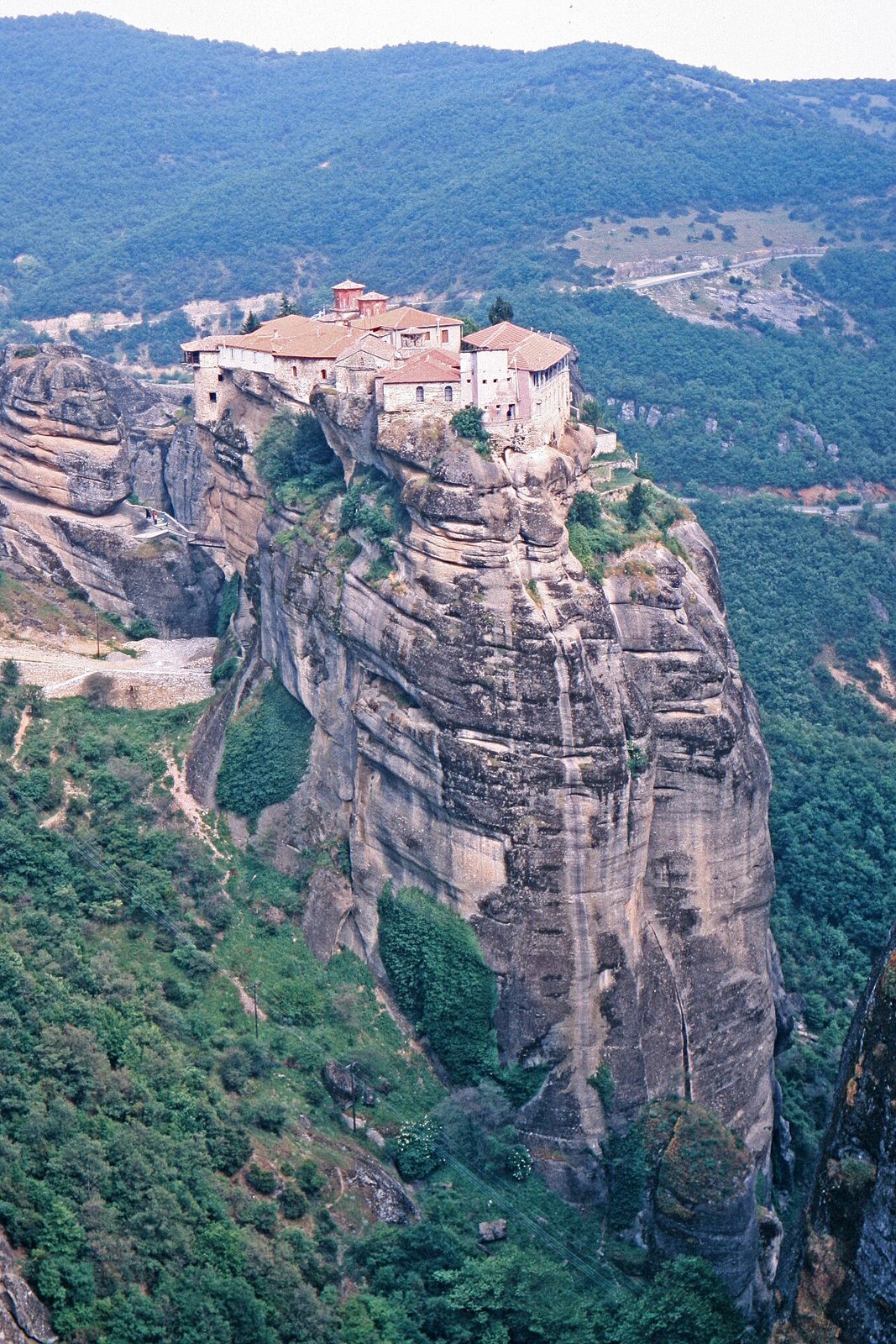
Kalambaka sits at the base of the towering conglomerate rocks of Meteora, where the flat Thessalian plain meets the Pindus foothills near the Pineios River. Walking through town, your gaze is constantly pulled skyward by sheer vertical stone looming over terracotta roofs. The lower center buzzes with cafes along Trikalon Street, while climbing uphill leads to Sopotos, an older quarter where traditional stone houses lean directly into the rock face and spring water flows from public fountain basins. Known in antiquity as Aeginium and later as Byzantine Stagoi, the town survived Roman devastation in 167 BC. Its most significant historical landmark is the tenth-century Church of the Dormition of the Virgin, built using remnants of an ancient Apollo temple and featuring a rare freestanding marble pulpit in the center of the nave. Nearby, the Natural History and Mushroom Museum highlights the region’s distinctive forest ecology, while centuries-old stone pathways lead straight from the upper streets toward fourteenth-century cliffside cloisters such as Holy Trinity. Evenings revolve around grill houses serving spit-roasted pork kontosouvli, followed by spatoula, a regional sweet of walnut cake layered with thick custard. On Friday mornings, growers from surrounding villages gather for the open-air market, selling wild mountain herbs and aged sheep cheeses. Visit during spring or autumn to avoid the summer plain heat, and tackle the marked walking footpaths up the cliffs in the early morning before day-trip coaches arrive.
Read more