
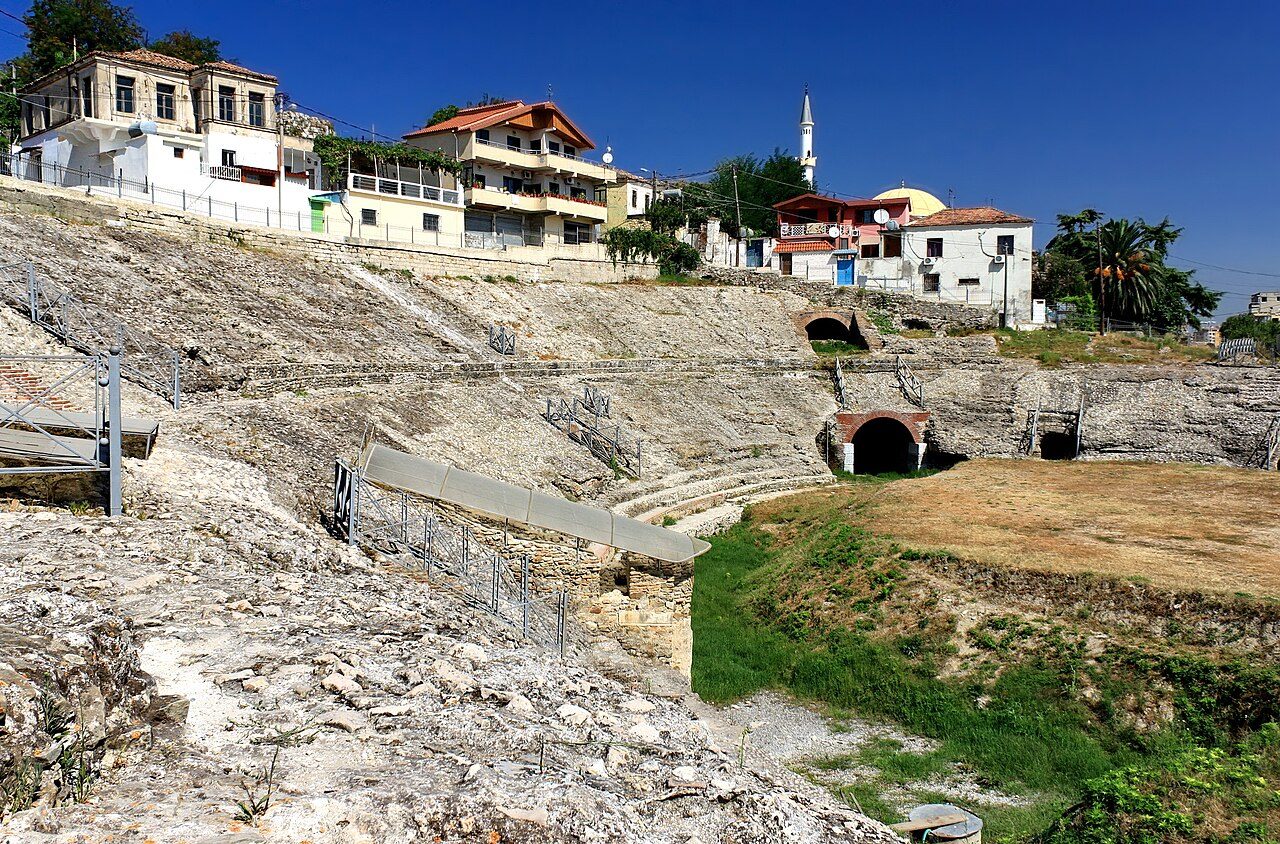
Durres Amphitheatre
Commissioned in the early second century CE under Emperor Trajan and expanded by Hadrian, this colossal elliptical arena stands as the largest Roman amphitheatre in the Balkan Peninsula. Carved directly into a natural hillside within ancient Dyrrhachium, its dual-tiered cavea of brick and local limestone once held up to 20,000 spectators for gladiatorial combats and venationes. Catastrophic earthquakes in the fourth and tenth centuries fractured its monumental radial vaults, gradually burying the structure until a schoolteacher’s accidental discovery in 1966 unearthed its subterranean galleries beneath the encroaching modern city. Descending from street level into the excavated hollow, visitors step from bright Mediterranean sunlight into the cool, damp labyrinth of the subterranean ambulatories. Hidden within one of these western tunnels is a remarkable sixth-century Byzantine chapel constructed after blood sports were banned. Standing in the shadowed crypt, you can inspect fragile, glistening wall mosaics crafted from gilded glass and earthy stone tesserae. These rare artworks depict Saint Stephen, Saint Sophia, and the Archangels Gabriel and Michael flanking local imperial donors, creating a striking aesthetic contrast between early Christian piety and the brutal Roman arena walls enclosing it.