Durres
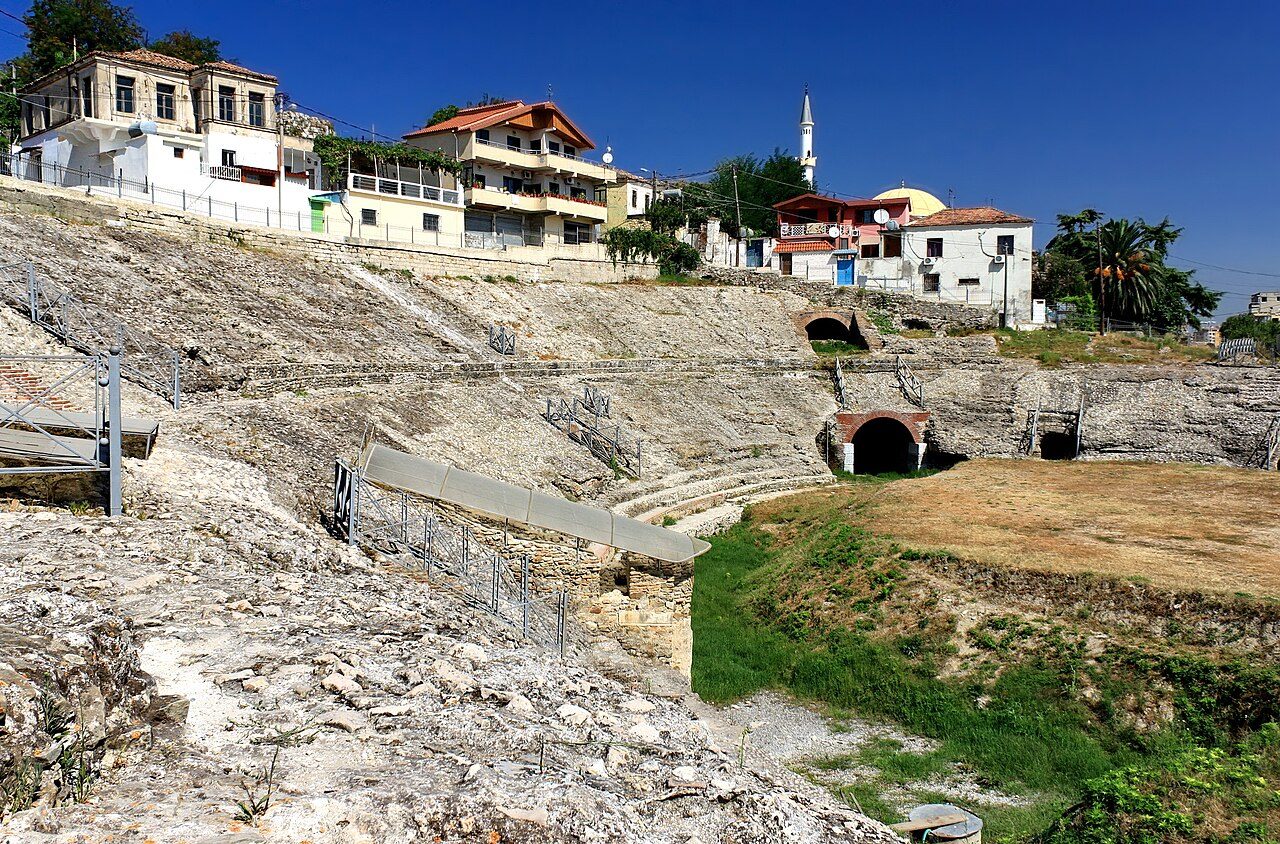
Stretching along a flat crescent of the central Adriatic coast, Durrës carries the salty, unhurried air of an ancient working port. Broad palm-lined boulevards give way to tightly woven alleys paved in sun-bleached stone, where maritime humidity meets the smell of roasting espresso and grilled mullet. While modern apartment blocks fringe the long sandy beaches to the south, the city center retains an earthy, layered Mediterranean character shaped by millennia of seafaring trade. Established as Epidamnos by Corinthian and Corcyrean colonists in 627 BC, the city later flourished as the Roman gateway to the Via Egnatia. Its greatest surviving relic is the second-century Roman Amphitheatre, built under Emperor Trajan, which once held twenty thousand spectators and conceals a rare early Christian chapel with fifth-century wall mosaics. Steps away, the circular Venetian Tower anchors the remains of the Byzantine defensive walls, while the Archaeological Museum down on the Taulantia promenade displays an extensive collection of ancient Illyrian and Hellenistic artifacts. Daily life peaks during the late-afternoon xhiro, when families walk the waterfront promenade to chat and crack roasted sunflower seeds against the backdrop of industrial cranes and cargo ships. Around the bustling municipal market, vendors sell sheep cheese, mountain herbs, and fresh cuttlefish pulled that morning from the bay. The compact historic core is easily navigated on foot, with late spring and early autumn offering the mildest weather for exploring before summer crowds fill the coast.
Read more