
Rozafa Castle
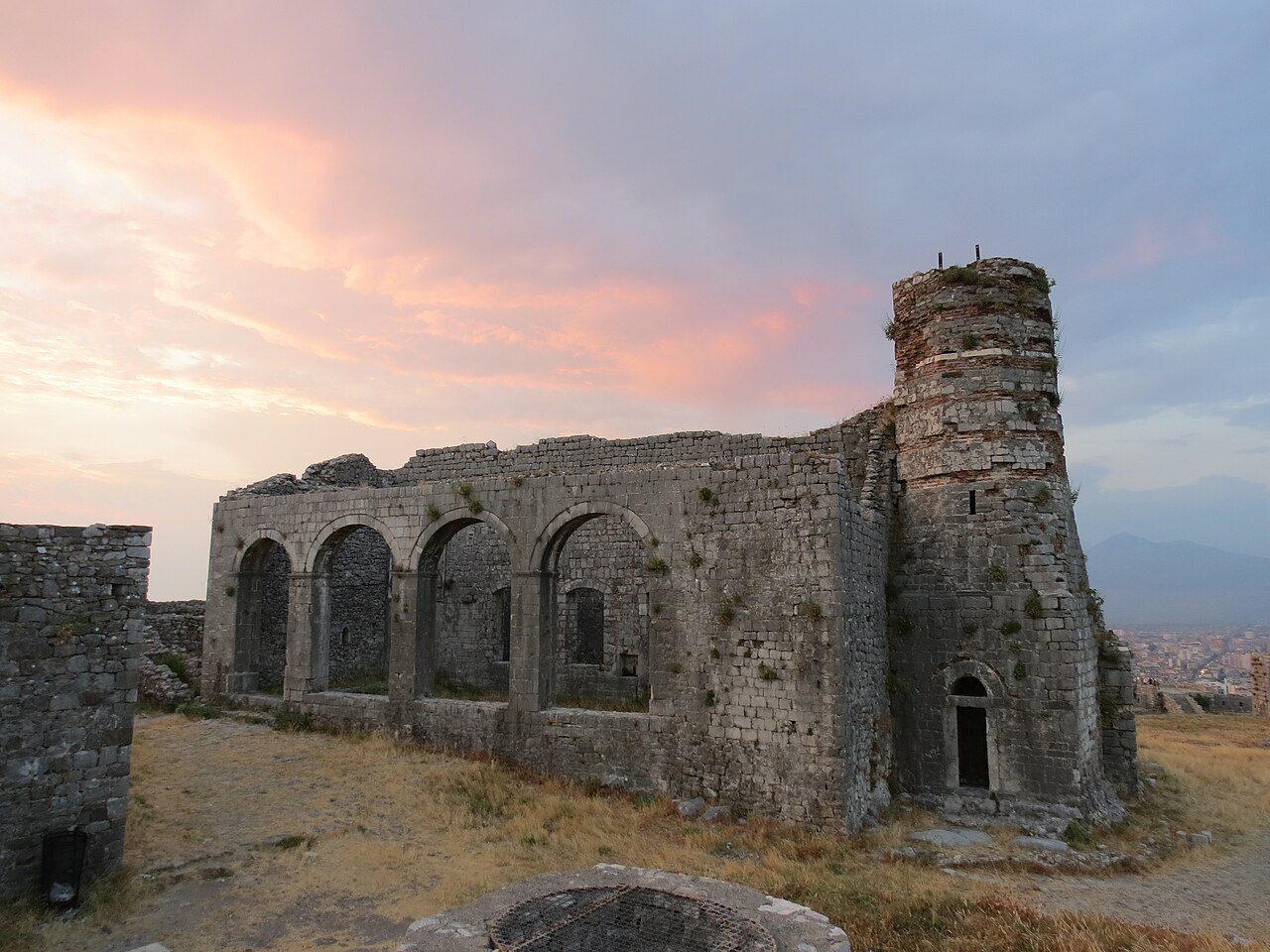
Perched 130 meters above the confluence of the Buna, Drin, and Kir rivers, Rozafa Castle crowns a jagged limestone crag steeped in antiquity and tragic lore. Originally fortified by the Illyrian Ardiaei tribe in the fourth century BCE—later ruled by Queen Teuta—the citadel owes its enduring masonry to an accretion of Illyrian, Venetian, and Ottoman military engineering. Local myth immortalizes Rozafa, the young mother entombed alive within the ramparts to prevent the walls from collapsing during construction, leaving one breast exposed to nurse her infant son. Beyond legend, these multi-tiered ramparts withstood fierce medieval warfare, notably the punishing 1478–1479 siege by Sultan Mehmed II, which finally pried Shkodër from Venetian control. Stepping through the imposing, vaulted Barbican gatehouse, visitors traverse three vast, interconnected courtyards enclosed by 2.2-kilometer-long defensive curtain walls. In the second courtyard stand the haunting, roofless limestone ruins of the thirteenth-century Venetian Church of St. Stephen, whose pointed gothic windows were later adapted into the Fatih Sultan Mehmet Mosque under Ottoman rule. Travelers can peer down into deep, echoey vaulted cisterns that once gathered rainwater for besieged garrisons, or explore the stone-clad Venetian captain’s residence. Standing atop the exposed southwestern parapets, winds sweeping off Lake Shkodër buffet your face as you gaze out over silvery river deltas and the jagged, snow-dusted ridges of the Accursed Mountains.