
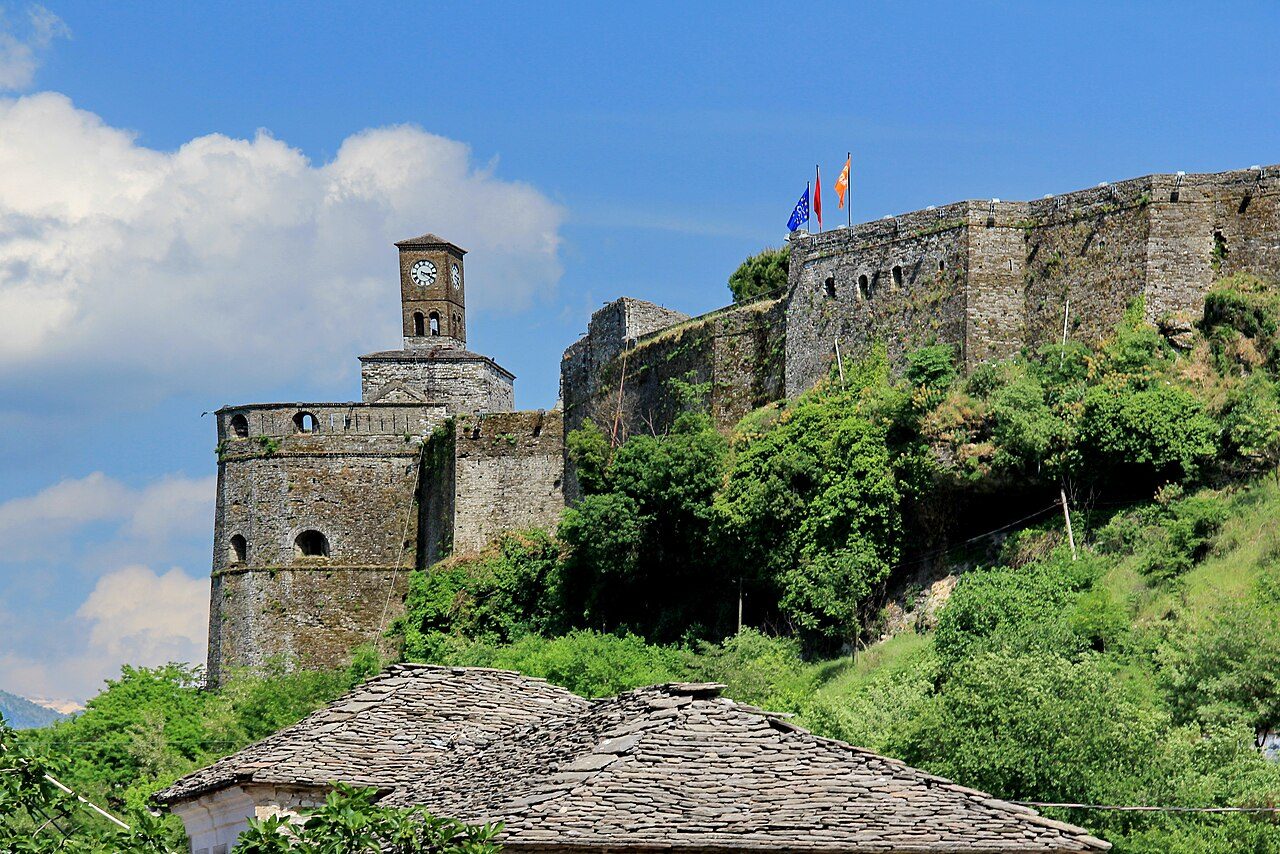
Gjirokaster Castle
Resembling a colossal stone warship anchored atop a limestone ridge, this fortress commands the sweeping Drino Valley with imposing military precision. While its earliest defensive bastions date to the 12th century under the Byzantine Despotate of Epirus, the citadel's present silhouette was engineered in 1811 by the Ottoman warlord Ali Pasha of Tepelena. Ali Pasha erected the prominent clock tower and reinforced the massive curtain walls to withstand heavy siege artillery. Stepping through the arched entryway, travelers cross directly into a chilled, cavernous vaulted gallery lined with atmospheric shadows and an eerie arsenal of abandoned Italian and German field guns left behind after the Second World War. Wandering the sunlit upper battlements reveals an incongruous Cold War artifact: the hollow fuselage of a US Air Force Lockheed T-33 jet, forced down by Albanian fighter pilots in 1957 and displayed as a triumph of communist defense. Beneath this terrace lie damp, windowless cells that functioned as a brutal political prison under King Zog and the paranoid regime of Enver Hoxha until 1968. Today, the claustrophobic dread of the dungeons dissipates on the northern open-air esplanade, where the National Folklore Festival stage offers travelers panoramic vistas over Mount Gjerë and the silver-slate roofs of Gjirokaster’s Ottoman-style fortified tower houses cascading downhill.