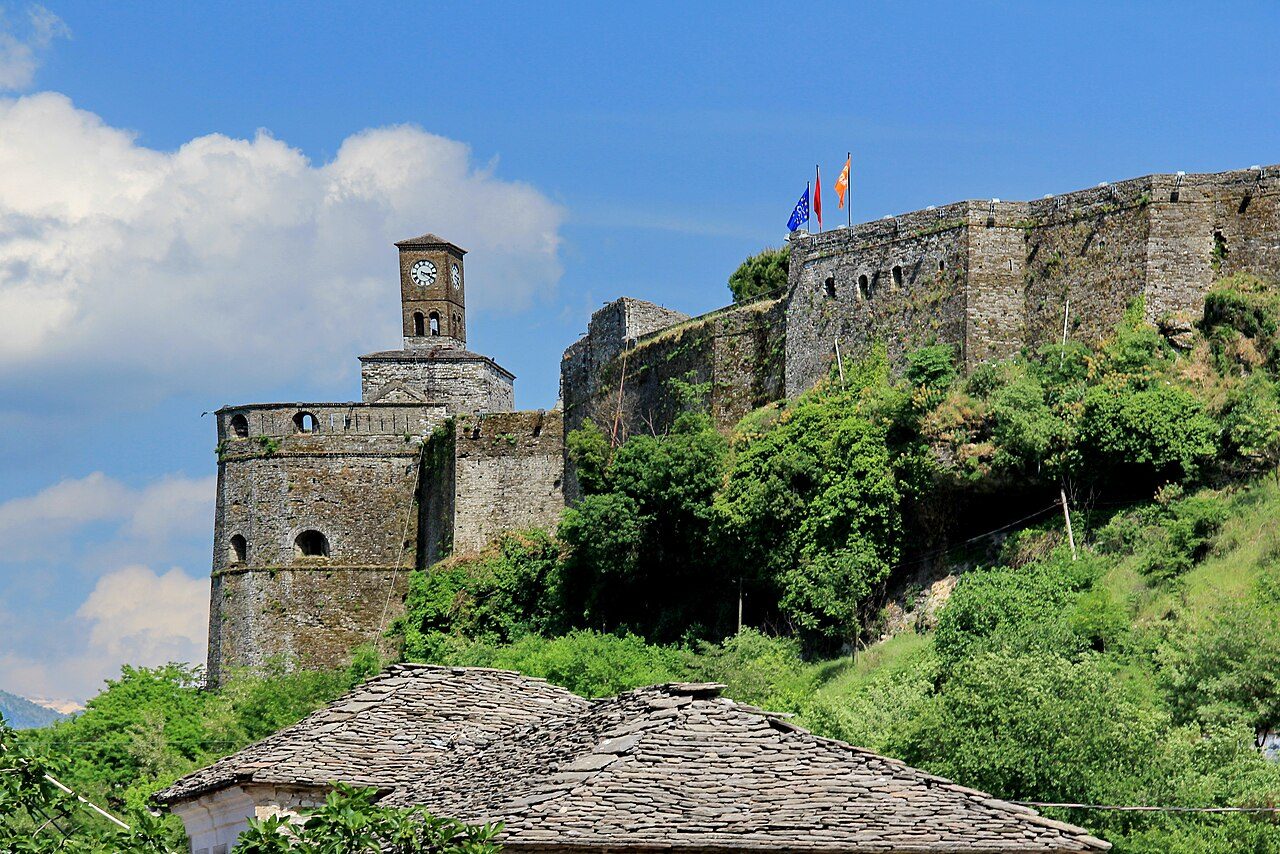
Gjirokaster
Flanked by the slopes of the Mali i Gjere mountain range, Gjirokaster cascades down into the wide Drino River valley in southern Albania. Moving through the town requires steady legs; centuries-old limestone cobbles, laid in decorative white and black patterns, pitch sharply between fortified Ottoman mansions. Heavy grey slate tiles cap every rooftop, creating a uniform, austere landscape that reflects the harsh rock of the surrounding terrain. First documented in 1336 and incorporated into the Ottoman Empire in 1417, the settlement grew around the colossal Gjirokaster Fortress, which Ali Pasha expanded in 1811 to house garrisons and a prominent clock tower. In the valleys below, the cobbled intersection of the Qafa e Pazarit bazaar preserves a traditional seventeenth-century radial street plan. Higher up in the Palorto quarter, intact fortified dwellings like Zekate House and the multi-story Skenduli House showcase carved wooden balconies, defensive shooting slits, and painted reception rooms. Evenings draw locals to bazaar taverns for qifqi, crispy rice balls seasoned with wild mint, followed by oshaf, a baked dessert of sheep milk and dried figs. The citadel also hosts the long-running National Folklore Festival, an event showcasing traditional Albanian iso-polyphonic singing. Plan visits for late spring or autumn, exploring early in the morning before midday heat settles over the valley, and wear sturdy shoes, as the worn cobblestones become notoriously slick.
Read more