
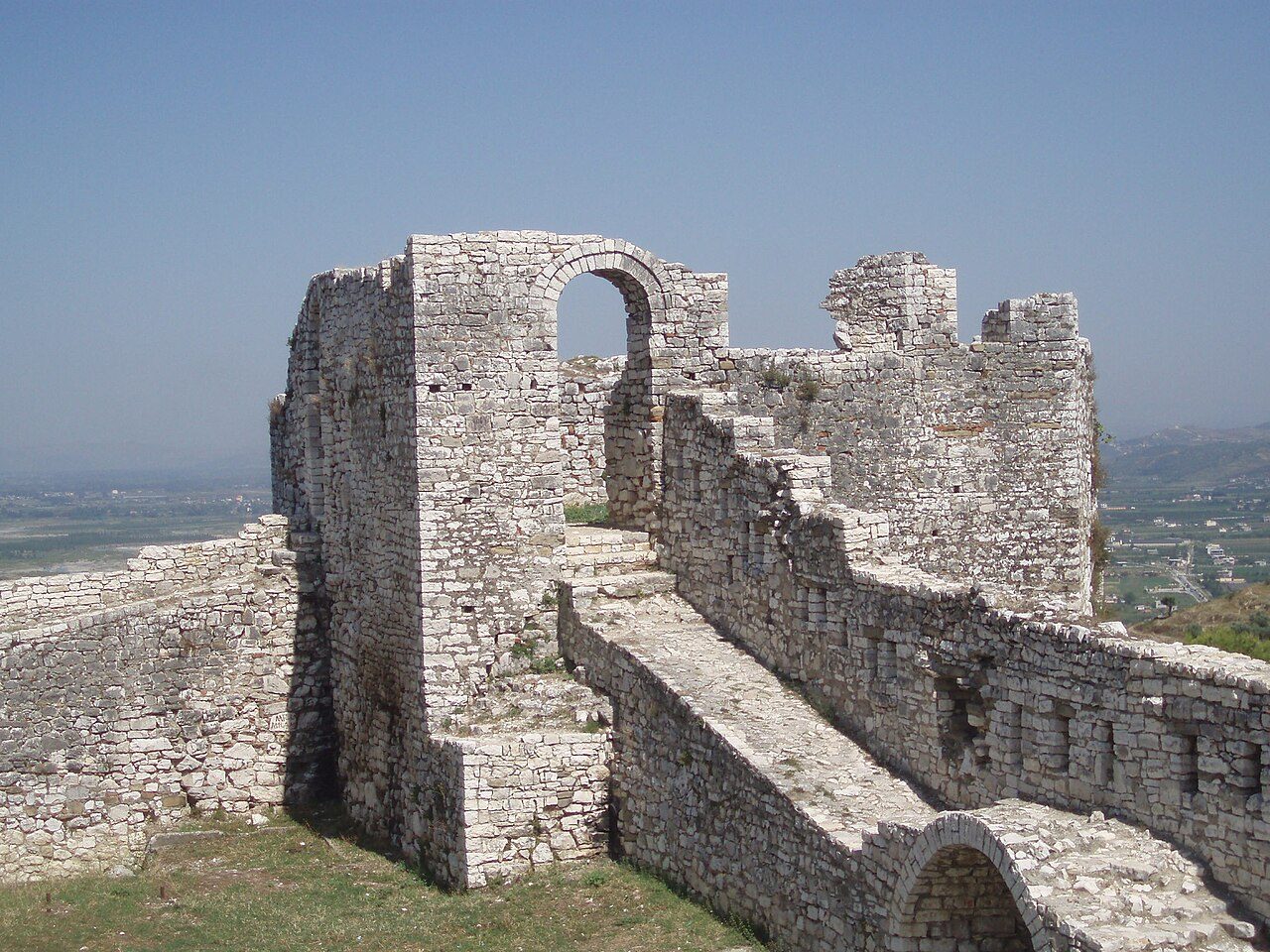
Berat Castle
Crowning a rugged limestone bluff 214 meters above the Osum River, the citadel of Berat—locally known as the *Kala*—traces its defensive lineage to 4th-century BC Illyrian fortifications before receiving its defining Byzantine footprint in the 13th century under the Despotate of Epirus. Encircled by sweeping ramparts punctuated by 24 defensive towers, this fortress uniquely persists as a living, inhabited community rather than a hollowed ruin. Within its defensive circuit stands the 14th-century Church of the Holy Trinity (*Kisha e Shën Triadhës*), exhibiting intricate Byzantine cloisonné brickwork set against the skeletal, ruined minaret of the 15th-century Red Mosque. Hidden behind the thick stone walls of the Cathedral of the Dormition of St. Mary, the Onufri National Iconographic Museum houses 16th-century post-Byzantine masterworks renowned for their luminous, closely guarded "Onufri red" pigments. Ascending the polished, slick river-stone cobbles (*kalldrëm*), visitors step into an atmospheric labyrinth where Ottoman-era slate-roofed houses frame courtyard gardens draped in drying figs and handmade lace. The ambient air carries the sharp scent of mountain tea and seasoned woodsmoke drifting from residential hearths. Traversing the southern parapets delivers an arresting vantage over the valley floor, where the Osum River divides the white-walled, multi-tiered Ottoman quarters of Mangalem and Gorica. From this sweeping stone precipice, the gaze extends across the dramatic chasm to the sheer, snow-dusted ridges of holy Mount Tomorr, providing an immediate, tactile sense of the strategic isolation that protected this stronghold across millennia.