
Berat
Set in south-central Albania along the rushing Osum River, Berat rises steeply against the rocky foothills of Mount Tomorr. Walking through its vertical lanes feels like stepping into a preserved architectural archive, where rows of white Ottoman facades climb the cliffs, their uniform timber-framed casements facing the water and earning the town its reputation as a city of stacked windows. Settled by Illyrian tribes in the fourth century BC and refortified by Byzantine rulers in the thirteenth century, the town divides into three distinct quarters. On the southern bank rests Gorica, connected to the northern quarter of Mangalem by the multi-arched, eighteenth-century Gorica Bridge. Looming over both is the Kala, an enormous, continuously inhabited citadel. Within its stone perimeter stands the thirteenth-century Church of the Holy Trinity and the Onufri National Iconographic Museum, situated inside the Cathedral of the Dormition of St. Mary to showcase sixteenth-century tempera icons painted in a brilliant, proprietary red. Evenings revolve around the xhiro, a communal twilight promenade where residents drift down the tree-lined Bulevardi Republika. Family-run taverns serve clay-baked tavë kosi, a rich dish of lamb baked in garlic yogurt, accompanied by dark olives and glasses of dry white Pulat wine sourced from the neighboring village of Roshnik. May and October provide comfortable temperatures for walking the steep gradients, and rubber-soled footwear is essential to handle the centuries-old limestone cobbles, which have worn mirror-smooth under foot traffic.
Read more
What to see in Berat
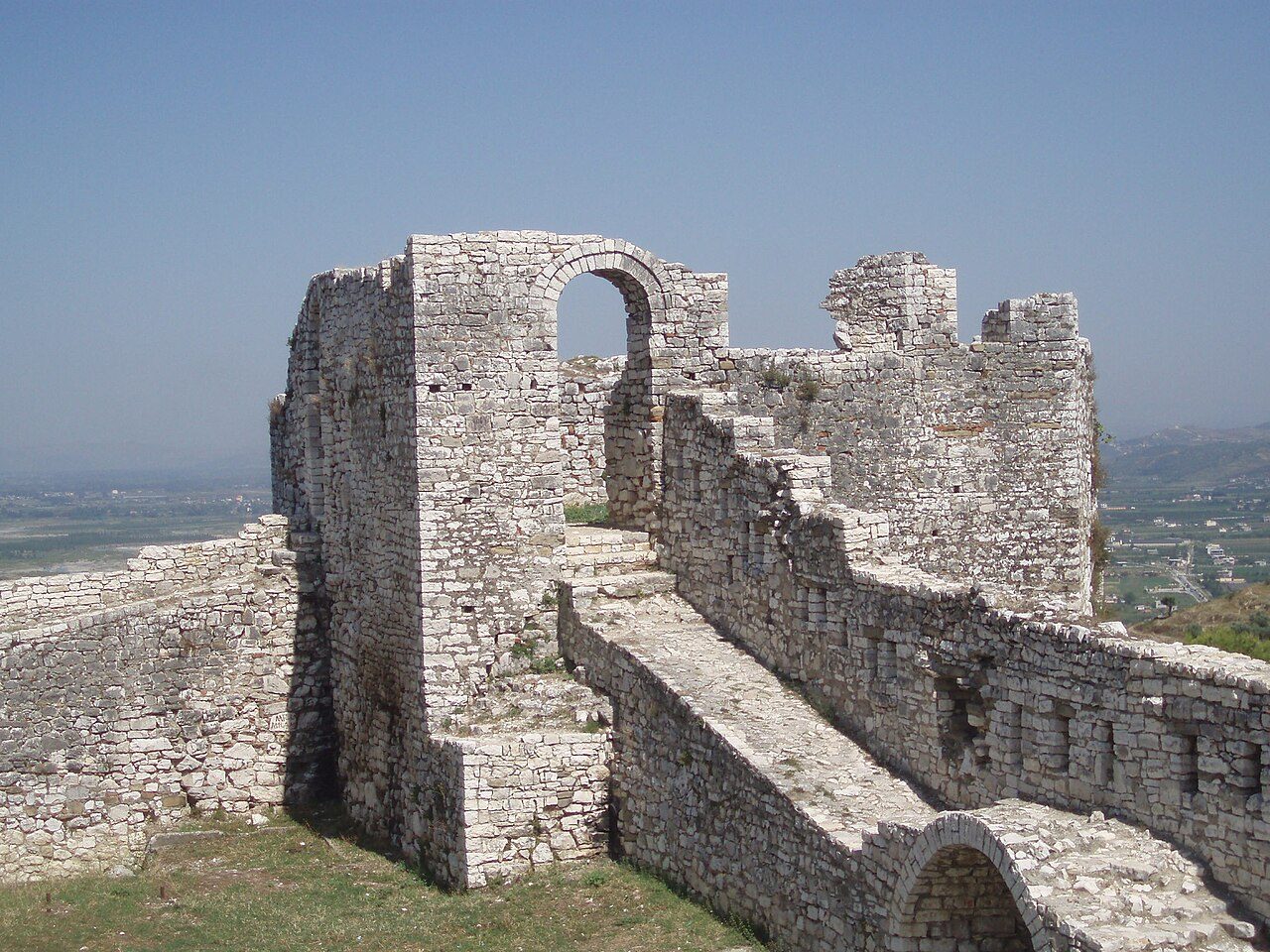
Photo credits (2)
- Helmut Kienzle, CC BY 4.0, via Wikimedia Commons
- User:Terfili, Public domain, via Wikimedia Commons