
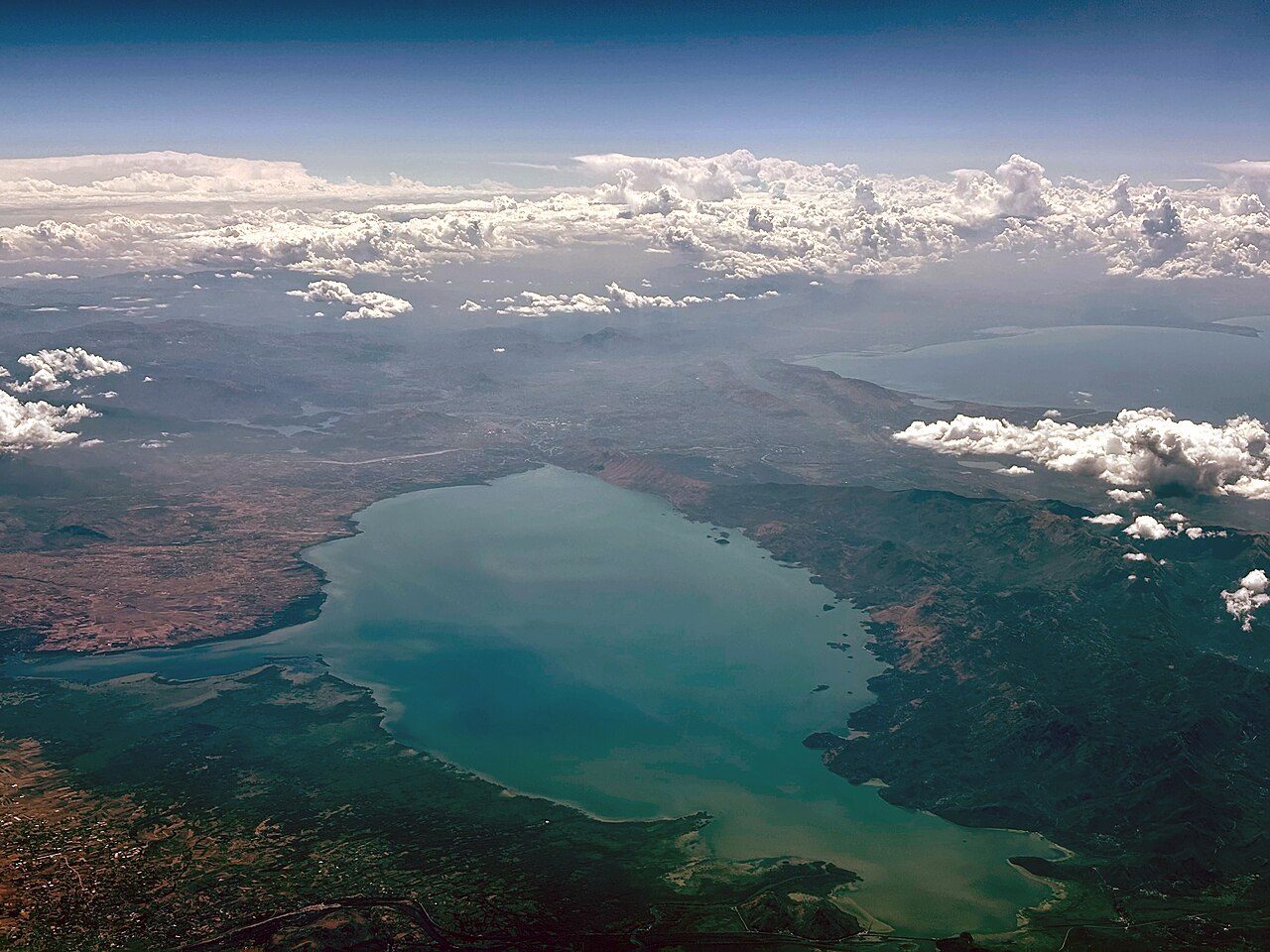
Lake Skadar
Rising from the flooded karst basin where southern Montenegro blurs into Albania, Lake Skadar cradles centuries of medieval frontier warfare. Looming directly above the three-arched stone bridge of Virpazar, the 1478 Ottoman fortress of Besac commands the valley, its limestone ramparts and circular watchtowers built during the reign of Sultan Mehmed II to secure the trade routes of Zeta. Beyond this garrison, the lake’s isolated isles harbor fortified 14th-century Orthodox monastic complexes established by the Balšić dynasty. Sanctuaries like Starčevo, consecrated around 1378, retain compact single-nave basilicas, domed chapels, and crumbling monastic cells where scribes once illuminated Cyrillic manuscripts under the threat of Venetian and Turkish raids. Boarding a narrow, flat-bottomed wooden *čun* at the Virpazar docks, travelers cut through emerald channels choked with white water lilies and spiky water chestnuts. The humid scent of wild sage and freshwater silt hangs in the air, broken only by the synchronized splash of wooden oars and the rustle of dense reed beds concealing rare, curly-crested Dalmatian pelicans. Gliding past the island redoubt of Grmožur—an 1843 Ottoman penal outpost dubbed the Montenegrin Alcatraz—visitors are enveloped by a dramatic panorama of brooding, sun-bleached limestone peaks of the Rumija mountain range plunging straight into cobalt water.