
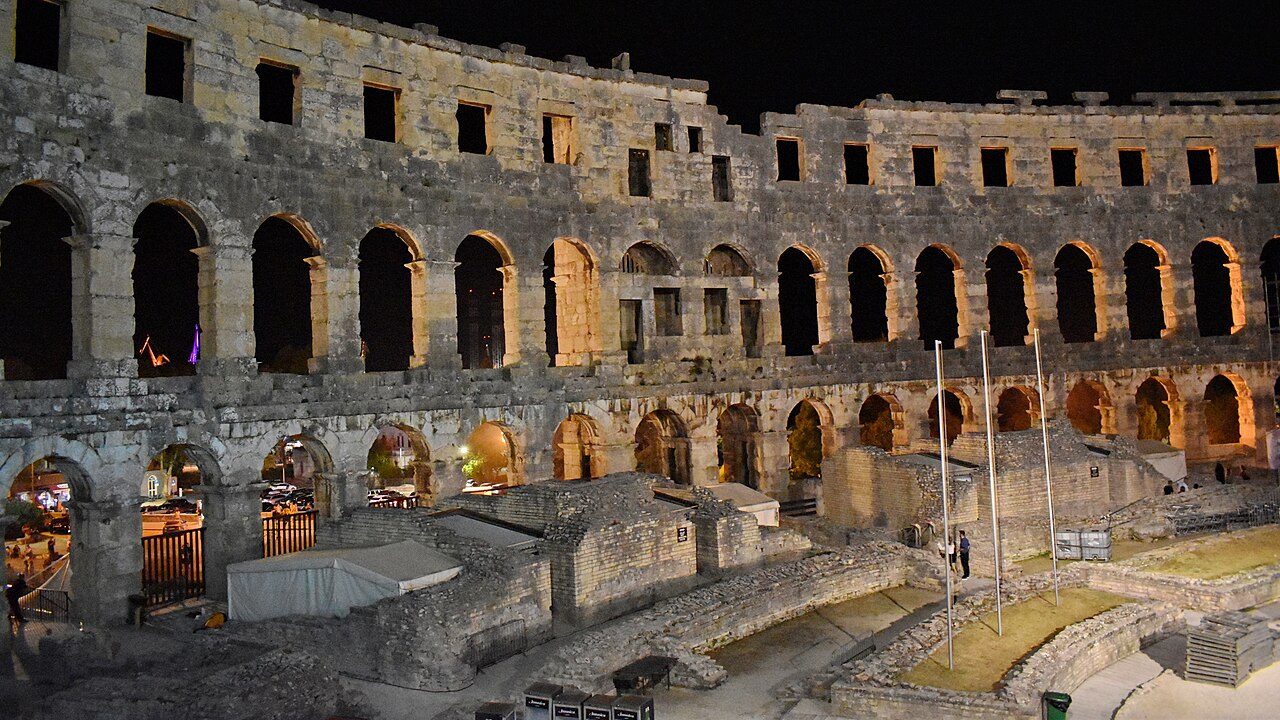
Pula Arena
Rising in brilliant white Istrian limestone just steps from the Adriatic, this first-century colossus was initiated under Emperor Augustus and significantly expanded by Emperor Vespasian into a monumental stage for gladiatorial combat. Unlike Rome’s Colosseum, Pula’s amphitheater stands as the only Roman arena in the world to retain its complete three-story outer wall and all four original corner towers. These exterior towers once anchored cisterns that sprayed perfumed water over 20,000 spectators sheltered beneath massive canvas awnings. Engineered directly into the natural slope of the harbor hillside, the perimeter drops dramatically toward the sea, where seventy-two round-arched arcades rise over thirty-two meters high to counterbalance the rugged coastal terrain. Stepping onto the sun-baked crushed stone of the central arena floor, visitors immediately confront the immense scale of the arena before descending into the cool gloom of the subterranean *hypogeum*. In antiquity, these vaulted chambers held caged predators and condemned fighters awaiting hoist-and-pulley lifts; today, the undercroft houses an extensive archaeological collection of Istrian olive oil mills, ancient grain mills, and rows of ribbed Roman amphorae once used to export wine across the empire. Standing between the subterranean pillars and gazing out toward the sunlit sea, travelers experience the rare thrill of an ancient Roman amphitheater whose coastal setting and architectural integrity remain almost completely unmarred by time.