Pula
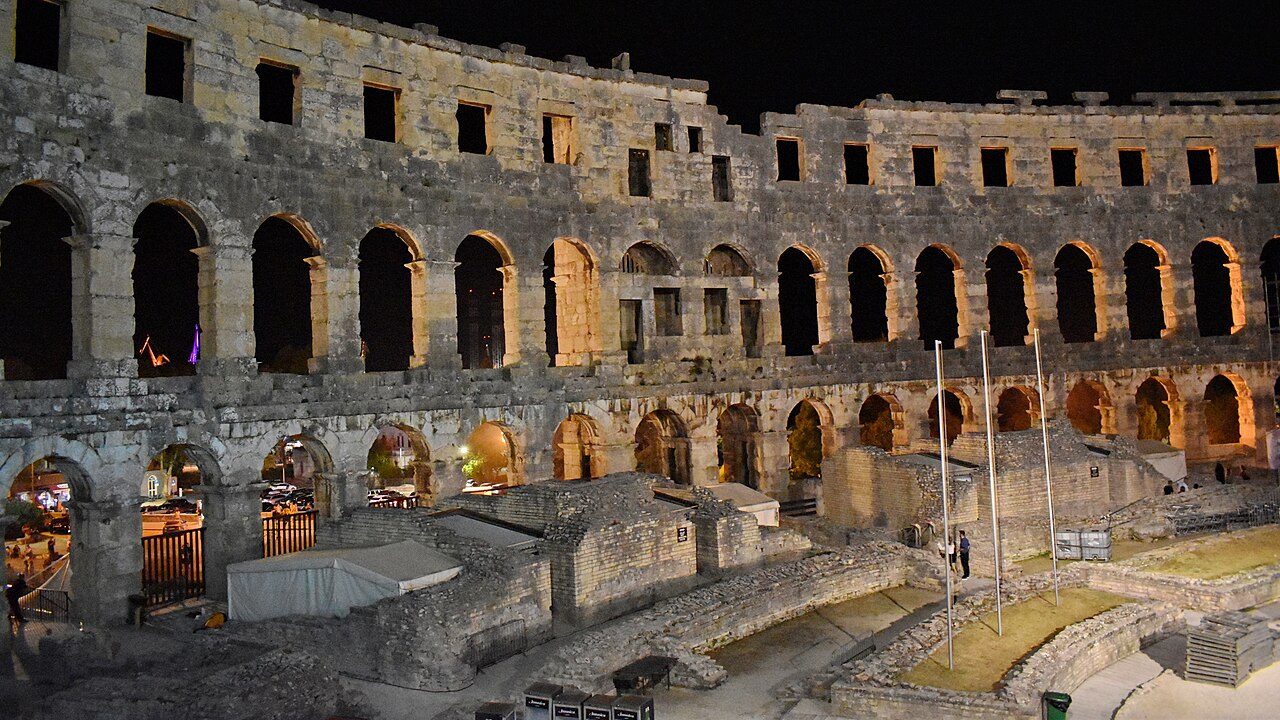
Pula anchors the southern tip of the Istrian peninsula, facing the Adriatic Sea. Its streets reveal a working seaport where towering shipyard cranes stand against limestone Roman monuments. The Roman amphitheater, built in the first century during the reign of Emperor Vespasian, dominates the bay with its intact four-tiered outer walls. Walking inward along the pedestrianized Forum leads past the slender Corinthian columns of the Temple of Augustus, completed around 2 BC, toward the Arch of the Sergii, a triumphal gateway carved in 29 BC to honor three brothers of a prominent local family. Above the red-tiled roofs, the seventeenth-century Venetian fortress atop the central hill sits over Zerostrasse, a complex network of underground pedestrian tunnels dug during the Austro-Hungarian era. Daily life centers on the green market, clustered around a 1903 iron-and-glass market hall where fishmongers display Adriatic sardines while farm stalls sell Istrian truffles, cured pršut, and wild asparagus. Each July, the Roman arena hosts the Pula Film Festival, screening international cinema under the night sky while residents fill the ancient stone tiers with cushions and carafes of chilled Malvazija wine. Pula is compact enough to explore entirely on foot, though local buses run directly from the center to the pine-fringed swimming coves along the Verudela peninsula. Late spring and September provide the most rewarding conditions, avoiding midsummer heat while the sea remains warm enough for swimming.
Read more