
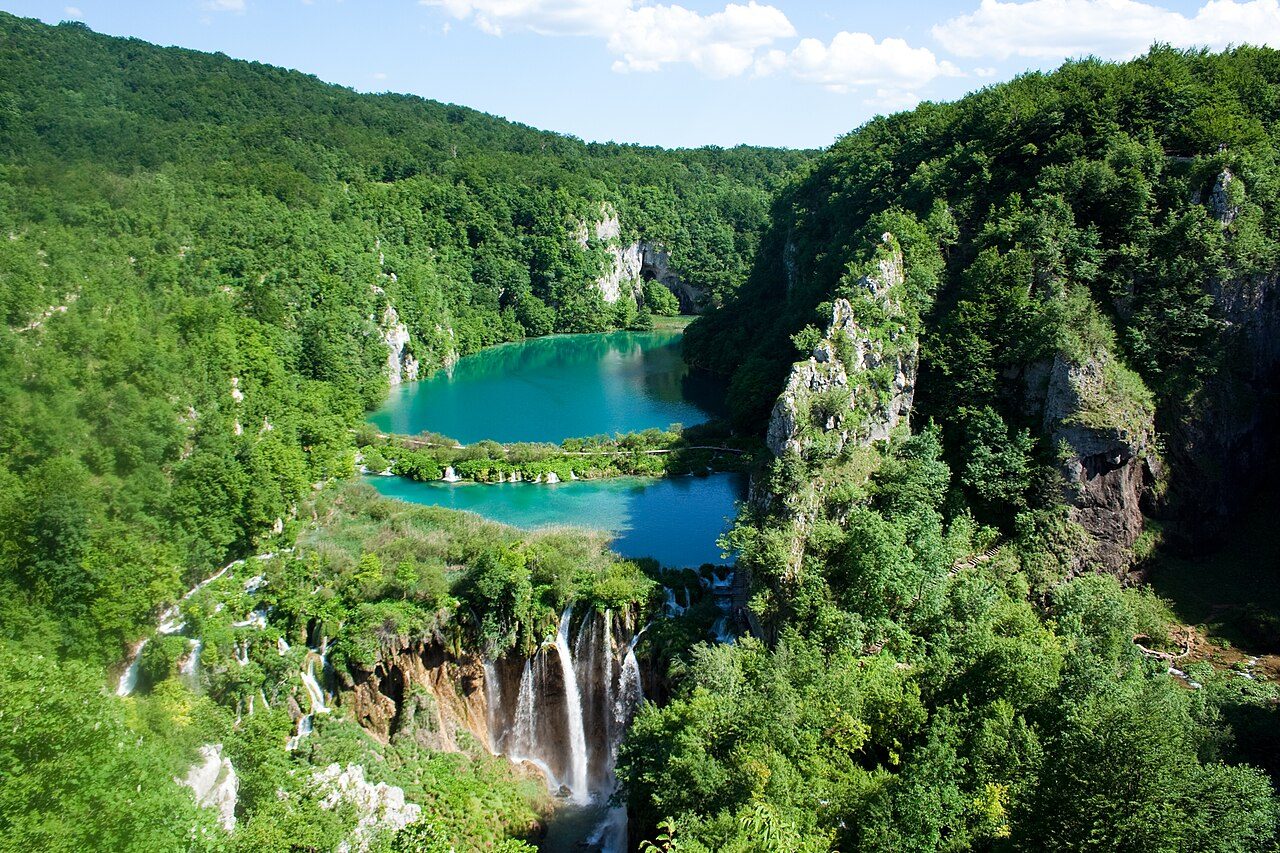
Plitvice Lakes National Park
Formed over millennia by the calcification of moss and algae into fragile travertine barriers, this watery labyrinth in the Dinaric Alps evolved from a fortified Habsburg borderland on the Military Frontier into Croatia’s first national park on April 8, 1949. Later designated a UNESCO World Heritage site in 1979, the basin also bore witness to modern history as the site of the 1991 "Plitvice Bloody Easter," an opening clash of the Croatian War of Independence. Today, tranquil geological drama reigns supreme across sixteen stepped lakes, neatly divided between the dolomite-rimmed Upper Lakes, enveloped by virgin beech forests, and the stark limestone canyon of the Lower Lakes. Navigating the snaking timber boardwalks, visitors hover mere inches above transparent pools that shift mercurially from milky turquoise to deep lapis lazuli as sunlight refracts through suspended karst minerals. Submerged logs, petrified beneath pale crusts of calcium carbonate, lie visible in the crystal depths alongside darting schools of brown trout. The sensory trail builds toward the park's dramatic precipice at Veliki Slap, Croatia's tallest waterfall. Standing before this 78-meter sheer drop, travelers are enveloped in a roaring amphitheater of sound, drenched by the cool, ionized plumes of spray surging down the sheer cliff into the Sastavci gorge below.