
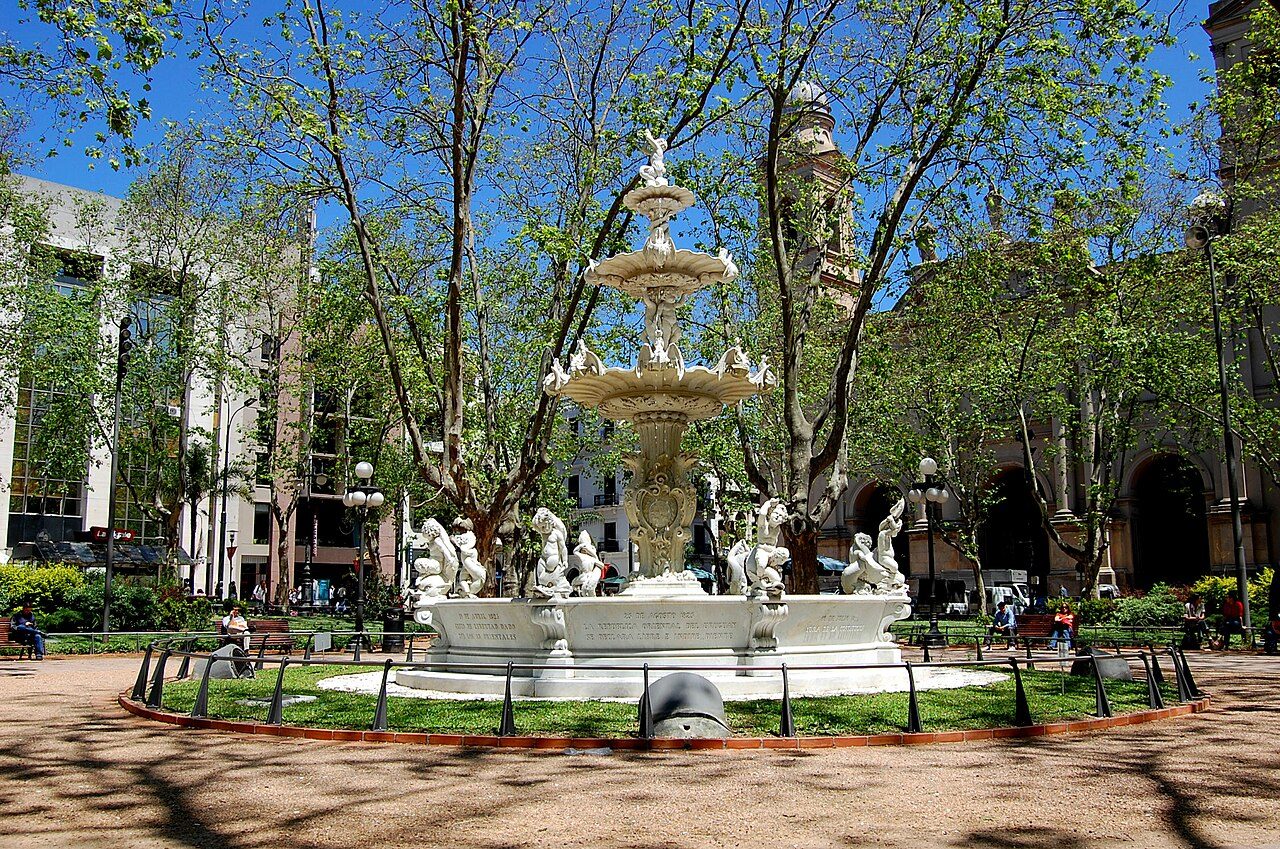
Ciudad Vieja
Passing beneath the weathered granite lintel of the Puerta de la Ciudadela—the sole surviving monumental arch of the Spanish fortress dismantled in 1877—steps directly into Montevideo’s fortified origin. Founded in 1726 by Governor Bruno Mauricio de Zabala to repel Portuguese expansion, this narrow peninsula preserves centuries of sudden shifts in empire and fortune. The cobblestone grid unfurls from Plaza Constitución, anchored by the 1804 Cabildo and the neoclassical twin towers of the Metropolitan Cathedral, whose vaulted, tile-clad interior shelters the crypts of early Uruguayan statesmen. As the streetscapes evolve, austere colonial masonry gives way to a dense gallery of turn-of-the-century French eclecticism, wrought-iron Art Nouveau balconies, and streamlined 1920s Art Deco façades washed in fading pastel stucco. Walking down the pedestrian spine of Calle Sarandí, the brackish tang of the Río de la Plata cuts through the narrow corridors, mingling with the rich smoke of hardwood fires drifting from the Mercado del Puerto. Inside this soaring 1868 Victorian cast-iron pavilion, fabricated in Liverpool, immense iron grates (*parrillas*) sizzle beneath cuts of beef as patrons clink glasses of effervescent *medio y medio*. Street-corner buskers coax melancholic tango rhythms from well-worn bandoneóns, competing with the clack of antique wooden chess sets clustered around leafy park benches. It is an atmospheric port quarter where maritime decay, civic grandeur, and bohemian river life continuously intersect.
More in Montevideo
Photo credits (2)
- Eduardo Ruggieri, CC BY-SA 3.0, via Wikimedia Commons
- Coolcaesar, CC BY-SA 3.0, via Wikimedia Commons