
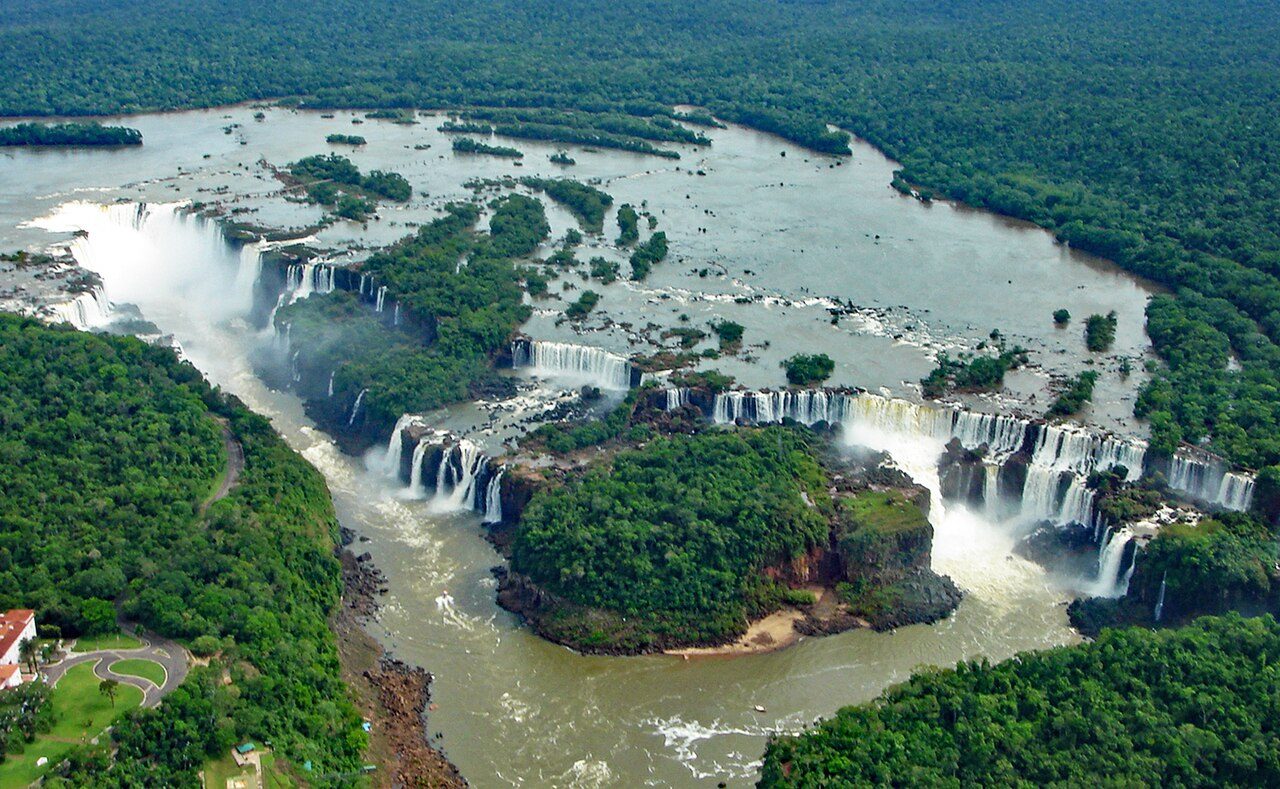
Iguazu Falls
Long before the Spanish explorer Álvar Núñez Cabeza de Vaca stumbled upon the cataracts in 1542, the indigenous Guarani understood these waters through the myth of the serpent deity M’Boi, who violently fractured the riverbed to consume the fleeing lovers Naipí and Tarobá. Geologically anchored in Mesozoic basalt plateaus formed 130 million years ago, the Brazilian sector of the falls was formally protected in 1939 under President Getúlio Vargas following direct advocacy from aviation pioneer Alberto Santos-Dumont. Unlike the fractured walkways of the neighboring Argentine side, the Brazilian vantage offers an unbroken, theatrical vista across the entire two-mile-wide geological amphitheater, framing roughly 275 individual torrents that sever the subtropical Atlantic Forest. Navigating the red-dirt trails of Foz do Iguaçu, travelers descend through lush bromeliad clusters toward a cantilevered steel walkway thrust directly into the churning mouth of the Garganta do Diabo (Devil’s Throat). Standing suspended above the abyss, the sensory impact is absolute: the sheer volume of cascading water generates a guttural vibration felt deep in the sternum, filling the air with a dense, drenching vapor that refracts the sunlight into vivid, perpetual double rainbows. Through the blinding wall of white foam, dark silhouettes of Great Dusky Swifts dive directly through the eighty-meter torrents to nest on moss-streaked basalt cliffs, surrounded by one of the earth’s most ferocious hydrological forces.
More in Foz do Iguacu

Photo credits (2)
- Mariordo (Mario Roberto Durán Ortiz), CC BY-SA 4.0, via Wikimedia Commons
- Embaixada dos EUA - Brasil, Public domain, via Wikimedia Commons