
Foz do Iguacu
Set at the subtropical tip of Paraná state where the Iguaçu and Paraná rivers converge, Foz do Iguaçu anchors the tri-border boundary between Brazil, Argentina, and Paraguay. Walking through the central avenues reveals red volcanic earth beneath broad sidewalks, the scent of grilled meats mixed with damp river humidity, and an unhurried border-town cadence. The urban core feels modest and approachable, framed by dense Atlantic rainforest and the constant presence of water. Founded as a military colony in 1889, the settlement pivoted toward conservation in 1916 after aviator Alberto Santos Dumont successfully lobbied to turn the surrounding waterfalls into public land. Travelers naturally prioritize Parque Nacional do Iguaçu, where steel walkways extend directly into the spray of the Garganta do Diabo cataract. North of the center stands the colossal Itaipu Dam, a joint Brazilian-Paraguayan engineering feat completed in 1984. Away from the rivers, the quiet hillside gardens of the Chen Tien Buddhist Temple display dozens of concrete statues facing the distant skyline, while the painted stone obelisk of Marco das Três Fronteiras marks the river junction itself. A sizeable Lebanese diaspora shapes local dining, filling Avenida Brasil with late-night shawarma counters and sweet shops selling fresh baklava. On Sunday mornings, residents gather at the Feirinha da JK street market to drink pressed sugarcane juice and eat hot pastéis filled with cheese or ground meat. Catch the park shuttles at eight in the morning right as gates open to avoid the mid-afternoon heat and crowds, using the reliable public bus line 120 directly from the downtown transit terminal.
Read more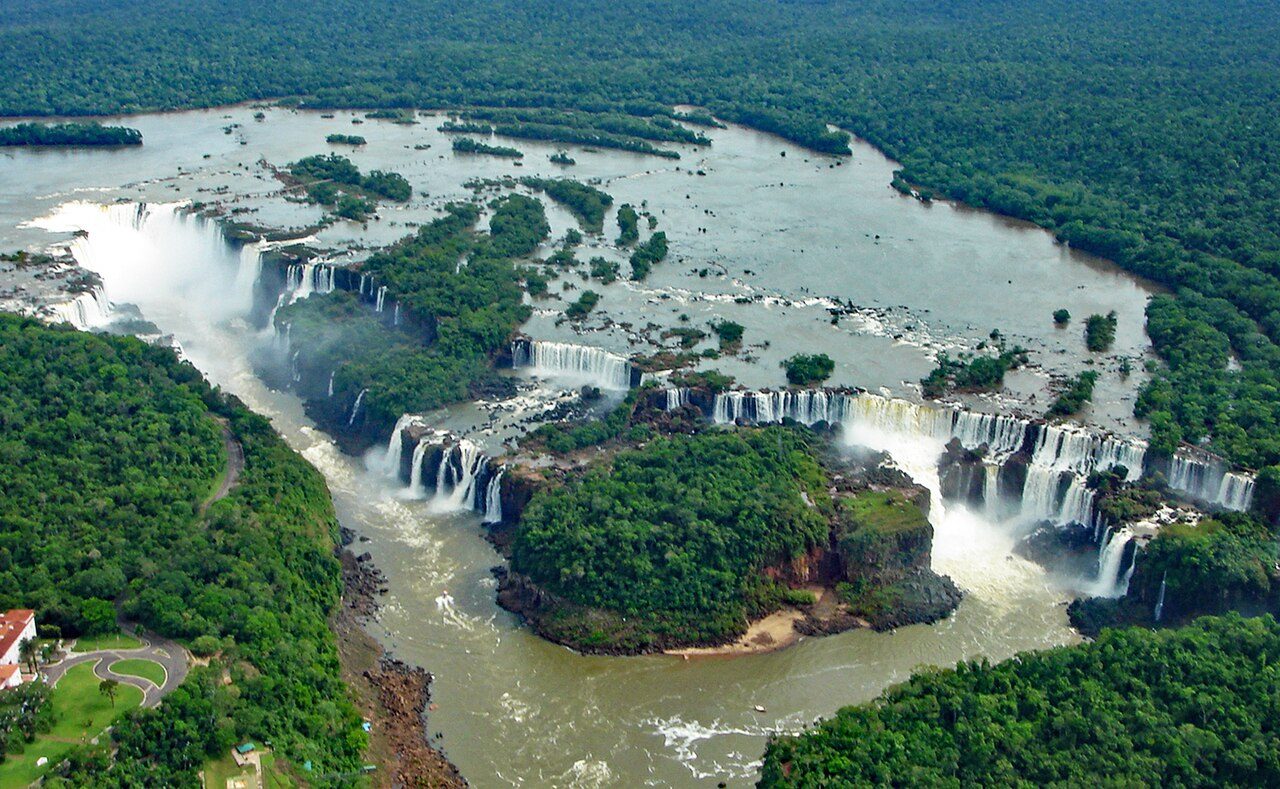
What to see in Foz do Iguacu

Photo credits (2)
- Mariordo (Mario Roberto Durán Ortiz), CC BY-SA 4.0, via Wikimedia Commons
- Embaixada dos EUA - Brasil, Public domain, via Wikimedia Commons