
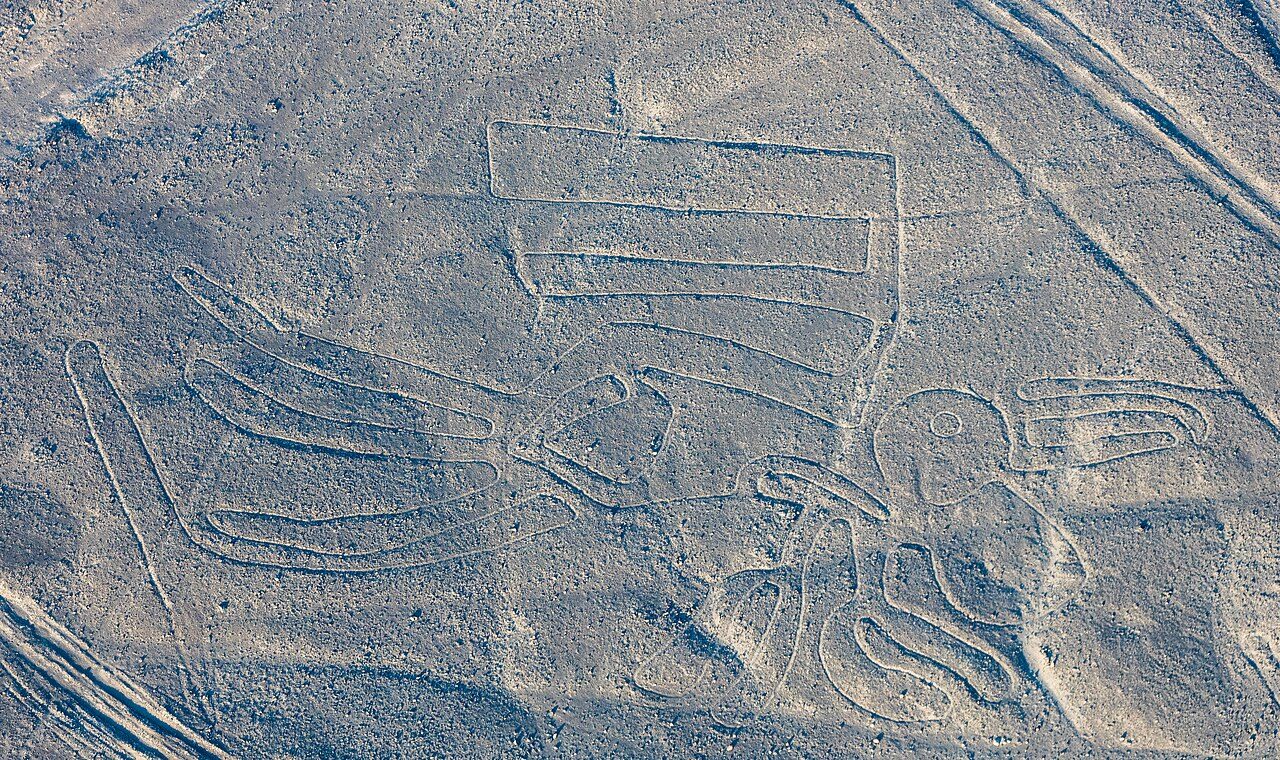
Nazca Lines
Etched into the windless, hyper-arid plateau of southern Peru between 200 BCE and 700 CE, the Nazca Lines represent an astonishing feat of ritual landscape engineering. Ancient Nazca artisans scraped away the surface layer of sun-blackened, iron-oxide pebbles to expose the pale, gypsum-rich subsoil beneath, relying on simple sightlines and cordage to preserve proportions. Meticulously cataloged across decades by German mathematician Maria Reiche, the desert pampa preserves over 450 square kilometers of geometric trapezoids, immense straight runways, and stylized biomorphs, including a 93-meter hummingbird, a delicate spider, and a monkey with an extravagantly coiled tail. At ground level, the geoglyphs dissolve into faint trenches of gravel, but boarding a light aircraft from the local aerodrome transforms the expanse entirely. As the plane banks hard through choppy desert thermals, tilting the horizon, the parched earth suddenly snaps into razor-sharp visual harmony. Travelers press against the cabin windows, tracking the crisp white contours of the soaring Condor and the enigmatic "Astronaut" etched into a rocky hillside. For those ascending the roadside Mirador observation tower, the profound silence of the desert and the shimmering heat haze across the dirt impart a visceral reverence for these ancient, enduring ceremonial pathways.