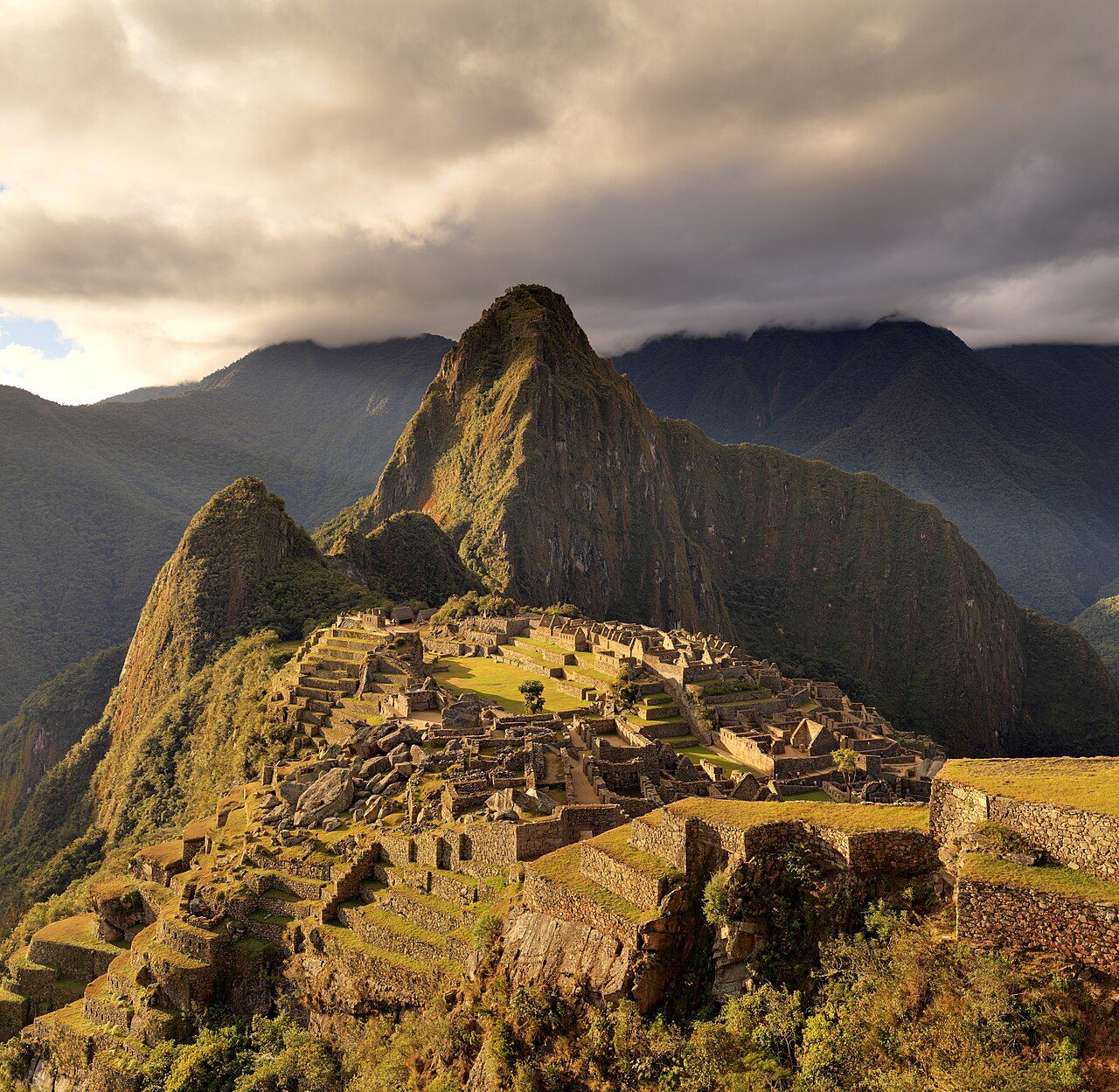
Huayna Picchu
Rising 2,693 meters above sea level like a jagged emerald monolith, Huayna Picchu served as an elite astronomical redoubt and priestly sanctuary during Emperor Pachacuti’s mid-15th-century reign. Inca engineers defied verticality to anchor dry-stone agricultural terraces directly onto sheer precipices, demonstrating peerless mastery over treacherous topography. Hidden within the northern subterranean face lies the Temple of the Moon, an exquisite ceremonial complex set inside a natural granite cavern. Here, imperial masons inserted trapezoidal niches and polished ashlar walls into the living stone with millimeter precision, creating a subterranean sanctuary dedicated to ancestral mummies and subterranean spirits. Ascending the peak demands a nerve-testing scramble up the infamous "Stairs of Death"—cantilevered steps chiseled into the cliffside with exposed drop-offs plunging straight into the roaring Urubamba River canyon. Hikers grip cold guide cables as damp cloud forest mist clings to their skin, navigating rock-cut tunnels designed to bottleneck invaders. Upon reaching the crest’s final tumble of giant granite boulders, the heart-pounding vertigo yields to an incomparable vantage: the sprawling Machu Picchu citadel directly below reveals its intended avian geometry, spread out like a stone condor pinned against the Andean void.