
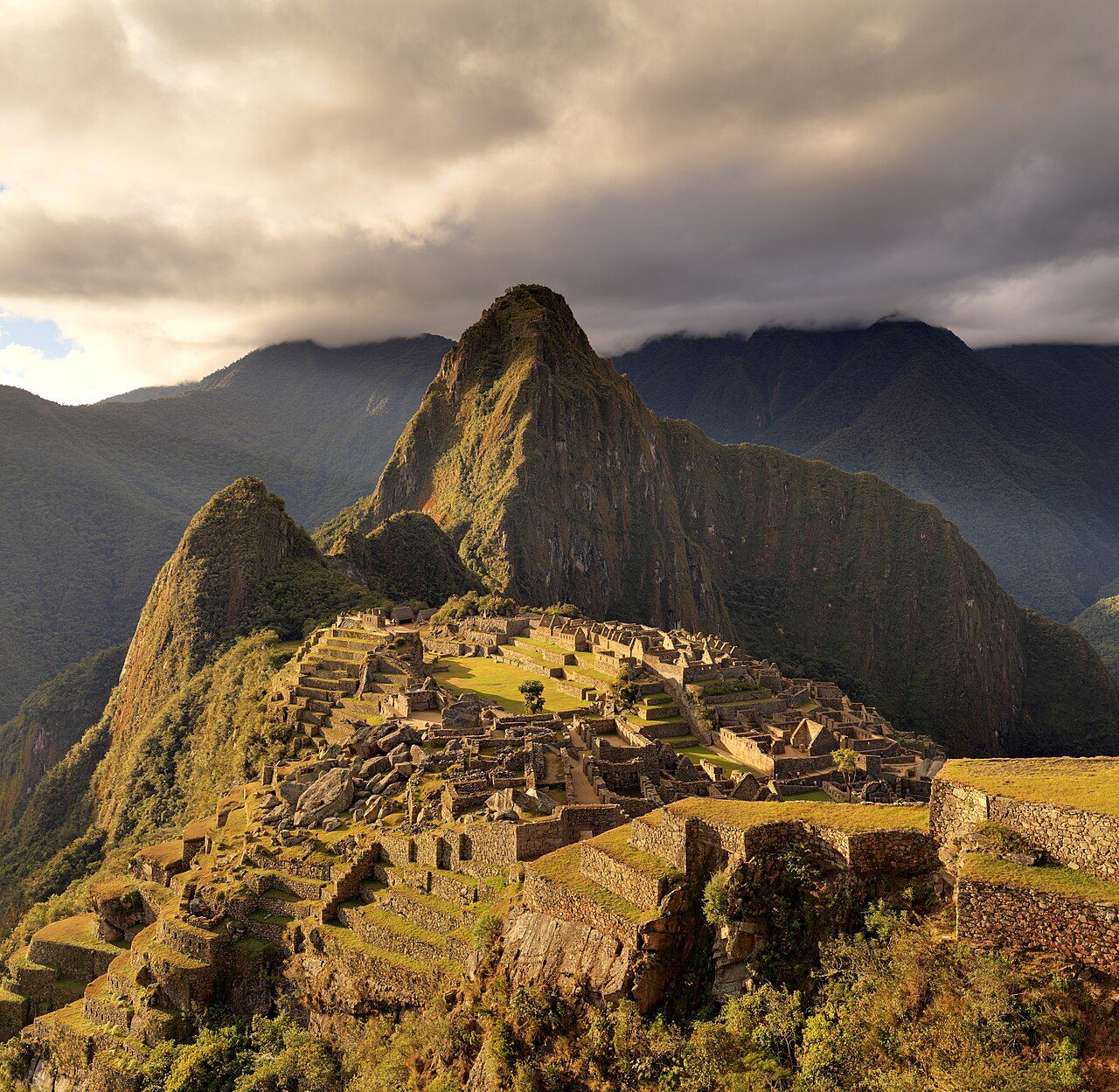
Machu Picchu
Commissioned around 1450 under the reign of the ninth Inca emperor, Pachacuti, this mountaintop sanctuary epitomizes classical Inca imperial architecture. Master stonemasons cut pale granite directly from the ridge, employing mortarless *ashlar* masonry where polished blocks fit together with microscopic precision to withstand seismic tremors. Over 200 residential, agricultural, and ceremonial buildings flank a central plaza, engineered with sophisticated subterranean drainage channels and steep agricultural terraces. Among the surviving stonework, the semi-circular Temple of the Sun wraps around an organic rock outcrop, while the trapezoidal Room of the Three Windows frames the eastern horizon, and the sacred *Intihuatana* stone rises from an elevated platform, meticulously carved to cast shadows that tracked the winter solstice. Standing along the upper agricultural terraces at dawn, you encounter a sudden, dramatic unveiling as the dense cloud-forest mist burns off to reveal the jagged green horn of Huayna Picchu. The roar of the Urubamba River echoes faintly from the gorge nearly 1,500 feet below, carrying a cool breeze across the emerald-carpeted steps. Running your fingers along the granite lintels, you feel the rhythmic, smooth pockmarks left by bronze chisels and river pebbles centuries ago. The sheer drop-offs induce a visceral sense of vertigo, grounding you in the audacious engineering of an empire that harmonized colossal stone architecture with the untamed topography of the high Andes.
