
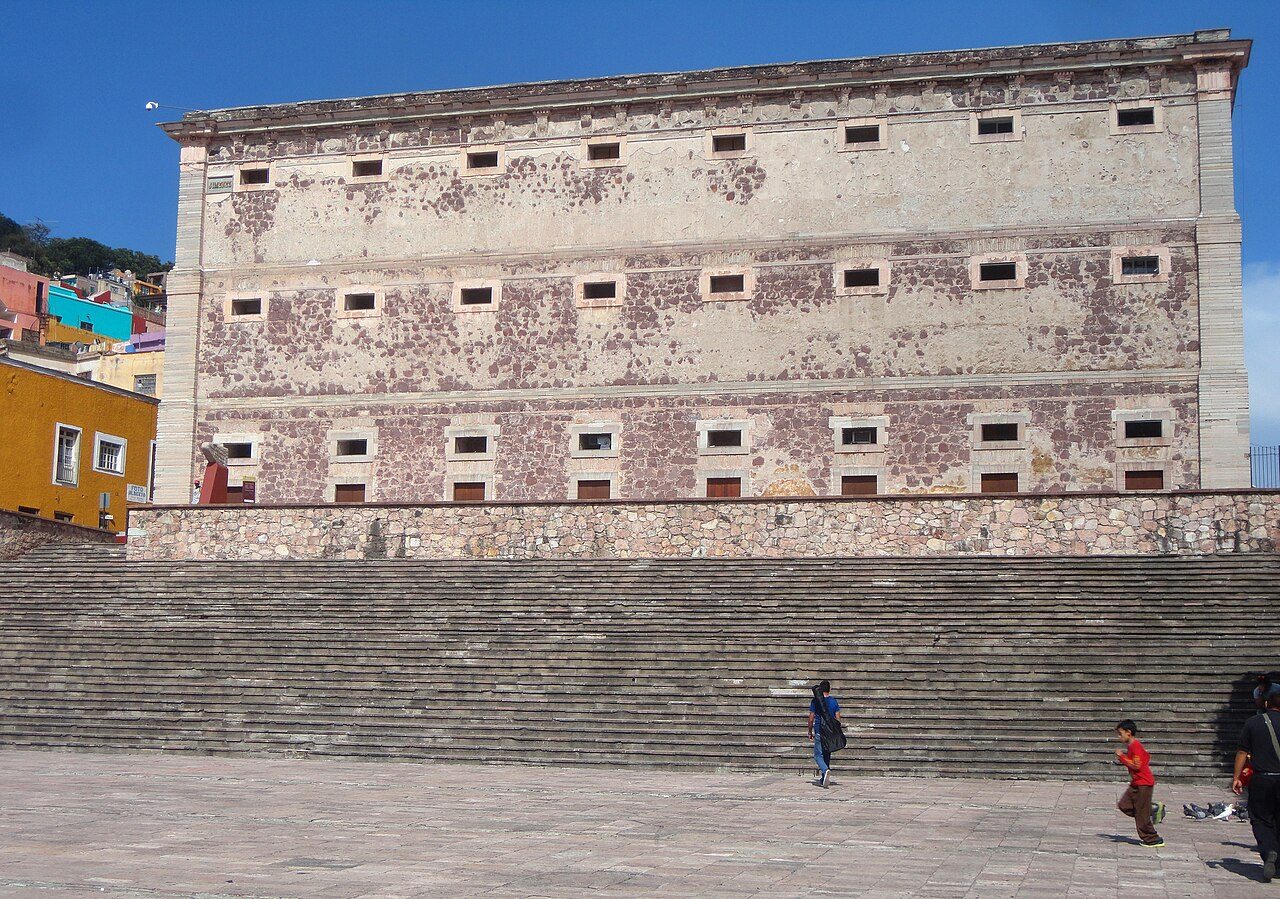
Alhondiga de Granaditas
Constructed between 1798 and 1809 as a fortified public grain exchange, this imposing Neoclassical citadel of green-and-pink *cantera* stone became the bloody crucible of Mexican Independence. On September 28, 1810, Father Miguel Hidalgo’s insurgent forces laid siege to royalist troops and wealthy Spanish elites entrenched inside. The deadlock broke only when the local miner Juan José de los Reyes Martínez—immortalized as "El Pípila"—strapped a heavy flagstone to his back to deflect musket fire and torched the wooden eastern portal. High above the street, the building’s severe facade still displays the four iron corner hooks where Spanish authorities suspended the severed heads of Hidalgo, Ignacio Allende, Juan Aldama, and Mariano Jiménez in iron cages from 1811 until 1821. Passing through the massive entryway, travelers step from martial austerity into the light of an expansive, two-tiered courtyard framed by Doric and Tuscan colonnades. Ascending the monumental stone staircase, visitors encounter the visceral mid-20th-century murals of Guanajuato native José Chávez Morado, whose fiery brushstrokes narrate the nation’s abolition of slavery and revolutionary rebirth. The cool interior chambers now house regional Mesoamerican artifacts and colonial relics, but the most profound sensation comes from lingering in the open-air cloister, tracing the chipped stonework left by 19th-century bullets and feeling the lingering weight of Mexico's foundational sacrifice.
