
Guanajuato
Tucked into a narrow canyon of the Sierra de Guanajuato in central Mexico's Bajío region, Guanajuato defies conventional urban planning. The city flows upward along ravine walls and downward into subterranean tunnels carved from old riverbeds, routing vehicle traffic beneath the historic core. Walking through the center means navigating a dense network of brightly painted staircases, pocket plazas, and crooked lanes where houses tilt together above stone pavement. Silver turned this Spanish settlement into an economic powerhouse after prospectors struck rich ore in the 1550s. That wealth built grand monuments, including the 1903 neoclassical Teatro Juárez facing the shaded benches of Jardín de la Unión, and the pink stone Templo de la Valenciana beside the main mining works. Down the slope, the heavy stone grain storehouse of Alhóndiga de Granaditas marks the site of the first major insurgent victory in the 1810 Mexican War of Independence, while the narrow Callejón del Beso draws visitors between balconies that stand mere inches apart. Daily routines converge on Mercado Hidalgo, a vaulted iron market hall inaugurated in 1910, where cookstalls fry up enchiladas mineras layered with carrots, potatoes, and fresh cheese. Each autumn, the Festival Internacional Cervantino floods the plazas with open-air theater, though musical callejoneadas led by student musicians in seventeenth-century dress wind through the neighborhoods nightly year-round. Bring sturdy shoes with dependable tread to handle the polished flagstones, as steep steps and pedestrian alleys make walking the only effective way to explore.
Read more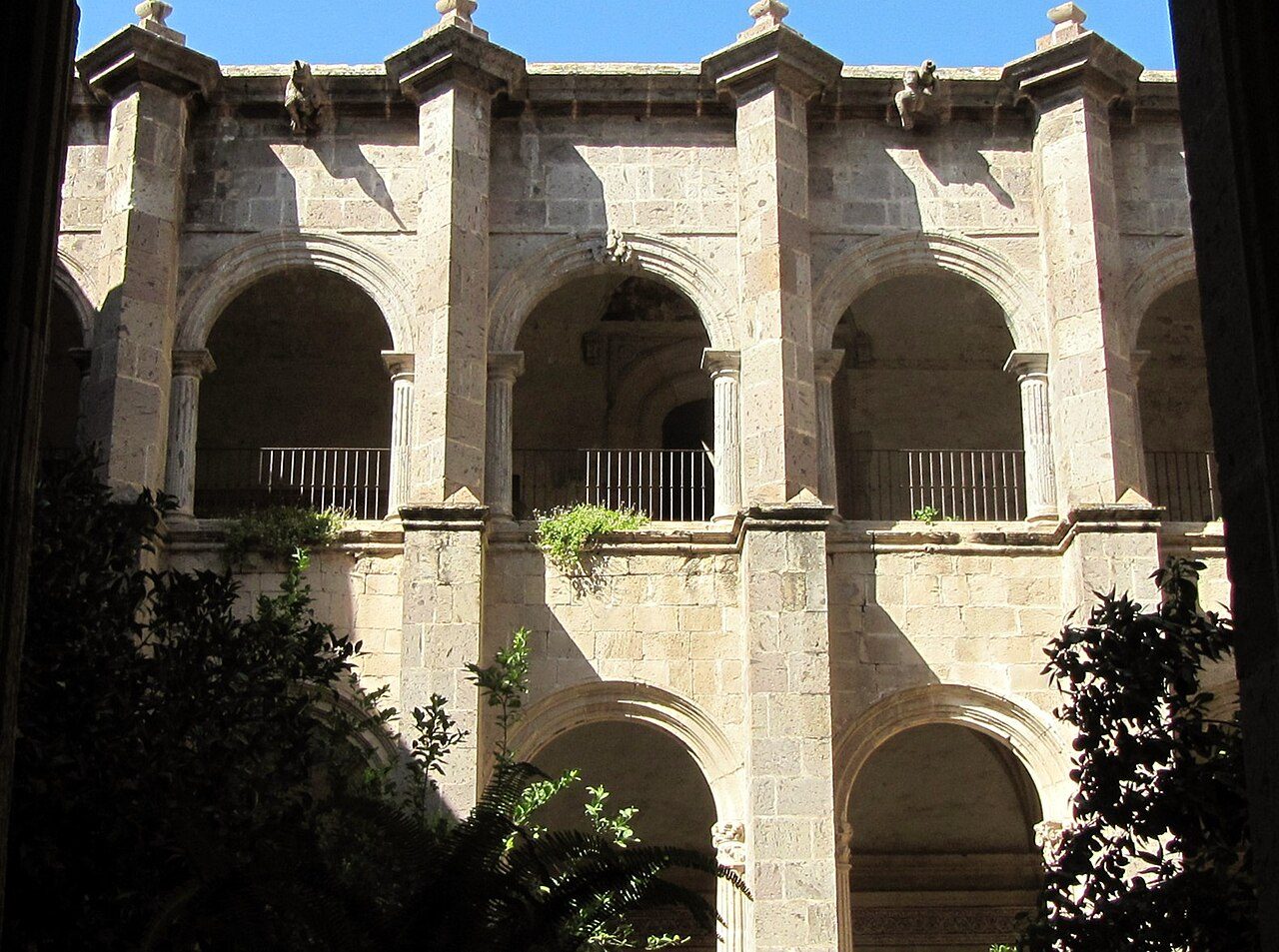
What to see in Guanajuato

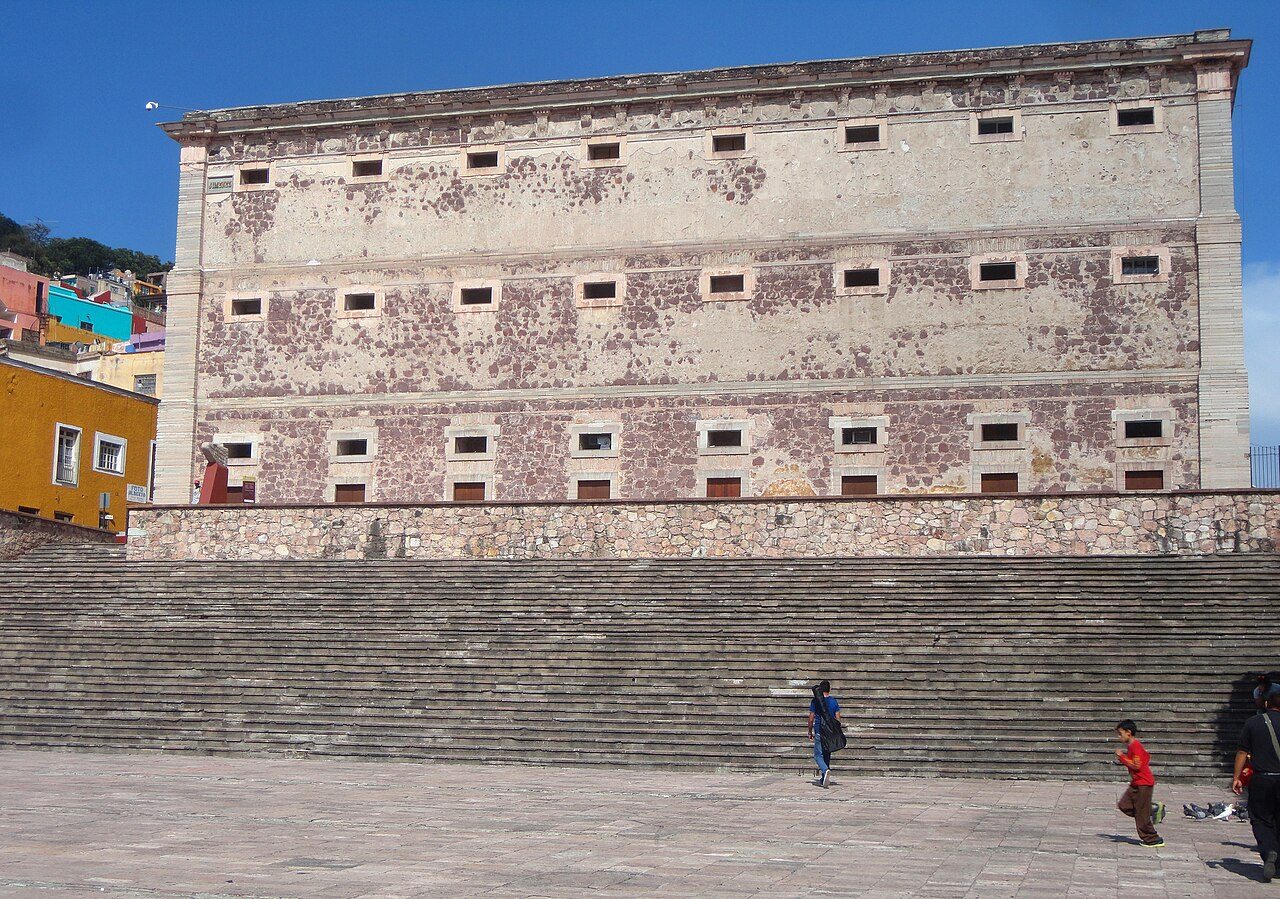
Photo credits (2)
- Minaram, CC BY-SA 4.0, via Wikimedia Commons
- Juan Carlos Fonseca Mata, CC BY-SA 4.0, via Wikimedia Commons